

What if the blur around your tattoo isn’t a surface stain, but ink that has spread beneath the skin? It’s understandable to wonder whether a hazy edge is part of healing or a lasting change. If you’re searching for “tattoo blowout what it is and how to fix,” the key distinction is that a blowout involves misplaced ink, while temporary bruising or early healing changes can also affect a fresh tattoo’s appearance.
Appearance alone can’t confirm what’s happening, and judging a tattoo before it has healed may lead to unnecessary worry. This guide explains common blowout characteristics, why they can occur, and how they differ from temporary healing changes. It also covers realistic options to discuss with an experienced tattoo artist, their limits, and when a medical professional should assess a skin concern. The goal is to help you choose a practical next step, not to promise that every blur can be corrected.
Key Takeaways
- Learn how a blowout’s blurred or feathered edges may differ from temporary healing changes, without treating appearance alone as a diagnosis.
- Understand why pigment can spread beyond its intended placement and why the tattoo’s healed appearance matters when considering next steps.
- Explore “tattoo blowout what it is and how to fix” through realistic options, including allowing time for healing and discussing design possibilities.
- Track changes with dated photographs taken in consistent lighting, and follow your established aftercare rather than picking at the tattoo.
- Bring current and healed photos, along with the tattoo’s placement and timeline, to a consultation. These details help an artist discuss what they can assess and what remains uncertain.
Tattoo Blowout: What It Is and How to Recognize It
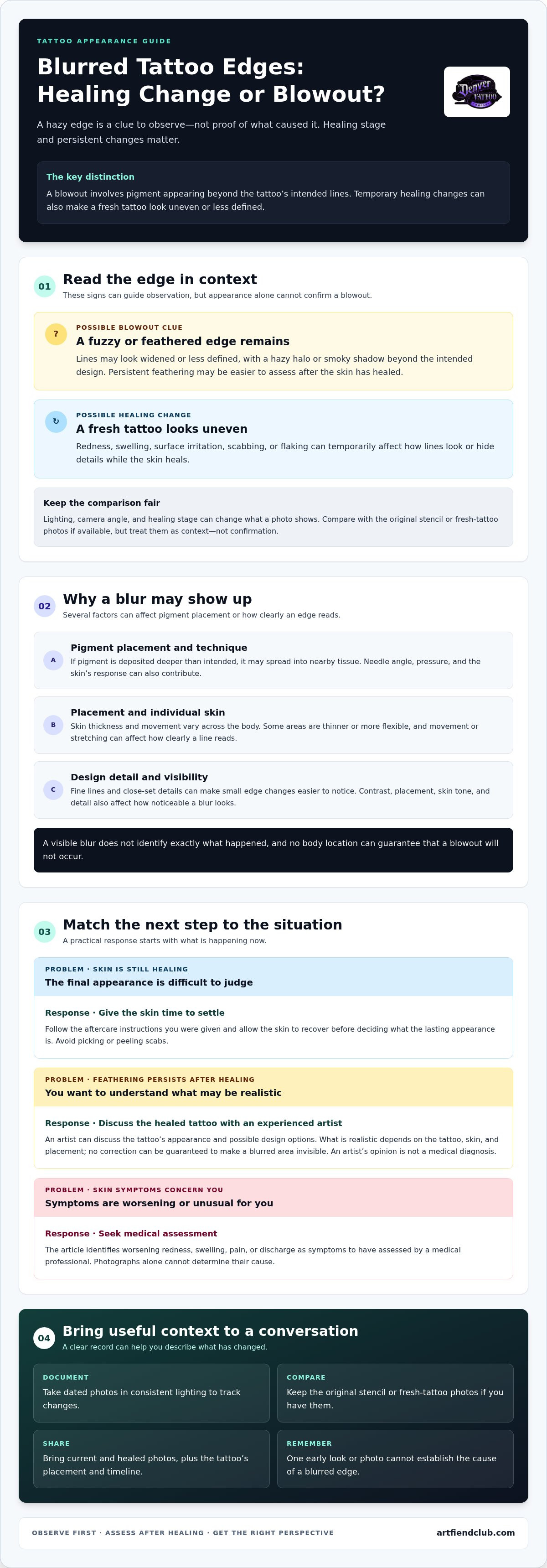
A tattoo blowout is a blurred or feathered appearance beyond the tattoo’s intended lines. Instead of staying crisp at the edges, pigment may look like a soft halo or smoky shadow under the surrounding skin.
In plain language, a blowout is ink that appears to have spread beyond where the tattoo’s lines were meant to sit. Tattooing places pigment in the skin. If ink is deposited too deeply, it can spread into nearby tissue. A blurred edge alone, however, can’t establish what caused the change or confirm that it’s a blowout.
What does a tattoo blowout look like?
Some lines may look fuzzy, widened, or less defined than intended, with a hazy edge around them. How noticeable the blur looks depends on factors such as contrast, placement, skin tone, and detail. A fine-line design may show small changes differently from a bold, heavily shaded tattoo. If you have them, compare the healed tattoo with the original stencil or photographs from when it was fresh. These can provide useful context, but they can’t confirm a diagnosis.
How is a blowout different from normal healing?
A fresh tattoo can change in appearance as the skin heals. Redness, swelling, surface irritation, scabbing, and flaking may temporarily make lines look uneven or hide details. A blowout is more consistent with blurred edges that remain after the skin has healed. Don’t rely on one photo to tell the difference: lighting, camera angle, and healing stage can all affect what you see.
Timing matters. If the tattoo is still healing, follow the aftercare instructions you were given and allow the skin to recover before drawing conclusions about its final appearance. Avoid picking or peeling scabs, which can irritate healing skin. If changes persist after healing, an experienced tattoo artist can discuss the tattoo’s appearance and possible contributing factors. An artist’s opinion is not a medical diagnosis.
Seek medical assessment for symptoms that concern you, such as worsening redness, swelling, pain, or discharge. A clinician can evaluate skin symptoms; photographs alone can’t determine their cause. If you’re searching for tattoo blowout what it is and how to fix, start by treating a visual clue as a reason to observe, not as a confirmed explanation. Considering the tattoo’s healing stage and your skin’s response can make the next conversation more useful.
Why Tattoo Blowouts Happen and When They Become Noticeable
A blowout is linked to pigment spreading beyond its intended placement in the skin. Tattooing requires ink to be deposited at a controlled depth. If pigment reaches deeper tissue than intended, it may disperse beyond the design’s lines and create a blurred or feathered edge. In plain terms, misplaced pigment can spread under the skin and soften the tattoo’s outline.
Depth and technique can contribute, including needle angle, pressure, and how the skin responds during tattooing. A visible blur doesn’t establish exactly what happened, and it isn’t a reason to blame yourself. Skin varies, and the way pigment settles can be affected by both the tattooing process and the characteristics of the area.
Can tattoo placement or skin affect blowout risk?
Skin thickness and movement vary across the body. Some areas have thinner or more flexible skin, while others shift or stretch as you move. Those differences can affect how a tattoo is applied and how its edges appear over time. Individual skin characteristics also matter, so the same design and technique may not look identical on everyone. Placement can shape an artist’s approach, but no location can guarantee that a blowout won’t occur.
Fine lines and close-set details can make small changes in edge definition easier to notice. Movement or stretching may also affect how clearly a line reads, particularly when you view the tattoo from different angles. These factors can affect visibility, but they don’t confirm a blowout or identify its cause. A considered assessment looks at the tattoo as a whole, rather than treating one blurry edge as proof.
When can you tell whether a tattoo has blown out?
Some blurring may be visible early, but a fresh tattoo is still changing as the skin heals. Redness, swelling, scabbing, and flaking can affect how the lines look, and the appearance may shift as the surface settles. It’s difficult to judge a new tattoo’s lasting appearance while the skin is healing. Follow the aftercare guidance you received, and avoid drawing a firm conclusion from one early look or photograph.
Once the skin has healed, persistent feathering beyond the intended lines may be easier to assess, though appearance alone still can’t establish the cause. If you’re researching tattoo blowout what it is and how to fix, dated photos can help you describe how the tattoo changed during healing. An experienced artist can discuss its appearance and design possibilities without promising a particular correction. For readers in Englewood, a tattoo consultation offers a practical setting for that conversation.
Can You Fix a Tattoo Blowout? Compare Realistic Options
What’s realistic depends on the tattoo, your skin, its placement, and whether it has fully healed. There isn’t one correction that suits every case, and no approach can guarantee that a blurred area will become invisible. If the tattoo is still healing, wait until the skin has settled before deciding what to do next.
| Option | What it can offer | Important limit |
|---|---|---|
| Wait for full healing | Gives the skin time to settle so the tattoo’s appearance can be assessed more clearly. | Waiting doesn’t remove pigment that has spread beyond the intended lines. |
| Discuss design changes | An artist can consider whether new elements, shading, or other changes could work with the existing tattoo. | Added pigment may change the design, and camouflage may not suit every tattoo or placement. |
| Laser treatment | A separate treatment route that a qualified practitioner can assess for suitability. | Results, number of sessions, risks, and suitability vary. It isn’t the same as tattoo reworking. |
Can a tattoo artist cover or rework a blowout?
An experienced artist can assess the healed tattoo and discuss whether surrounding design changes are practical. Added detail or shading might help integrate a blurred area into a broader design, but adding pigment isn’t automatically the right solution. The tattoo’s existing lines, size, placement, and the look you want all matter. A consultation is a chance to explore possibilities, not a promise of correction or invisibility.
Reworking can also mean accepting a different result from the original design. A larger or more detailed tattoo may be possible, but it may not suit your preferences or the available space. A careful discussion should set realistic expectations about what design changes could achieve and what they can’t.
Can laser tattoo removal help with a blowout?
Laser treatment is distinct from tattoo reworking. A qualified practitioner must assess whether it’s suitable for the specific tattoo and skin. Outcomes and potential risks vary, so don’t assume laser treatment will remove the blur completely or require a particular number of sessions.
Before choosing a route, consider what matters most to you: keeping the tattoo close to its current form, exploring a design change, or seeking an assessment for laser treatment. If you’re looking up tattoo blowout what it is and how to fix, start with an informed conversation rather than a guaranteed-fix claim. A tattoo consultation can help clarify design possibilities and their limits; it can’t determine whether a separate treatment is medically suitable.
What to Do If You Think Your Tattoo Has Blown Out
A blurred edge can be unsettling, but a measured approach can help you avoid irritating the skin or mistaking a healing change for a lasting one. Start with these steps:
- Leave the skin alone. Don’t pick, scratch, or peel at scabs or flakes.
- Follow your established aftercare. Use the guidance you received for the tattoo rather than adding new products or remedies.
- Record what you see. Take clear photographs in consistent lighting and from a similar distance. Add the date so you can compare how the tattoo changes as it heals.
- Seek the right assessment. For questions about the tattoo’s appearance after healing, discuss it with an experienced artist. For concerning skin symptoms, contact a clinician.
Photos are useful for tracking changes, but they can’t diagnose a blowout or a medical condition. Lighting, camera angle, and skin changes may affect how the tattoo appears in an image. For ongoing care after healing, see this guide to long-term tattoo care in Colorado.
What should you avoid doing at home?
Don’t scrape, cut, or try to remove pigment yourself. Avoid harsh chemicals and unverified creams, too. These approaches can injure or further irritate the skin, potentially making the tattoo harder to assess. Home remedies can’t reliably reverse pigment that appears to have spread beneath the skin. Stick to established aftercare and seek a professional opinion rather than experimenting.
Good hygiene matters during tattooing and healing, but it can’t confirm the cause of a blurred edge. You can read more about safe tattoo studio practices for broader context.
When should a skin concern receive medical attention?
Seek prompt medical advice if you notice worsening pain, spreading redness, warmth, pus, fever, or other symptoms that concern you. These signs require medical assessment, not an artist’s visual opinion. A tattoo artist can discuss the design and its appearance, but can’t diagnose infection, an allergic reaction, or another medical condition.
If the skin has healed and your main concern is how the tattoo looks, a consultation can help you discuss what an artist observes and what design possibilities may be realistic. It can’t guarantee a fix. Readers in Englewood can find information about a tattoo consultation to discuss the tattoo’s appearance and possible design considerations. Understanding tattoo blowout what it is and how to fix starts with separating a design concern from a skin-health concern, then choosing the appropriate next step.
Discussing Tattoo Blowout Options With an Experienced Artist in Englewood
A useful consultation starts with context, not a promise of a particular result. Bring clear photographs of the tattoo as it looks now and, if available, images from when it was fresh or after it healed. The original design or stencil can also help show how the current lines compare with the intended artwork.
What should you bring to a tattoo consultation?
Along with your photos, note where the tattoo is and when you first noticed the blurred appearance. Describe any changes you observed as the skin healed, and mention whether the tattoo is fully healed now. This timeline helps frame the discussion without turning a photograph or your own impression into a diagnosis.
It also helps to explain what you hope to achieve. You may want to keep the existing design as close to its current form as possible, or you may be open to discussing changes. Sharing your preferences gives the artist a starting point. Staying open to practical limits leaves room for an honest conversation about what may suit the tattoo.
How can an artist help you plan a next step?
An artist can consider the tattoo’s placement, linework, healed appearance, and surrounding design when discussing possible directions. At Art Fiend Club in Englewood, consultations are collaborative conversations led by Jason Oz, who has more than 20 years of industry experience. That experience informs the discussion, but it doesn’t guarantee a particular correction or outcome.
The purpose is to understand what the tattoo looks like and explore realistic design possibilities. An artist can discuss whether a design change seems workable, but can’t diagnose a medical concern or promise that a blurred area will disappear. This guide to what to ask during a tattoo consultation can help you organize your questions.
For people in Englewood and nearby Denver, Lakewood, Highlands Ranch, and Littleton, a consultation offers a measured way to talk through the tattoo’s appearance and your goals. Bring reference images and a clear sense of what matters to you to make the discussion more useful. Understanding tattoo blowout what it is and how to fix means weighing realistic options for your individual tattoo, not expecting a guaranteed result.
Take a Calm, Informed Next Step
A blurred edge may suggest a blowout, but a fresh tattoo’s appearance can change during healing, so don’t rush to a conclusion. If the skin has healed and the blur remains, an experienced artist can discuss the tattoo’s appearance and possible design directions without promising a particular result. For symptoms such as worsening pain, spreading redness, or fever, seek medical advice instead.
If your question is “tattoo blowout what it is and how to fix,” start by documenting changes, following aftercare, and getting the right kind of assessment. At Denver Tattoo Company in Englewood, Jason Oz brings more than 20 years of tattoo industry experience to consultations and custom design discussions. The studio uses single-use sterilized equipment and premium inks as part of its tattooing practice.
Bring your photos and ideas for a collaborative conversation about realistic possibilities. Discuss your tattoo goals in a consultation with Denver Tattoo Company, and take the next step with clarity.
Frequently Asked Questions
What is a tattoo blowout?
A tattoo blowout is a blurred or feathered appearance beyond the tattoo’s intended lines. It’s associated with pigment spreading into surrounding skin rather than staying within the planned outline. The edges may look soft, hazy, or smoky, but appearance alone can’t confirm the cause. Healing changes can also affect a fresh tattoo’s look, so consider its stage of healing and compare it with the original stencil or earlier photographs.
Can a tattoo blowout be fixed?
Sometimes a tattoo’s appearance can be changed, but there’s no guaranteed fix for every blowout. Once the tattoo has healed, an experienced artist can discuss whether design changes, added detail, or shading may suit the existing work. Laser treatment is a separate option that requires assessment by a qualified practitioner. Each route has limits, and the relevant considerations depend on the tattoo, placement, skin, and your preferences.
Does a tattoo blowout go away on its own?
A true blowout is generally considered a lasting change, rather than pigment that will fade back into the intended lines on its own. However, a fresh tattoo’s appearance can shift as redness, swelling, scabbing, or flaking settles during healing. If you’re wondering about tattoo blowout what it is and how to fix, allow the skin to heal before judging the final appearance, then consider an artist’s assessment.
How can you tell a tattoo blowout from normal healing?
Normal healing can include temporary redness, swelling, surface irritation, scabbing, or flaking that changes how the tattoo looks. A blowout is more consistent with blurred edges that persist after the skin has healed. One photo can’t establish the difference, since lighting and healing stage affect appearance. Track changes with dated photos in consistent lighting, and seek medical advice if you have concerning skin symptoms.
What causes a tattoo blowout?
A blowout is associated with pigment spreading beyond its intended placement in the skin. Tattooing depth and technique can be factors, but a blurred edge doesn’t prove exactly what happened or establish a single cause. Skin characteristics and placement may also influence how ink settles and how visible changes appear. Don’t blame yourself based on appearance alone; an artist can discuss the tattoo’s design and healed condition.
Can you prevent a tattoo blowout?
You can’t guarantee that a blowout won’t happen, but thoughtful planning and communication can help you make informed choices. Discuss design, placement, and any concerns with your tattoo artist before the session. Follow the aftercare instructions you’re given, and avoid picking or irritating healing skin. Aftercare supports the healing process, but it can’t reverse pigment spread that has already occurred. Denver-area clients can discuss custom tattoo design and placement in a consultation.
Should I get a tattoo blowout checked by a doctor?
A doctor or other clinician should assess concerning skin symptoms, not just a question about line appearance. Seek prompt medical advice for worsening pain, spreading redness, warmth, pus, fever, or other symptoms that worry you. A tattoo artist can discuss the tattoo’s appearance and design possibilities, but can’t diagnose infection, allergy, or another medical condition. Denver Tattoo Company is in Englewood and serves clients from Denver, Lakewood, Highlands Ranch, and Littleton.


