

What if a tattoo feels less like one sharp sting and more like a changing mix of vibration, pressure, and scratchy discomfort? If you’re wondering what does getting a tattoo feel like, the honest answer is that the sensation can shift as the artist works and may feel different from one part of the design to another.
It’s reasonable to worry about pain or wonder whether you’ll be able to sit still. People often describe the needle’s movement as an intense scratching or buzzing feeling, but there’s no single experience that applies to everyone. Placement, session length, and personal sensitivity all affect how it feels.
This guide covers common tattoo sensations, why discomfort varies, and practical ways to prepare and communicate if you need a pause. At Art Fiend Club in Englewood, artist Jason Oz brings more than 20 years of industry experience. Talking through your design and concerns can make the process more familiar, even though no one can predict exactly how your session will feel.
Key Takeaways
- Learn what does getting a tattoo feel like, from repeated needle contact to scratchy, vibrating, or stinging sensations.
- Understand how sensations may change during a session, while recognizing that the pace and experience vary by tattoo.
- See how placement, session length, design detail, and personal sensitivity can affect discomfort, without relying on a pain chart to predict your experience.
- Prepare to discuss your concerns, placement, and design expectations with your artist, and speak up if you need a pause.
- Explore how a consultation at Denver Tattoo Company in Englewood can help you plan custom artwork with Jason Oz, an artist with more than 20 years of experience.
What Does Getting a Tattoo Feel Like? The Sensation, Explained
Not knowing what to expect can feel more intimidating than the tattoo itself. If you’re asking what does getting a tattoo feel like, picture a sensation that repeats and changes, rather than one continuous, identical feeling. People often compare it to scratching, buzzing, pressure, or a brief sting. These descriptions can help set expectations, but they can’t tell you exactly how your session will feel.
In brief: Getting a tattoo involves repeated needle contact that may feel scratchy, vibrating, pressurized, or stinging. The level of discomfort varies from person to person.
How people commonly describe the feeling
Some people notice the scratch-like feeling as the needle moves across the skin. Others pay more attention to the machine’s buzz or a steady pressure than to each contact. The process of tattooing involves repeated needle contact to place ink in the skin, which helps explain why the sensation can feel rhythmic rather than like one sharp moment.
The feeling may also change with the artist’s movement. A steady pass can feel consistent, while outlining or working on smaller details may bring sharper, more noticeable moments. These comparisons are not a pain scale. Personal sensitivity and the area being tattooed affect how each person experiences the work.
Does tattooing feel the same from start to finish?
Usually, the sensation isn’t perfectly uniform. The first few minutes may feel unfamiliar as you adjust to the needle’s movement and the machine’s sound. Once you recognize the rhythm, it may become easier to anticipate, but that doesn’t mean the discomfort disappears.
As the artist moves between parts of the design or changes technique, the feeling may shift from a steady scratch or vibration to a more focused sting. Your attention can affect how pronounced it seems, and fatigue during a longer session may make the same sensation harder to ignore. There’s no single correct way for a tattoo to feel.
Tattoo Pain and Sensation: What Happens During a Session?
A tattoo session often includes several broad stages, though the order and pace depend on the design and the artist’s approach. The artist prepares the skin and positions you, then applies the tattoo in sections, adjusting position or technique as the work progresses. You’ll hear the machine’s vibration, while repeated needle contact may feel like a steady buzz, scratch, or sting.
Tattoo sensation can change when the artist moves to a different area, shifts between linework and shading, or continues working as your attention and energy change. A pause or change in position can interrupt the rhythm. You can speak up if you have a concern or need a moment.
What the first minutes of tattooing may feel like
The first contact can seem sharper or more noticeable because it’s new. You may also be adjusting to the sound and vibration while figuring out how the sensation feels for you. Breathe steadily and follow your artist’s instructions about positioning. You don’t have to ignore discomfort or prove you can endure it. Clear communication helps your artist understand how you’re doing.
Why the sensation may change as the tattoo progresses
Moving to a different area can bring a different sensation. Linework may feel focused, while shading can involve repeated movement across an area. Design detail and the time spent in one position may also affect comfort. There’s no fixed pattern, and sessions don’t all involve the same techniques or progression.
Repeated contact can become tiring, and fatigue may make discomfort harder to manage as the session continues. If the sensation becomes difficult, you feel unwell, or you need to adjust your position, tell your artist rather than pushing through silently. Discussing the plan beforehand can also help clarify what to expect. If you’re preparing for a first tattoo, you can talk through your tattoo concerns in a consultation.
Comfort and safety are separate considerations. The U.S. Food and Drug Administration outlines tattoo safety risks, including infection and allergic reactions. Knowing about these health considerations can help you arrive informed, while an open conversation with your artist can make the session itself more predictable.
Why Tattoo Sensation Varies by Person, Placement, and Design
One person’s description can help you imagine a tattoo, but it can’t predict your experience. People differ in sensitivity, and even the same person may respond differently depending on the area, design, and session length. Treat other people’s accounts as possibilities, not promises, when considering what does getting a tattoo feel like.
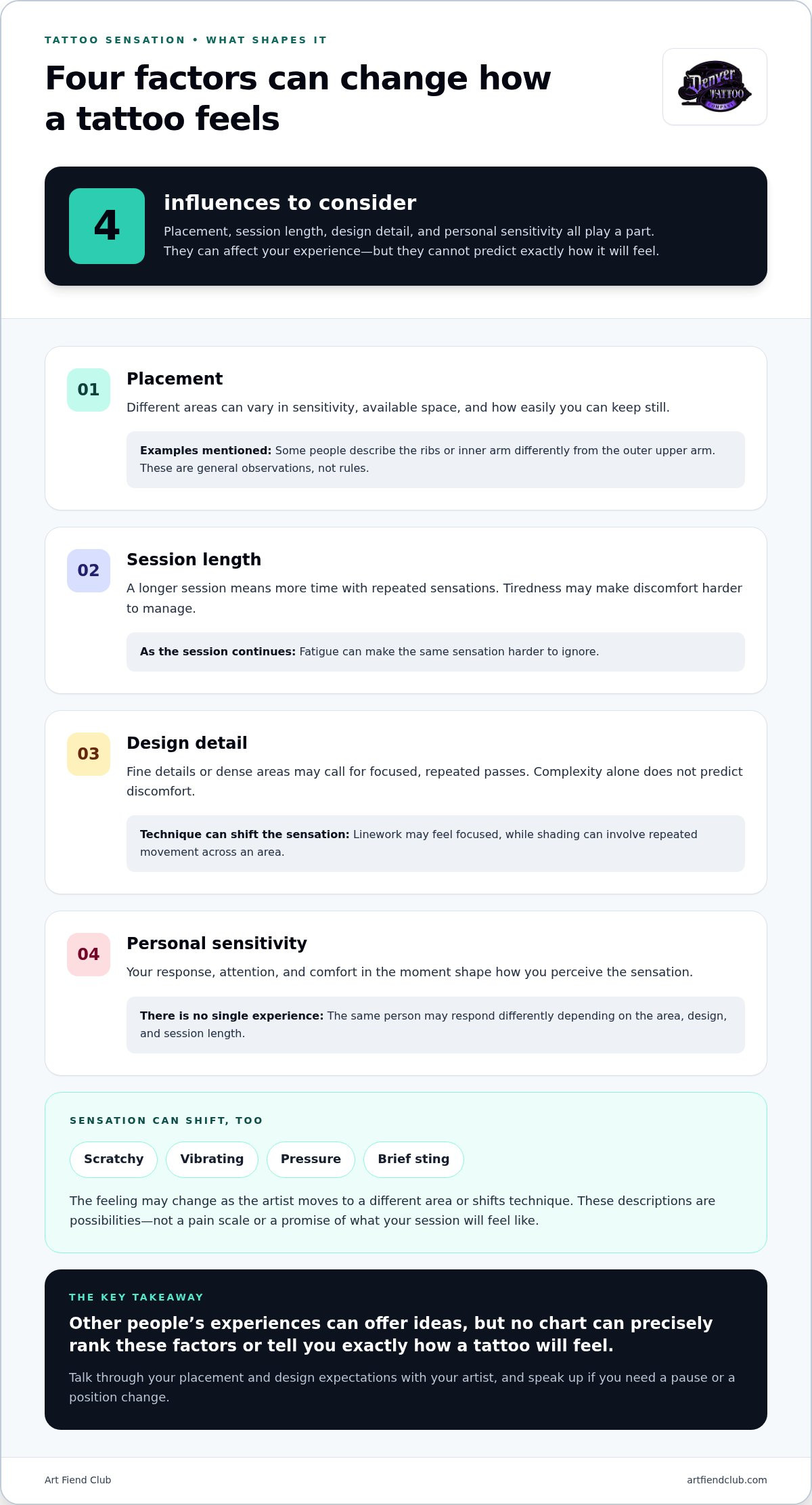
These factors can influence sensation, but no chart can rank them precisely or tell you exactly how a tattoo will feel.
| Factor | How it may affect the experience |
|---|---|
| Placement | Areas can differ in sensitivity, available space, and how easily you can keep still. |
| Session length | A longer session means more time with repeated sensations, and tiredness may affect comfort. |
| Design detail | Fine details or dense areas may call for focused, repeated passes, but complexity alone doesn’t predict discomfort. |
| Personal sensitivity | Your response, attention, and comfort in the moment shape how you perceive the sensation. |
How tattoo placement can affect the sensation
Some people describe areas such as the ribs or inner arm differently from the outer upper arm, but these are general observations, not rules. Bodies aren’t identical, and posture or movement can also affect how comfortable it feels to stay positioned. Discuss placement alongside the design with your artist. You can consider both how the tattoo will sit and what the session may involve.
How design size, detail, and session length matter
A larger design may take more time under the needle, while intricate details can involve precise, repeated work. That doesn’t mean a detailed tattoo will necessarily feel more uncomfortable than a simpler one. The sensation may last longer or change as the artist works across different parts of the design.
Discussing the custom tattoo design process gives you a chance to consider placement, scale, and detail together before the session. An experienced artist can explain how those choices shape the work and help set clearer expectations. For broader health information, Mayo Clinic outlines tattooing risks and precautions. That guidance is useful for preparation, but it won’t predict an individual’s discomfort.
How to Feel More Prepared Before and During a Tattoo
You can’t know exactly how a tattoo will feel in advance, but preparation can make the experience more predictable. If you’re wondering what does getting a tattoo feel like, use these steps to plan for the conversation as well as the session.
Before your appointment: set realistic expectations
- Talk through the design and placement. Share your concerns, especially if this is your first tattoo. Discussing size, detail, and where the design will sit gives your artist a chance to explain what the session may involve.
- Use a consultation to prepare your questions. Ask what sensations are common during the planned work, how to signal that you need a pause, and what to expect from the session. A consultation can also help you become familiar with the design before your appointment.
- Arrive rested and allow enough time. Avoid making the appointment feel rushed. Follow the studio’s instructions so you know what to expect and can focus on the process.
You don’t need to arrive with every concern resolved. Bringing a short list of questions to ask during a tattoo consultation can make it easier to raise what’s on your mind. Avoid starting medication or applying numbing products based on general online advice. Discuss health-related questions with a qualified professional, and tell your artist about anything that could affect the session.
During the session: communicate and take pauses
Say what you need plainly: “Could we pause for a moment?” or “I’m feeling uncomfortable in this position.” You don’t have to wait until discomfort feels overwhelming. Asking a question or requesting a pause is a normal part of working together, not a failure to cope. Follow your artist’s guidance if you need to shift position, and let them know if you feel unwell or something concerns you.
A reassuring session includes clear communication and attention to hygiene. Denver Tattoo Company uses single-use sterilized equipment as part of its safety-focused process. Hygiene supports a careful tattooing environment, but it doesn’t make the sensation painless or predictable for everyone. After your appointment, follow the artist’s instructions and refer to appropriate tattoo aftercare advice as you care for the new tattoo.
If you’re preparing for a tattoo in Englewood, a consultation at Denver Tattoo Company is a practical way to discuss your design, placement, and session expectations with Jason Oz, an artist with more than 20 years of industry experience.
Getting a Tattoo in Denver or Englewood: What a Reassuring Session Looks Like
A reassuring tattoo session doesn’t depend on promising that the work won’t hurt. It comes from understanding the plan and feeling able to speak up. A consultation can make the design, placement, and session expectations more familiar before the tattoo begins. That may reduce uncertainty, though everyone’s sensations are different.
How an experienced artist can help you feel informed
Denver Tattoo Company is a tattoo-only studio in Englewood led by Jason Oz, who has more than 20 years of industry experience. In a consultation, you can discuss how a design may fit a chosen area, what the artwork involves, and what matters to you. This collaboration can make the plan clearer, but it can’t predict exactly how the tattoo will feel.
If you’re considering original artwork, discussing custom tattoo designs in Denver can help you explore how your ideas, placement, and design details come together. The studio uses single-use sterilized equipment and premium inks as part of its process. These practices reflect attention to the work and studio environment, but they don’t guarantee a session free of discomfort.
A comfortable next step for Denver-area tattoo clients
If talking through your idea would ease uncertainty, book a tattoo consultation. Use the conversation to ask about the design, placement, and what to expect during the session. Denver Tattoo Company also welcomes walk-ins during open hours. The right next step depends on your idea and how you prefer to plan.
It’s reasonable to want a clearer picture before making a permanent choice. Denver Tattoo Company serves tattoo clients in Denver, Englewood, Lakewood, Highlands Ranch, and Littleton. Explore the studio’s tattoo services and discuss your ideas with an experienced artist.
Move Forward With Clarity and Confidence
So, what does getting a tattoo feel like? The sensation can range from scratchy vibration to sharper moments, and may shift with placement, design, and time. No one else’s experience can predict yours exactly. Discussing your concerns with your artist and speaking up during the session can help you feel more prepared.
If you’re considering a tattoo in Englewood, Denver Tattoo Company offers consultations to talk through your idea, design, and placement. Jason Oz brings more than 20 years of industry experience to that conversation. The studio also uses single-use sterilized equipment and premium inks as part of its process. These details support a thoughtful, safety-conscious experience, though they don’t determine how the tattoo will feel.
Take the next step at your own pace. Explore tattoo consultations and custom work at Denver Tattoo Company, and bring your questions along. A clear plan and open communication can help you approach your session feeling informed and ready to make the design your own.
Frequently Asked Questions
What does getting a tattoo feel like?
People often describe tattooing as repeated scratching, buzzing, or stinging, but the exact sensation differs from person to person. Placement, design, session length, and personal sensitivity all play a part. Some moments may feel sharper than others as the artist works. These descriptions can help you picture what does getting a tattoo feel like, but they can’t predict exactly how your tattoo will feel.
Does getting a tattoo hurt the whole time?
No. The sensation may change during a session rather than stay identical from start to finish. The artist may move to another area or use a different technique, and your attention or fatigue can affect how you perceive the sensation. If you have a concern or need a pause, tell your artist. You don’t have to stay silent or push through without communicating.
What part of getting a tattoo hurts the most?
There isn’t one placement that feels worst for everyone. Personal sensitivity, the tattoo’s location and design, and the time spent working on it can all influence the experience. Online pain rankings may offer general context, but they can’t reliably predict what you’ll feel. Discuss placement with your artist while planning the tattoo so you can understand how the design will fit your chosen area.
Can you handle a tattoo if you have a low pain tolerance?
Your comfort level doesn’t automatically determine whether you can get a tattoo, but no one can guarantee how a particular session will feel for you. Start by sharing your concerns and discussing the design and placement with your artist. During the session, speak up if you need a pause or have a concern. You don’t need to ignore discomfort or prove anything by staying silent.
What does a tattoo feel like after the session?
The sensation after tattooing differs from what you feel during the session, and individual experiences vary. Follow the aftercare instructions provided by your tattoo studio rather than relying on broad online advice. If you have questions about healing or notice a change that concerns you, contact an appropriate health professional. This guide explains tattooing sensations; it can’t assess symptoms or diagnose a health issue.
Should I use numbing cream before getting a tattoo?
Don’t assume a numbing product is suitable for every person or tattoo. Products can have different instructions and considerations, so discuss anything you’re thinking of using with your tattoo artist and read the product label carefully. Avoid applying a product if you don’t understand how it should be used. For questions related to your health, seek advice from a qualified medical professional.
How can I make getting a tattoo feel less intimidating?
Learn which sensations people commonly describe, talk through your design and placement beforehand, and tell your artist if you’re nervous. During the session, focus on steady breathing and communicate if you need a pause. A consultation can make the process more familiar. If you’re in Denver, Englewood, Lakewood, Highlands Ranch, or Littleton, discuss your tattoo idea with Denver Tattoo Company in Englewood.


