
A large tattoo’s dimensions won’t tell you the whole budget. Design detail, placement, estimated working time, and the session plan can all affect the estimate. Knowing how to budget for a large tattoo starts with discussing the actual design, not calculating a cost by inches.
Before committing, get clear on what the estimate covers and what could change it. For a custom piece that may take several sessions, compare estimates only after you understand the scope and assumptions behind each one. Then set a spending limit that feels comfortable and leave room in your personal budget for changes to the plan.
This guide covers the factors that shape an estimate, questions to ask about session timing, and ways to plan before booking. Denver-area clients can discuss design scope and estimated time with Jason Oz at Art Fiend Club in Englewood. Jason brings more than 20 years of industry experience to consultations, where you can explore a project plan before deciding how to proceed.
Key Takeaways
- Design detail, placement, and the artist’s process can shape an estimate beyond the tattoo’s size.
- Use how to budget for a large tattoo as a planning process: set a comfortable limit, define the scope, then review it with your artist.
- Compare estimates by checking what each covers, how time is assessed, and how sessions may be planned, not by choosing the lowest figure alone.
- Leave flexibility in your personal budget in case the design or session plan changes.
- Use a consultation to discuss the project scope and estimated time with a Denver-area artist.
How to Budget for a Large Tattoo When Size Does Not Tell the Whole Story
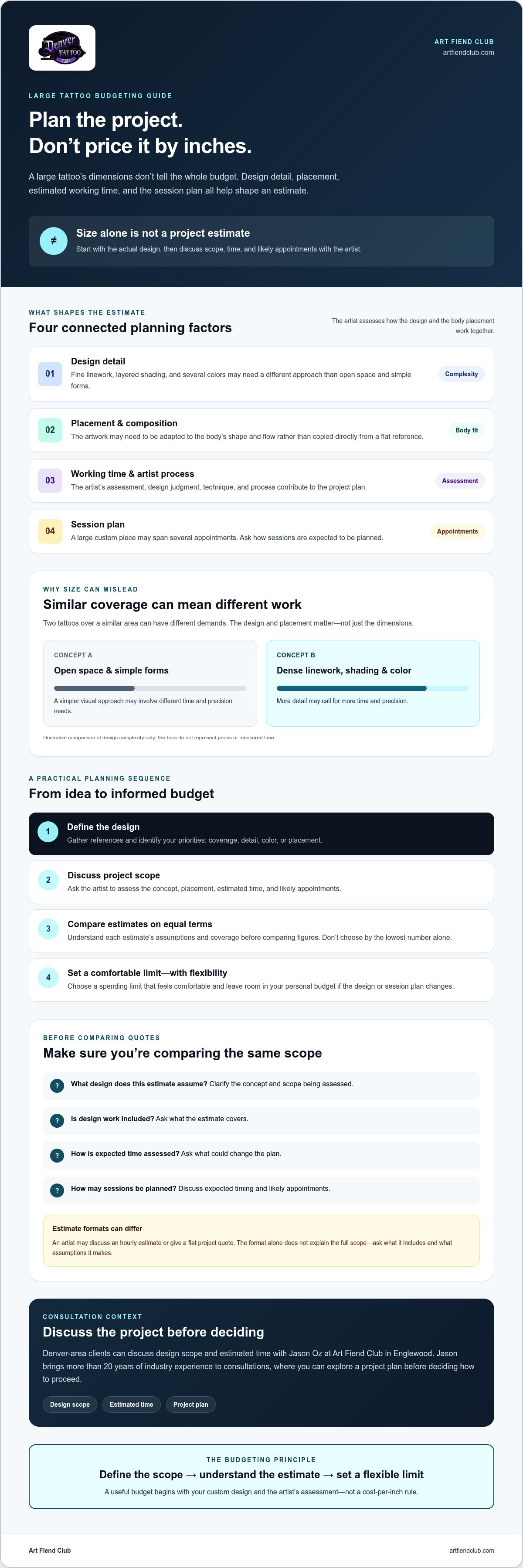
It’s reasonable to want a clear figure before committing to a large tattoo. But a custom piece isn’t a standard item priced by dimensions alone. The design, placement, artist’s assessment, and time needed to apply the work all contribute to the estimate.
For how to budget for a large tattoo, think of your budget as a project plan, not a calculation based on inches. First define the design you want. Then ask the artist to assess its scope, estimated time, and likely appointments. An estimate is most useful when it reflects your concept and the artist’s process.
What counts as a large tattoo project?
“Large” might mean extensive coverage, intricate detail, a challenging placement, or work expected to span several appointments. A sleeve or a piece covering a broad area of the back may be considered large, but these aren’t fixed pricing categories. Artists may assess the same design differently, so discuss the artwork and placement in a consultation instead of relying on a size label.
Why two similarly sized tattoos may need different budgets
Imagine two designs covering a similar area. One uses open space and simple forms; the other has dense linework, layered shading, and several colors. The second concept may call for more time and precision. Placement can affect the work too, since the artist may need to adapt the composition to the body rather than copy a flat reference image.
A useful estimate depends on the design and the artist’s assessment, not size alone. Tattooing requires specialized equipment and needles, as this overview of the tattooing process explains. The artist’s skill and attention are also part of applying a custom piece. That’s why a simple cost-per-inch rule can’t reliably account for the labor involved.
Bring reference images and identify what matters most to you, such as coverage, detail, color, or placement. Ask how those choices affect the scope and estimated time. At Denver Tattoo Company in Englewood, a consultation can help turn a custom design idea into a project plan with Jason Oz, who brings more than 20 years of industry experience.
Which Design and Artist Factors Shape a Large Tattoo Estimate?
A useful estimate starts with your specific concept, not a universal rule for every tattoo. Ask how detail, color, placement, and working time affect the project. Clarify which choices you can refine and where the artist’s judgment will help keep the artwork cohesive and suited to your body.
Design complexity, placement, and working time can matter as much as physical dimensions. These factors work together, so changing one part of the concept may change the project plan. A consultation gives you a chance to discuss those trade-offs before settling on a scope.
How complexity, color, and placement affect planning
Start by considering the amount and type of detail. Fine linework, layered shading, and several colors may call for a different approach than a more open composition. Placement matters as well. The artist may need to adjust shapes and flow to suit the area of the body, which can affect execution and estimated time.
Bring reference images as conversation starters, not as a requirement to copy another tattoo exactly. Ask, “Which elements are likely to take the most time?” and “Would changing the detail or color affect the plan?” You can explain your priorities, while the artist can advise on how the composition might work in its intended placement.
How the artist’s process affects the estimate
An artist may discuss an hourly estimate or give a flat project quote. Neither format explains the full scope on its own. Ask what design the estimate assumes, whether design work is included, how expected time is assessed, and what could change the plan. This makes it easier to compare estimates on equal terms.
An artist’s experience and approach are part of the creative service, not interchangeable rate labels. Their design judgment, technique, and process shape how your idea becomes finished artwork. For broader context on tattoo safety and regulation, the FDA outlines considerations related to tattoos and tattoo inks. Consider safety and professional standards alongside the estimate.
To prepare, explore custom tattoo design planning. Then bring your concept and questions to a consultation. Denver Tattoo Company in Englewood offers consultations to discuss design scope and estimated time with Jason Oz, who has more than 20 years of industry experience. A project-specific discussion is central to how to budget for a large tattoo without relying on assumptions that may not fit your design.
How to Compare Tattoo Quotes and Plan for Multiple Sessions
A quote is useful only when you know what it covers. Before comparing artists, write down the project details behind each estimate. Different totals may reflect different design scope, included work, or session plans, rather than different prices for the same project.
Use this table to organize the conversation. If an answer is unclear, ask for clarification instead of assuming something is included or that an extra fee will apply.
| What to compare | Questions to ask |
|---|---|
| Design scope | What areas and design elements does this estimate cover? |
| Design work | What design work is included, and how are revisions handled? |
| Time basis | Is the estimate hourly or a flat project quote? What assumptions is it based on? |
| Session plan | How might the project be divided into appointments, and what could change that plan? |
| Follow-up | How would a change in scope or an additional session affect the estimate? |
Compare like-for-like estimates
Keep each artist’s proposed scope, estimate format, and assumptions together in your notes. If one estimate covers a more developed composition or different design work, it isn’t directly comparable to another yet. Ask what’s included and whether design changes or a revised session plan could affect the estimate. The aim is to understand what each artist is proposing, not to pick the lowest number in isolation.
Plan around the artist’s session guidance
If a project may take multiple appointments, ask how the artist expects to divide the work and what will guide the timing. Don’t base your budget on a guessed appointment count. Use the artist’s assessment to plan your availability and decide how much you can set aside as the project progresses.
Before booking, confirm the studio’s policies on deposits, rescheduling, and payment methods. These details can vary. For your own savings plan, these strategies for saving from South Dakota State University Extension may offer general guidance for preparing for a significant purchase. Base your tattoo budget on the project-specific information the artist provides.
Care between appointments is another practical part of planning. Ask your artist what to expect for your project, and review this guidance on long-term tattoo care in Colorado for additional context. Clear answers about scope, session flow, and studio policies make it easier to understand how to budget for a large tattoo before committing.
How to Build a Flexible Budget Before Booking a Large Tattoo
A clear personal limit can make design decisions easier. Decide what you’re comfortable setting aside, then work with the artist to shape a project around your priorities. A flexible plan lets you make informed adjustments without treating an early estimate as a final commitment.
A step-by-step budget framework
- Set a comfortable limit. Choose a maximum that works for your finances before settling on the tattoo’s coverage. Keep some room in your personal budget for possible project changes, without assuming a fixed percentage or cost.
- Define the scope. Note your preferred style, placement, color, and essential design elements. Separate must-haves from details you’d consider adjusting if the artist recommends another approach.
- Use the consultation to refine the plan. Discuss how the concept might translate to the chosen placement, what working time the artist anticipates, and how the project may be scheduled. Ask whether simplifying or adjusting the design could change the plan.
- Revise before committing. Update your budget once you understand the proposed scope and session plan. Track travel, time off, and other personal logistics separately from the tattoo estimate so you can see the full commitment without confusing those expenses with the artist’s quote.
Confirm the design scope and session plan with the artist before treating an estimate as final. A project-specific conversation can surface assumptions you may have missed, including what happens if you request a design change or the work needs additional time.
Questions to resolve before committing
Bring focused questions: What does the estimate cover? What could change it? How might the work be divided across appointments? What are the studio’s scheduling and payment expectations, and what policies apply if plans change? Confirm these details with the studio rather than assuming its deposit, payment, or rescheduling terms.
For a helpful consultation checklist, review questions to ask during a tattoo consultation. If you’re planning a custom piece in the Denver area, a consultation at Denver Tattoo Company in Englewood can help you discuss design scope and estimated time with Jason Oz, who has more than 20 years of industry experience. To explore a tattoo consultation, visit Denver Tattoo Company online.
Plan Your Large Tattoo Budget with a Denver-Area Artist
A realistic plan accounts for design scope, detail, placement, the artist’s process, and the likely session plan. A consultation connects those considerations to your priorities and budget before you decide how to proceed. That conversation is more useful than relying on a general size category or an estimate that doesn’t reflect your design.
What to bring to a consultation in Englewood
Bring reference images, your preferred placement, approximate dimensions, and a short list of essential details. Share your budget boundary and ask what scope may fit it and which elements could be adjusted. You can also ask how the artist would assess timing and potential sessions. These details give the artist a clear starting point without requiring you to arrive with a finished design.
Denver Tattoo Company is a tattoo-only studio in Englewood offering custom tattoo designs and consultations. Jason Oz, the studio’s owner and artist, has more than 20 years of industry experience. Ask for guidance specific to your concept and confirm details that affect your plans directly with the studio. Experience is useful context for the conversation, not a promise of a particular price or timeline.
Choose a project plan that respects both craft and budget
Consider more than the estimate. Look at how clearly the artist explains the scope and process, whether their artistic approach suits your idea, and whether you’re comfortable with the studio’s hygiene practices. Denver Tattoo Company uses single-use sterilized equipment and premium inks. Ask any questions you have about the studio’s practices as you decide whether the project feels right for you.
As you work through how to budget for a large tattoo, aim for a plan that supports the artwork you want while staying within a comfortable financial limit. If the proposed scope feels out of reach, ask whether adjusting coverage, detail, or timing could help. A clear conversation gives you a stronger basis for deciding without pressure to commit before you understand the plan.
To discuss your custom tattoo concept and budget priorities with the studio, start with discuss your custom tattoo concept.
Make Your Next Step a Clear One
A sound plan for how to budget for a large tattoo starts with the full project, not its dimensions alone. Design detail, placement, the artist’s process, and the session plan help shape a useful estimate. Set a comfortable budget, then compare estimates only after you understand what each one covers.
A consultation can connect your creative priorities with a realistic project plan. At Denver Tattoo Company in Englewood, Jason Oz brings more than 20 years of industry experience to discussions about custom tattoo designs. The studio uses single-use sterilized equipment and premium inks, practical details to consider alongside artistic fit and estimate clarity.
Bring your references, placement ideas, and budget priorities to the conversation. Discuss your large tattoo concept with Denver Tattoo Company and take the next step with a clearer understanding of the work ahead. Thoughtful planning can help you move forward with confidence and make room for a piece that feels distinctly yours.
Frequently Asked Questions
How do I budget for a large tattoo?
Set a comfortable spending limit, then identify the design priorities you want the artist to consider. Share your preferred placement, approximate dimensions, style, and essential details during a consultation. Ask how the scope, estimated working time, and potential sessions affect the plan. Keep flexibility in your personal budget and confirm what the estimate includes before treating it as final.
What factors affect the cost of a large tattoo?
An estimate may depend on design complexity, color, shading, linework, placement, and the time required for the specific piece. The artist’s approach to developing and applying custom artwork matters too. Tattoos with similar dimensions can involve different amounts of work. Ask which elements of your concept shape the estimate and whether changes to the scope could affect the plan.
Is it better to budget by tattoo size or by session?
Use size to describe the area you have in mind, but don’t treat it as a reliable budget formula. A session plan can show how the artist expects to organize the work, though the number and timing of appointments depend on the design and the artist’s assessment. Compare estimates using the same project details, including scope, time basis, and anticipated sessions, rather than size alone.
Can a large tattoo be completed in multiple sessions?
Yes, a large tattoo may be planned across multiple sessions, depending on the design, placement, and work involved. Ask how the artist expects to divide your specific project and what could affect that plan. Don’t assume an appointment count before the artist assesses the concept. Understanding the anticipated sequence can help you plan your schedule and set aside funds over time.
How much should I save for a large tattoo?
There isn’t one savings amount that fits every large tattoo. Ask an artist to assess your design and explain the estimate and session plan, then compare that guidance with a spending limit that feels manageable. Consider leaving room in your personal budget for possible project adjustments. Budget separately for travel, time off, or other logistics, and confirm payment expectations directly with the studio.
Should I choose the cheapest quote for a large tattoo?
Don’t decide on price alone. First check whether the estimates cover comparable design scope, design work, time, and sessions. Ask what assumptions each artist made and how changes could affect the plan. Consider whether the artist’s work suits your concept, whether communication is clear, and whether you’re comfortable with the studio’s hygiene practices. A lower estimate may reflect a different project scope, so clarify before deciding.
What should I ask at a large tattoo consultation?
Bring reference images and ask what the estimate covers, how the artist assesses timing, and how the work might be divided into sessions. Clarify what could change the scope or estimate, along with scheduling and payment expectations. Denver Tattoo Company in Englewood offers consultations and custom tattoo designs. Clients from Denver, Lakewood, Highlands Ranch, and Littleton can discuss their concept and budget priorities with the artist.


