
The artist with the most striking tattoo photo may not be the right fit for your design. Learning how to find a good tattoo artist means looking beyond one polished image to assess relevant work, safety practices, and communication. It’s understandable to feel cautious: a tattoo is lasting, and an attractive portfolio alone doesn’t show whether an artist’s strengths suit your idea.
This checklist will help you review portfolios, ask clear questions about hygiene and equipment, and prepare to discuss your design. You’ll learn what to look for across several examples, how to assess an artist’s style, and what details to gather before contacting a Denver-area studio. Art Fiend Club is in Englewood and is led by Jason Oz, who has more than 20 years of industry experience. The studio offers tattoo consultations and uses single-use sterilized equipment and premium inks. Treat those details as a starting point for a conversation, alongside the evidence in each artist’s work.
Key Takeaways
- To learn how to find a good tattoo artist, compare several finished pieces relevant to your idea, not just one striking image or a high follower count.
- Bring a clear idea of your subject, approximate size, and placement so you can assess whether an artist’s work suits the tattoo you want.
- Ask straightforward questions about studio procedures and notice whether the answers are clear, respectful, and reassuring.
- Compare artists based on portfolio fit, safety answers, communication, and consultation experience.
- Before contacting a Denver-area studio, prepare reference images and confirm current consultation arrangements, hours, and walk-in availability directly.
What makes a good tattoo artist, and what should you look for first?
A good tattoo artist brings together artistic skill relevant to your idea, sound safety practices, and clear communication. A strong reputation can help you build a shortlist, but it can’t tell you whether an artist’s work suits your specific design. Look for evidence of fit: examples in the style you want, an ability to discuss your expectations, and respectful answers to your questions.
Social-media popularity, polished branding, or one dramatic photo may catch your attention, but none replaces reviewing a body of work and discussing your plans. Learning how to find a good tattoo artist starts with defining what you want before comparing artists. Take your time, ask questions, and pause if you’re not confident about the fit.
Start with your idea, placement, and preferred style
Write down the subject, approximate size, intended placement, and style you have in mind. Collect a few references and note what appeals to you, such as line quality, shading, or overall mood. This gives you a practical way to compare portfolios: if your idea is a small botanical tattoo on your forearm, look for similar linework and detail rather than relying only on a large, unrelated piece. Stay open to adjustments, since placement and scale can affect how a design works on your body.
Look for evidence, not just a polished online presence
Professional photography can make a portfolio easier to browse, but it doesn’t show everything about a finished tattoo. Review several completed pieces and look for consistent execution in work related to your subject and style. If images are limited, heavily edited, or don’t answer your questions, ask for clarification rather than assuming they prove poor work.
Consider reputation as one signal, not the final decision. Recommendations and reviews may offer context about professionalism, while a portfolio helps you judge artistic fit. Experience matters too, but it should sit alongside visible work and thoughtful communication. For an overview of what a tattoo artist does, review information about the profession and its tools and practices. Jason Oz of Denver Tattoo Company has more than 20 years of industry experience, a useful point to weigh alongside his portfolio and your conversation with the studio.
Before moving forward, ask yourself: does the artist show work related to my idea, can I discuss changes comfortably, and have my process and safety questions been addressed? If you’re not sure, keep comparing. A considered choice is better than committing because an account is popular or you feel pressured to book quickly.
How to assess a tattoo artist’s portfolio for your design
A portfolio is most useful when it helps you judge the work you want, not just admire attractive images. Search for examples close to your intended subject, approximate scale, and placement. If you want a small botanical design on your forearm, for example, look for comparable linework and detail on a similar body area instead of relying only on a large, unrelated tattoo.
A relevant portfolio shows repeated examples of the style and execution your design needs. Several consistent pieces can tell you more than follower counts or one standout image. Look for clear photos of finished tattoos and, where available, compare healed work with freshly completed pieces. Not every portfolio includes both, so ask whether additional examples are available rather than assuming their absence reflects poor quality.
Check style, linework, shading, and composition
Zoom in on the details, but assess the whole tattoo too. In the examples, look for controlled lines and details that remain legible rather than crowded. For shaded work, notice whether transitions appear intentional and contrast supports the design. Then consider placement: a composition that looks balanced on a screen may need to curve, stretch, or simplify to suit the body area.
Use your own priorities as a guide. If crisp outlines matter most, focus on similar examples with clear linework. For a shaded portrait or illustrative piece, look for work where the tonal contrast and composition appeal to you. A portfolio can’t confirm every part of a studio’s safety practices. For broader risks and precautions, consult the Mayo Clinic’s tattoo guidance separately.
Use references responsibly when discussing an artist’s work
Reference images help explain your preferences, not request an exact copy of another artist’s tattoo. Bring examples that communicate qualities you like, such as a mood, subject, or approach to shading, and explain which details are flexible. Then ask whether the idea can be adapted to your chosen placement and scale. The artist’s response can help you understand how they approach the collaboration.
If you’re still shaping the concept, read this guide to custom tattoo design guidance for ideas on developing an original direction. You can also explore additional tattoo inspiration as you refine your references. Keep your shortlist focused on artists whose work repeatedly aligns with your priorities, then use a consultation to discuss design fit and expectations before deciding.
How to check tattoo safety and professionalism before choosing
Safety deserves the same careful attention as artistic fit. Start by observing the studio, then ask how the tattoo area and equipment are prepared. A tidy room can be reassuring, but it can’t confirm the specific procedures used to clean or sterilize equipment.
Visible cleanliness is a useful first impression, not confirmation of sterilization procedures. Ask direct questions and listen for clear, specific answers. You don’t need technical terminology to ask how the studio handles equipment and prepares work surfaces. When comparing artists as part of learning how to find a good tattoo artist, include their answers and your comfort level in the decision.
Questions to ask about equipment and hygiene
Keep the conversation practical. You might ask:
- Which items are single-use, and how are reusable items handled?
- How are the work surface and tattoo area prepared between clients?
- How are equipment and supplies kept organized during the session?
A professional should explain the studio’s procedures without dismissing reasonable questions. Don’t treat a clean-looking space as proof that every safety step is being followed, and don’t expect a studio to promise a risk-free procedure. For additional background on tattoo ink safety, consult the FDA’s information about tattoo inks and potential safety concerns.
What a professional interaction should feel like
Clear communication matters before the tattoo begins. The artist should be willing to discuss the design’s feasibility, explain what to expect during the session, and make space for questions. You should understand what’s being proposed and feel able to speak up if something is unclear.
Pay attention to the interaction, not just the answers. Rushed explanations, unclear boundaries, or pressure to proceed are good reasons to pause and reconsider. A consultation can help you discuss the design and your questions before making a decision.
Denver Tattoo Company states that it uses single-use sterilized equipment and premium inks. If you’re considering the Englewood studio, ask about its current procedures directly so you understand how they apply to your tattoo. For more prompts to bring into that conversation, review this safe tattoo studio guidance. You can also explore more tattoo studio safety information as you prepare questions. Take the time you need; confidence in the process is part of choosing well.
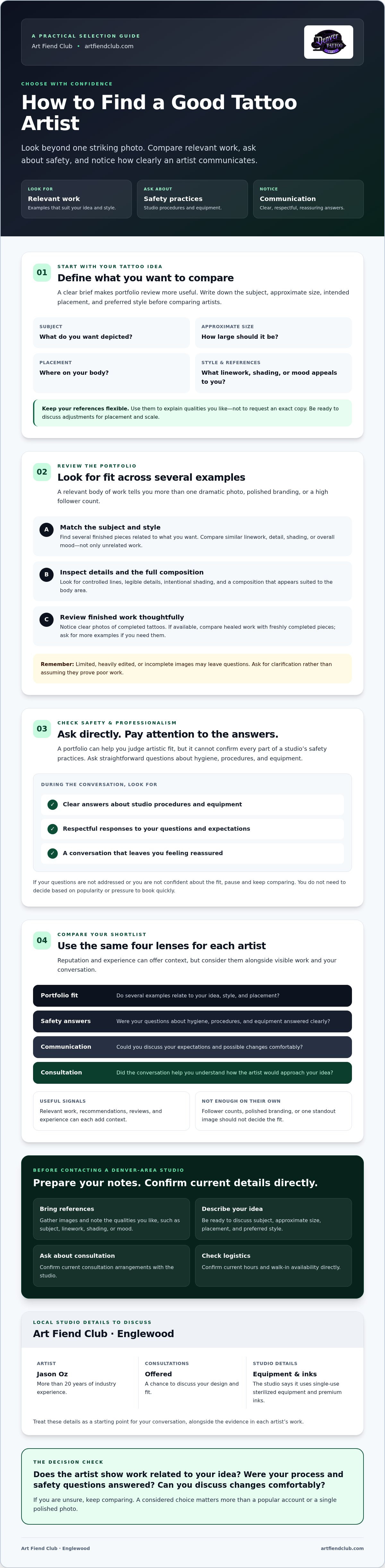
How to compare tattoo artists in Denver and decide who fits
Once you’ve identified artists whose work fits your idea, compare them using the same criteria. A short, consistent review makes it easier to notice meaningful differences without endlessly browsing profiles. Search across Denver and Englewood, and consider options in Lakewood, Highlands Ranch, and Littleton if those locations are convenient. Confirm each studio’s location and current availability directly. Don’t rank artists by popularity or price alone; focus on whether their work, process, and communication suit your design.
Use a short, consistent comparison checklist
Keep notes for a few suitable artists. Assess each one against your actual design brief, not someone else’s project. This simple table can help:
| What to compare | What to note |
|---|---|
| Relevant work | Are there several portfolio examples with a similar subject, style, or level of detail? |
| Safety answers | Were questions about equipment and studio procedures answered clearly and specifically? |
| Communication | Did the artist listen, explain design adjustments, and make room for questions? |
| Consultation fit | Did the discussion help clarify feasibility and expectations without pressure to proceed? |
Use brief notes such as “strong examples in this style” or “ask for more detail about preparation.” The goal isn’t to create a perfect scorecard. It’s to see which artist offers the strongest overall fit and where you still need answers.
Make a consultation useful without feeling pressured
Before a consultation, prepare your concept, preferred placement, approximate size, reference images, and questions. Explain which parts of the idea are essential and where you’re open to the artist’s input. A productive conversation can help clarify what may work at that scale and location, along with expectations for the design process. It can’t guarantee a particular result, so take time afterward to consider what you discussed.
For a focused list to guide the conversation, review these questions for a tattoo consultation. Denver Tattoo Company is located in Englewood, and its consultations give clients a chance to discuss design fit and expectations. Confirm current consultation arrangements directly. Comparing a small shortlist this way is a practical step in how to find a good tattoo artist.
Ready to discuss your idea with the studio? Review tattoo consultation information and bring your notes and references to the conversation.
Your next steps for finding a tattoo artist in Englewood or Denver
Turn your research into a clear, unhurried decision. Define the idea and placement, review portfolios for relevant work, ask how the studio handles safety, and discuss whether the design feels right with the artist. This sequence can make how to find a good tattoo artist less overwhelming, without letting popularity or urgency make the decision for you.
Prepare a clear first message to the studio
A concise message gives the studio enough context to suggest a useful next step. Include:
- Your design subject and the details that matter most to you.
- Approximate size and intended placement.
- Any preferred timing, framed as a request rather than an assumption about availability.
- A few reference images that communicate mood or style, not an exact tattoo to copy.
- A question about whether a consultation would be appropriate and what to do next.
For example, explain that you’re considering a botanical design on your upper arm, share a few references for the linework you like, and ask whether the idea could suit that placement. Leave room for the artist’s input. An original design may need changes in scale or composition to work well on the body.
Know when you have enough information to choose
You don’t need to answer every possible question before moving forward. You do need to feel that the portfolio includes relevant work, your safety and process questions have been addressed, and the artist has listened to your priorities. A consultation can help clarify feasibility and expectations, but it doesn’t oblige you to proceed.
Pause if important questions remain unanswered, communication feels uncomfortable, or the proposed design doesn’t reflect what matters to you. Ask for clarification or continue comparing options. A thoughtful choice should feel considered, not rushed.
For readers comparing Denver-area options, Denver Tattoo Company is in Englewood and is led by Jason Oz, who has more than 20 years of industry experience. The studio offers custom tattoo designs, tattoo consultations, and walk-in tattoos. Before visiting, confirm current hours and walk-in availability directly, and ask about consultation arrangements. Verify these details rather than relying on old listings.
If the studio’s work and communication seem aligned with your priorities, take a low-pressure next step: Explore Denver Tattoo Company. You can discuss a custom design or ask the studio about current walk-in options before deciding how to proceed.
Choose your next step with confidence
Finding the right artist comes down to more than a popular profile or a single impressive photo. Compare several examples that suit your design, ask clear questions about studio procedures, and notice whether the artist listens and explains your options. These are practical ways to approach how to find a good tattoo artist while keeping your priorities at the center.
For readers comparing Denver-area options, Denver Tattoo Company is in Englewood and is led by Jason Oz, who has more than 20 years of industry experience. The studio states that it uses single-use sterilized equipment and premium inks, and offers custom tattoo designs, consultations, and walk-ins. Confirm current safety procedures, consultation arrangements, hours, and walk-in availability directly before making plans.
A good choice should feel considered, with your design, questions, and comfort all taken seriously. If you’re ready to start a conversation, contact Denver Tattoo Company to discuss a custom tattoo design or ask about current walk-in options. Take your time, ask what you need to ask, and move forward when the fit feels right.
Frequently Asked Questions
How do I know if a tattoo artist is good?
A good tattoo artist shows consistent skill in work relevant to your design, follows clear safety procedures, and communicates openly. Review several finished pieces that match your intended style, subject, and placement. Ask how equipment and work surfaces are handled, and notice whether the artist answers without rushing you. Experience can be a useful trust signal, but it should support, not replace, evidence of fit and a comfortable conversation.
Should I choose a tattoo artist based on their portfolio or reviews?
Use both, but give the portfolio more weight when judging whether an artist’s style suits your design. Look for multiple examples with similar subject matter, scale, and execution. Reviews can offer context about communication and professionalism, but they can’t show whether the artist can create the work you have in mind. Consider reviews alongside portfolio evidence, safety answers, and how clearly the artist discusses your questions.
What should I ask a tattoo artist before getting tattooed?
Ask whether the artist has examples relevant to your idea and how they might adapt the design to your chosen placement and size. You can also ask which items are single-use, how reusable equipment is handled, and how the tattoo area is prepared. Clarify what to expect during the session and what the next step is. Clear, unpressured answers help you decide whether you’re comfortable proceeding.
How can I tell if a tattoo studio is clean and safe?
Notice whether the studio and work area appear orderly, but remember that appearance alone can’t confirm sterilization procedures. Ask how the artist prepares surfaces, handles single-use items, and manages reusable equipment. A professional should explain their procedures clearly and take reasonable questions seriously. Avoid relying on promises of a risk-free procedure. If key details remain unclear, pause and seek answers before deciding.
Is it okay to bring reference pictures to a tattoo consultation?
Yes. Reference pictures can help communicate the mood, subject, or visual details you like. Bring a few examples and explain what matters to you, rather than asking the artist to copy another person’s tattoo exactly. Include your preferred placement and approximate size, too. The artist can discuss whether the concept suits that area and how it might be adapted into an original design.
Can I walk into a tattoo shop in Denver without an appointment?
Some studios accept walk-ins, but availability and current hours vary, so confirm directly before visiting. Denver Tattoo Company, located in Englewood, offers walk-in tattoos; contact the studio to check its current hours and availability. If you have a specific design or placement in mind, ask whether a consultation would be a better first step. Don’t assume an artist can begin a particular tattoo when you arrive.
How many tattoo artists should I compare before choosing?
There’s no required number. Compare a small shortlist of artists whose portfolios already show work relevant to your idea, then assess their safety answers and communication using the same criteria. If you’re looking locally, explore options in Denver, Englewood, Lakewood, Highlands Ranch, and Littleton, depending on what’s convenient. Keep searching if important questions remain unanswered, but don’t let endless browsing replace a careful decision.


