

What should you do after getting a tattoo when online instructions conflict and Colorado’s dry air and strong sun add another concern? The most useful tattoo aftercare advice is clear, consistent, and grounded in your artist’s instructions, not a mix of competing routines.
Redness, peeling, or tenderness can prompt questions about what is part of healing and whether your skin needs extra care in a dry climate. A simple routine can help you clean and protect fresh work without overcomplicating each step. Start with the instructions your artist gave you, since they reflect the dressing and process used for your tattoo.
This guide covers a practical approach to caring for a new tattoo, common changes to watch for, and signs that call for professional medical attention. It also explains how to limit dryness and sun exposure while your tattoo heals, so you can tell when to ask your artist a tattoo-specific question and when to contact a healthcare professional.
Key Takeaways
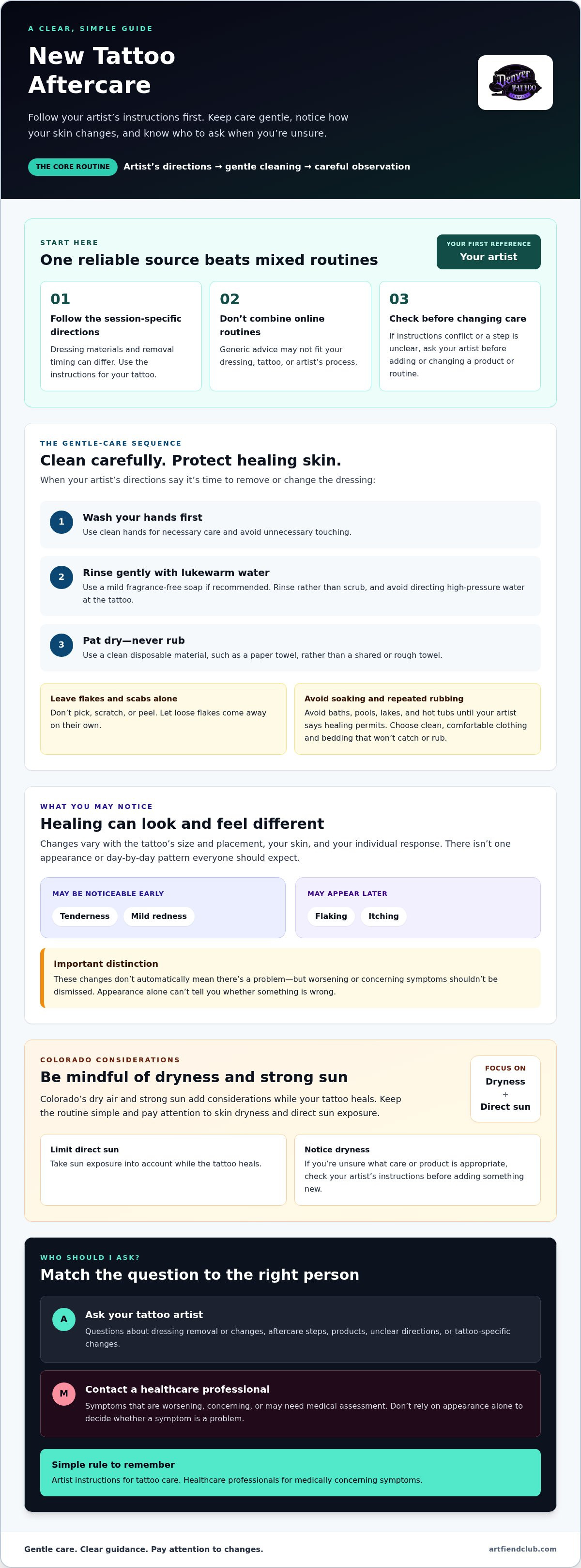
- Use your artist’s instructions as your first reference, especially for handling the dressing.
- Keep your routine simple: wash your hands, clean the tattoo gently, and pat it dry without rubbing.
- Know which healing changes may occur and when worsening symptoms call for medical attention.
- Adapt tattoo aftercare advice to Colorado by limiting direct sun and paying attention to skin dryness.
- Ask your tattoo artist about care instructions, and contact a healthcare professional about medically concerning symptoms.
Tattoo aftercare advice: what happens while your new tattoo heals?
Healing takes time, and visible changes vary from person to person. Tattoo aftercare means gently cleaning and protecting freshly tattooed skin while paying attention to how it changes. Tenderness, mild redness, and later flaking may occur, but appearance alone can’t tell you whether something is wrong.
A tattoo creates a skin injury, and the body responds as the area repairs. For a foundational overview of the tattoo healing process, including what happens to ink in the skin, see this general reference. For your own tattoo, follow the care directions you received and notice how your skin responds.
What should I expect during tattoo healing?
Some tenderness or mild redness may be noticeable early on. Flaking or itching may appear later. These changes don’t automatically indicate a problem, but they shouldn’t be used to dismiss symptoms that are worsening or concerning. Ask your artist about tattoo-specific care, or contact a healthcare professional about symptoms that may need medical assessment.
Healing can differ with the tattoo’s size and placement, your skin, and your individual response. A small design in one location may feel different from a larger piece elsewhere. There isn’t one appearance or day-by-day pattern that everyone should expect, so avoid comparing your healing skin too closely with someone else’s photos or timeline.
Why should artist instructions come first?
Online advice can conflict because aftercare isn’t always one universal routine. Artists may use different dressing materials and recommend different removal times based on the application. Someone else’s instructions may not suit your dressing or tattoo, so don’t combine online routines or assume a particular covering method or product is right for everyone.
Use your artist’s specific directions as your starting point. If you find a conflicting recommendation online, compare it with the instructions you received before changing your routine. Contact your artist if you’re unsure when to remove the dressing, how to care for the tattoo afterward, or what a direction means. Clear guidance for your session is more useful than trying to reconcile a collection of generic tips.
How to clean and protect a new tattoo in the first days
A simple routine is easier to follow than a stack of conflicting online tips. For tattoo aftercare advice in the first days, follow your artist’s directions for when to remove or change the initial dressing. Then keep each step gentle: wash your hands before touching the area, clean the tattoo carefully, and pat it dry without rubbing. Dressing materials and removal timing can differ, so don’t use someone else’s schedule as a substitute for your own instructions.
How should I wash a fresh tattoo?
When your artist’s instructions say it’s time to remove or change the dressing, wash your hands first. Use lukewarm water and, if recommended, a mild fragrance-free soap. Gently rinse the tattoo rather than scrubbing it, and avoid directing high-pressure water at the area. Pat it dry with a clean disposable material, such as a paper towel, instead of rubbing it with a shared or rough towel.
Use clean hands for necessary care and avoid unnecessary touching. If your instructions don’t cover a product or step, check with your artist rather than adding a new cleanser, ointment, or dressing routine based on a generic recommendation. The U.S. Food and Drug Administration also provides general information about tattoo safety risks. This information isn’t a substitute for personalized aftercare instructions or medical advice.
What should I avoid during early healing?
Leave flakes and scabs alone, even if they catch on clothing or feel tempting to pick. Pulling at healing skin can irritate the area, so let loose flakes come away on their own rather than scratching or peeling them. If you’re uncertain about a change, ask your artist instead of trying to correct it yourself.
Keep the tattoo out of soaking water, including baths, pools, lakes, and hot tubs, until your artist says healing permits. Brief, gentle washing is different from prolonged soaking. Choose clean, comfortable clothing and bedding that won’t repeatedly rub the area or catch on flakes. Avoid tight or abrasive fabric over the tattoo when possible, and take care when dressing and undressing.
If your instructions seem incomplete or conflict with advice you’ve found elsewhere, pause before changing your routine and contact your artist for clarification. A tattoo consultation is also a good time to ask care questions before a session, so you know which instructions to follow afterward.
Peeling, redness, and itching: what can be normal during tattoo healing?
Healing skin can change in appearance, and mild itching or flaking may occur, though not everyone experiences the same symptoms. These signs alone can’t confirm whether a tattoo is healing normally. Follow your artist’s care instructions, avoid irritating the area, and pay attention to whether symptoms are easing or getting worse. Good tattoo aftercare advice includes both gentle care and knowing when to seek professional help.
Is tattoo peeling and itching normal?
Some people notice light flaking or itching as their skin heals. Don’t scratch, peel, or pull at attached skin or scabs. Keep care gentle and follow your artist’s directions rather than adding products or changing your routine to respond to every new sensation. If itching or flaking intensifies, feels unusual, or worries you, ask a healthcare professional for an assessment.
When should I be concerned about tattoo redness?
Mild redness or irritation may occur early, but worsening or spreading redness, increasing pain, swelling, unusual discharge, or fever can be warning signs that warrant prompt medical advice. These symptoms don’t establish a diagnosis, and a tattoo artist can’t assess medical concerns. Contact a healthcare professional if symptoms are severe, worsening, or concerning. Cleveland Clinic’s tattoo aftercare instructions also explain what to watch for and when to seek medical care.
| What you notice | Sensible care | When to ask for help |
|---|---|---|
| Mild itching or light flaking | Follow your artist’s instructions; don’t scratch or pick. | Ask a healthcare professional if it intensifies, seems unusual, or concerns you. |
| Some redness or tenderness early on | Keep the area clean and handle it gently as directed. | Seek medical advice if redness spreads or symptoms worsen or become severe. |
| Increasing swelling, pain, unusual discharge, or fever | Don’t try to diagnose or treat the cause yourself. | Contact a healthcare professional promptly for assessment. |
A change in appearance doesn’t automatically mean something is wrong, but worsening symptoms shouldn’t be brushed off as routine healing. If you’re unsure about a tattoo-specific care step, your artist can clarify their instructions. For symptoms that may signal a medical issue, contact a healthcare professional rather than relying only on studio guidance.
Tattoo aftercare in Colorado: protect healing skin from dryness and sun
Colorado’s dry conditions and strong sun are practical considerations while a tattoo heals, but they won’t affect everyone’s skin in the same way. Whether you’re in Denver, Englewood, Lakewood, Highlands Ranch, or Littleton, keep your routine simple: follow your artist’s care instructions, avoid direct sun on the healing tattoo, and notice if outdoor conditions leave the area feeling uncomfortable. You don’t need to guess at a special routine based on altitude or location alone.
How can Colorado’s climate affect tattoo aftercare?
Dry air may leave skin feeling tight or uncomfortable, while sun can irritate healing skin. These are possibilities, not guarantees. Local humidity, altitude, and UV exposure vary with conditions and location, so avoid broad assumptions about what you personally will experience. Check current weather and UV information when planning time outside, then use your artist’s instructions to guide tattoo-specific protection.
If dryness concerns you, don’t add a new product or change how you care for the tattoo without checking that it fits your artist’s directions. Protect the area from direct sun with shade or loose clothing that doesn’t rub. Follow your care instructions if they address how to protect the tattoo outdoors.
Can I go outside or exercise with a new tattoo?
Being outside isn’t automatically off limits, but plan around exposure and friction. Choose shade when possible, avoid direct sun on healing skin, and wear clean, comfortable clothing that won’t repeatedly rub the area. Activities that cause heavy sweating, pressure, or repeated movement across the tattoo may be irritating, so consider how the activity and clothing will affect the specific placement.
There’s no single return-to-exercise or outdoor-activity schedule that suits every tattoo. Timing depends on the design’s placement, the activity, your skin, and your artist’s instructions. Ask your artist before returning to demanding hikes, workouts, or other activities that may expose the tattoo to sun or friction. Don’t use sunscreen on healing skin unless your artist says it’s appropriate for your situation.
Once the tattoo has healed, sun protection remains part of preserving its appearance. For care beyond the initial healing period, read this guide to long-term tattoo care in Colorado. For additional guidance on adapting care to your plans, explore tattoo care resources and keep your artist’s instructions as your first reference.
When to contact your tattoo artist or a healthcare professional
Good tattoo aftercare advice includes knowing who can answer which questions. Your tattoo artist can clarify the care instructions they gave you and explain details related to the dressing or application. A healthcare professional is the right person to assess symptoms that are severe, worsening, or medically concerning. If you’re unsure which kind of help you need, don’t let uncertainty delay care when symptoms feel urgent.
Should I contact my tattoo artist about healing?
Reach out to your artist if you’re unclear about when to remove a dressing, how to clean the tattoo, or whether an activity fits your care instructions. Be specific: describe what you’re noticing, when it began, and which step of the instructions is confusing. Your artist can provide tattoo-specific clarification, but can’t diagnose or treat a medical condition.
For broader context on professional practices, read about safe tattoo studio standards. Keep that information separate from advice about symptoms: questions about studio procedures and questions about your health may need different kinds of support.
When should I seek medical advice?
Contact a healthcare professional promptly if symptoms are severe, worsening, unusual, or causing significant concern. Don’t rely on an artist to decide whether a medical problem is present, and don’t wait for a reply to an aftercare question if you feel you need clinical assessment. If symptoms seem urgent, seek urgent medical care.
While waiting for appropriate guidance, avoid picking at the area or adding treatments that weren’t recommended for you. Share clear details with the clinician, including when the tattoo was done, how symptoms have changed, and what products or care steps you’ve used. This can help them assess your concern, but it doesn’t replace their judgment.
For questions about the studio’s aftercare instructions or the tattoo’s application, Art Fiend Club can clarify the guidance provided after your session. For symptoms that may need medical attention, contact a healthcare professional instead.
Care for your new tattoo with confidence
A steady routine makes healing easier to approach: follow your artist’s instructions, clean the tattoo gently, and avoid picking or exposing healing skin to direct sun. Mild flaking or itching may occur, but symptoms that worsen or feel medically concerning should be assessed by a healthcare professional. Colorado’s dry conditions are another reason to pay attention to comfort without adding unconfirmed steps to your care plan.
For tattoo-specific questions, Denver Tattoo Company can help clarify the instructions provided after your session. Led by Jason Oz, who has more than 20 years of industry experience, the Englewood tattoo-only studio offers custom tattoo designs, walk-in tattoos, and consultations. The studio emphasizes single-use sterilized equipment and premium inks. Your artist’s guidance remains the first reference for care.
If you’re planning a tattoo or need clarification on an instruction from your session, contact Denver Tattoo Company. For symptoms that may need medical assessment, contact a healthcare professional.
Frequently Asked Questions
How long does a tattoo take to heal?
A tattoo may look healed on the surface within 2 to 4 weeks, while deeper skin repair can take 3 to 4 months. The timeline varies with the tattoo, its placement, your skin, and individual healing. Keep following your artist’s aftercare instructions even as the surface looks better. Don’t assume a tattoo is fully healed just because flaking or redness has stopped.
Is peeling normal after getting a tattoo?
Light flaking can happen as a tattoo heals, though it doesn’t occur the same way for everyone. Let loose flakes come away on their own, and don’t scratch, peel, or pull at attached skin or scabs. Keep care gentle and follow your artist’s instructions. If peeling comes with worsening redness, increasing pain, or other concerning symptoms, contact a healthcare professional for assessment.
Can I shower after getting a tattoo?
Follow your artist’s instructions about the initial dressing and when it can be removed or changed. Once washing is appropriate, a brief shower with lukewarm water is generally different from soaking the tattoo. Clean gently as directed, avoid scrubbing or aiming high-pressure water at the area, and pat it dry without rubbing. Ask your artist if your dressing instructions leave you uncertain about showering.
Can I swim with a new tattoo?
Avoid swimming and soaking a healing tattoo in pools, lakes, hot tubs, or baths until your artist says it’s appropriate. Prolonged immersion is different from gentle washing and may irritate healing skin. There isn’t one schedule that fits every tattoo, so don’t rely on a fixed number of days from an online source. Check with your artist before returning to swimming or water activities.
What should I put on a new tattoo?
Use the products and steps recommended by your artist rather than combining advice from different sources. Mild, fragrance-free soap and lukewarm water are common guidance for gentle washing, but your artist’s instructions should come first. If moisturizer is part of your care routine, ask which type and how to apply it. Avoid adding unfamiliar products or applying more than directed, especially if your skin becomes irritated.
What happens if my tattoo becomes increasingly red or painful?
Contact a healthcare professional promptly if redness or pain is worsening, severe, spreading, or accompanied by symptoms that concern you. These signs can’t be diagnosed through an article or by a tattoo artist. Don’t wait for studio guidance if you feel you need medical assessment, and seek urgent care for urgent symptoms. Your artist can still clarify application or aftercare details, but can’t diagnose or treat a medical condition.
Can Colorado’s dry climate affect tattoo healing?
Dry conditions may make healing skin feel tight or uncomfortable, but people’s experiences vary. Keep your care routine aligned with your artist’s instructions, and avoid adding products without checking first. If you’re in Denver, Englewood, Lakewood, Highlands Ranch, or Littleton, plan outdoor time to limit direct sun and clothing friction on the tattoo. Ask your artist how to protect your specific tattoo while it heals.


