

Smothering a fresh tattoo under heavy petroleum ointment is one of the quickest ways to suffocate healing skin and blur fine line work. Choosing the best tattoo aftercare products 2026 has to offer isn't about grabbing whatever generic moisturizer sits on your bathroom shelf; it demands breathable, stage-matched skincare calibrated to your body and your climate.
You have invested hours in the chair and significant endurance into your new piece. The anxiety of compromising that custom artwork through rough scabbing, patchy ink loss, or stinging irritation from artificial fragrances is completely understandable, particularly in dry, high-altitude environments where skin cracks easily. You shouldn't have to rely on confusing labels or trial-and-error balms to protect your skin health. In this expert guide, we break down the tested soaps, medical-grade films, and clean balms designed to guide your ink safely from day one to fully healed vibrance.
Key Takeaways
- Choosing the best tattoo aftercare products 2026 recommends requires matching specific formulas to distinct healing phases, transitioning smoothly from fluid management to breathable hydration.
- Gentle, fragrance-free cleansers protect your skin barrier while clearing away plasma and bacteria without the harshness of traditional drying soaps.
- Medical-grade barrier films and breathable botanical salves serve distinct lifestyle needs, and understanding how each operates prevents trapped moisture and rough scabbing.
- Preserving fine lines and deep saturation over time demands a shift to daily barrier moisturizers and mineral-based UV protection that shield pigment from cellular breakdown.
- Successful healing starts during your session, where sterile studio practices and disciplined needle depth create the clean foundation required for lasting ink clarity.
Essential Tattoo Healing Stages and Aftercare Categories for 2026
A fresh tattoo is an open puncture wound suspended across thousands of microscopic dermal penetrations. Treating it like ordinary dry skin invites patchy pigment retention, heavy scabbing, and prolonged irritation. Evaluating the best tattoo aftercare products 2026 offers requires understanding that your skin's physiological needs change every few days during recovery.
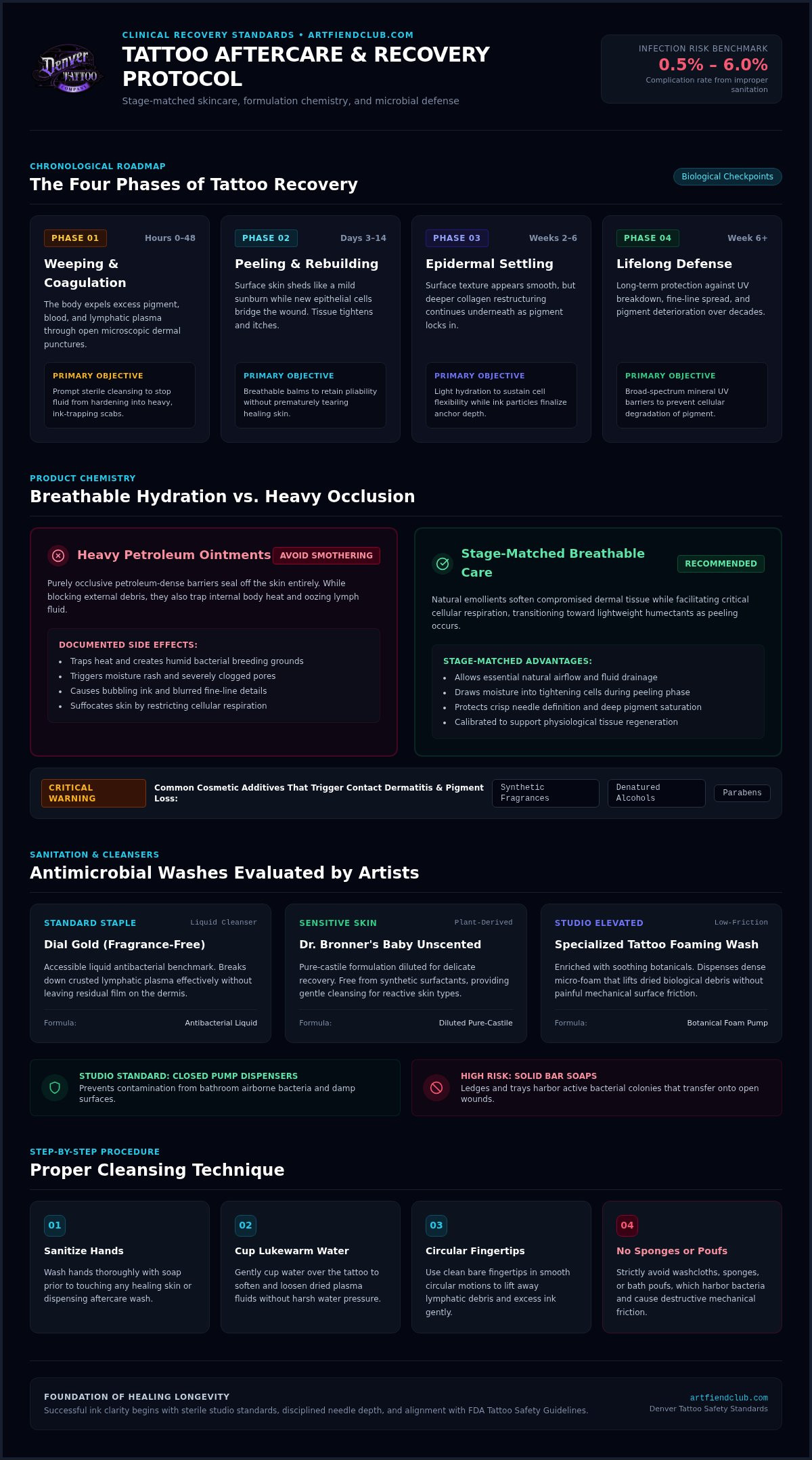
The Four Phases of Tattoo Recovery
Tattoo recovery is not a static state; it moves through four distinct biological checkpoints:
- Phase 1: Weeping and Coagulation (Hours 0 to 48). Your body sheds excess pigment, blood, and lymphatic plasma. Prompt, sterile cleansing prevents this fluid from hardening into thick, ink-trapping crusts. Recognizing this phase of the clinical tattoo healing process ensures your dermis stabilizes without early trauma.
- Phase 2: Peeling and Epithelial Rebuilding (Days 3 to 14). Dead surface skin flakes away much like a mild sunburn. The tattooed area often tightens and itches as new tissue bridges the wound. Breathable balms keep the skin pliable without sloughing off healing skin prematurely.
- Phase 3: Deep Epidermal Settling (Weeks 2 to 6). The surface appears smooth, but deeper collagen restructuring continues underneath. Light daily hydration maintains flexibility while ink particles lock into the dermis.
- Phase 4: Lifelong Pigment Defense (Week 6 and Beyond). Broad-spectrum UV barriers protect delicate pigment particles from solar breakdown and premature line spread over decades.
How to Match Formulation Chemistry to Healing Milestones
Matching product chemistry to your specific stage determines whether your lines heal crisply or bleed out. Purely occlusive barriers, such as petrolatum-dense ointments, trap moisture completely. While that barrier blocks external debris, it also traps heat and weeping lymph fluid. This creates a humid breeding ground for bacteria, frequently causing moisture rash, clogged pores, and bubbling ink.
Early healing demands breathable natural emollients that soften tissue while still allowing cellular respiration. As active peeling starts, transition toward lightweight humectants that draw moisture into tightening cells. Strictly avoid synthetic fragrances, denatured alcohols, and parabens; these common cosmetic ingredients trigger contact dermatitis and inflammatory pigment loss. Choosing the best tattoo aftercare products 2026 recommends means selecting clean, stage-appropriate formulas calibrated to support natural tissue regeneration.
The Best Antimicrobial Cleansers and Tattoo Soaps of 2026
Washing away plasma, sweat, and environmental debris forms your first line of defense against infection. Microbial complications affect between 0.5% and 6% of tattooed individuals, almost always stemming from poor initial sanitation or contaminated shower environments. Choosing the best tattoo aftercare products 2026 provides means selecting a cleanser that neutralizes pathogens without stripping the skin's protective acid mantle. Solid bar soaps resting on damp shower ledges harbor bacteria; closed pump-dispensed liquid or foaming formulas remain the studio standard for clinical safety.
Top-Rated Cleansers Evaluated by Professional Artists
Reliable wound cleansing requires gentle efficacy rather than abrasive stripping. Fragrance-free liquid antibacterial staples, like standard Dial Gold, remain accessible choices for breaking down crusted plasma without leaving residue. For sensitive or reactive skin, diluted Dr. Bronner's Baby Unscented pure-castile soap offers a gentle, plant-derived alternative free from synthetic surfactants. Specialized tattoo foaming washes elevate healing further by integrating soothing botanicals, allowing the foam to lift biological debris without creating painful mechanical friction. Following the FDA Tattoo Safety Guidelines begins with pure formulations. That is why resident tattooers at a safe tattoo studio Denver clients trust consistently advise using neutral antiseptic cleansers that prevent contact dermatitis before it starts.
Proper Cleansing Technique to Avoid Irritation
Proper technique matters just as much as formulation chemistry. Wash your hands thoroughly with soap before touching healing skin. Cup lukewarm water over the tattoo to loosen dried fluids, and use your clean fingertips in smooth circular motions. Avoid washcloths, sponges, or bath poufs; their abrasive surfaces snag delicate epithelial cells and introduce trapped shower bacteria. Rinse completely until the skin loses its slick feel.
Pat the surface dry using a fresh, single-use paper towel rather than a household bath towel, which often carries lingering fabric softeners and lint. Wash your piece two to three times daily during the initial healing window. If you are planning an intricate custom piece, scheduling a consultation with the artists at Art Fiend Club allows you to align your hygiene routine with your specific design and placement. Committing to the best tattoo aftercare products 2026 features ensures your fresh artwork remains clean, calm, and set up for clean saturation.
Top Healing Balms, Salves, and Medical Barrier Films Compared
Modern aftercare divides primarily into two camps: medical-grade adhesive barriers and breathable botanical salves. Heavy petrolatum ointments are increasingly falling out of favor among seasoned tattooers because they smother tissue. Selecting the right medium depends entirely on your lifestyle, adhesive tolerance, and personal healing speed.
| Product Category | Breathability | Application Protocol | Best Suited For |
|---|---|---|---|
| Medical Barrier Films (Saniderm, Recovery Derm Shield) | High (gas-permeable) | Single application worn 3 to 5 days continuously | Active routines, high-friction clothing, weeping management |
| Botanical Balms (Hustle Butter Deluxe) | High | Micro-thin layer 2 to 3 times daily | Adhesive-sensitive skin, dry climates, early peeling |
| Emollient Ointments (Aquaphor) | Moderate to Low | Sheer layer 2 times daily for 48 hours only | Severe surface tightness, traditional wet-healing routines |
The Best Breathable Adhesive Films (Second-Skin Dressings)
Polyurethane dressings like Saniderm, Recovery Derm Shield, and Tegaderm lock in your body's natural healing enzymes while locking out airborne pathogens. Liquid pooling beneath the plastic is completely normal during the first 24 to 48 hours. If fluid breaches the adhesive seal or outside moisture leaks in, remove the wrap immediately to avoid sealing bacteria against broken skin.
Never peel dry film upward like a bandage. Step into a warm shower, loosen an edge, and pull the film gently downward along the plane of your skin in the direction of hair growth. This wet-stretch technique prevents lifting fresh pigment crusts or tearing fragile epidermal cells.
Top Natural Balms and Ointment Alternatives
If you have sensitive skin or react poorly to medical adhesives, plant-derived balms represent some of the best tattoo aftercare products 2026 has brought to the forefront. Formulations like Hustle Butter Deluxe substitute heavy mineral oils with unrefined shea butter, mango butter, and rice bran oil. These natural lipophilic bases melt smoothly on skin contact, minimizing friction during application.
Legacy ointments like Aquaphor still deliver intensive hydration, but they require extreme discipline. Apply only a translucent micro-layer so the skin looks slightly satin rather than wet or greasy. Checking formulations against established FDA tattoo safety guidelines helps you avoid unlisted irritants, ensuring your skin receives the essential cellular oxygenation needed to lock in crisp lines.
Best Daily Moisturizers and UV Sunscreens for Long-Term Ink Clarity
Your finished tattoo rests permanently beneath a living, shedding window of epidermis. When surface skin dries out, light scatters irregularly across dead skin cells, turning saturated blacks into chalky grays. Ultraviolet radiation inflicts even deeper damage: solar rays shatter dense pigment clusters in the dermis, allowing your immune system to sweep the broken particles away. Preserving crisp line work demands transitioning from short-term wound recovery to daily barrier defense.
Top Daily Unscented Lotions for Settled Ink
Once active peeling resolves, replace thick balms with lightweight lotions rich in ceramides and hyaluronic acid. Trusted staples like CeraVe Daily Moisturizing Lotion, Lubriderm Daily Moisture Unscented, and Aveeno Daily Moisturizing Lotion restore essential lipids without clogging pores. These non-comedogenic formulas reinforce the skin's moisture barrier, keeping dermal pigment visible and crisp through a hydrated outer layer.
Environmental conditions dictate hydration needs. In arid or elevated regions, dry air siphons moisture straight out of healing tissue. Reviewing specialized guidelines for long term tattoo care Colorado collectors follow will help you prevent the chronic moisture loss and cracking common to thin, high-altitude air.
The Best Sunscreens to Prevent Ink Fading
Solar exposure represents the single greatest threat to tattoo longevity. Among the best tattoo aftercare products 2026 dermatologists and artists recommend, broad-spectrum mineral sunscreens rated SPF 30 to SPF 50 offer unmatched defense. Formulations built around pure zinc oxide or titanium dioxide sit directly on top of the skin, reflecting harmful UV rays away like microscopic mirrors.
Chemical sunscreens rely on ingredients like avobenzone and oxybenzone, which absorb UV energy and convert it into heat within the skin. This heat reaction often triggers contact dermatitis or allergic flare-ups across sensitive tattooed areas. Apply mineral physical blocks liberally thirty minutes before sun exposure, and reapply every two hours during prolonged outdoor activity.
Commitment to aftercare protects the artistry for a lifetime. If you are ready to start a new project, book a tattoo consultation with our artists to discuss a custom design tailored to your body and lifestyle.
Professional Studio Standards: Maximizing Longevity for Custom Work
Even the best tattoo aftercare products 2026 can offer cannot rescue poorly inserted pigment or heavily traumatized skin. Proper recovery is fundamentally rooted in the technical craftsmanship delivered during your tattoo session. When an artist executes a piece with clinical discipline, the body encounters far less structural distress, paving the way for seamless epithelial repair.
Why Technical Artistry Matters Before Aftercare Even Starts
Tattooing requires precise needle depth into the upper dermis. If an artist pushes too deep, pigment disperses into the subcutaneous fat layer, generating permanent blowouts and heavy inflammatory weeping. Working too shallow results in rapid pigment loss during peeling. Overworking an area turns skin into raw scar tissue, multiplying scabbing severity.
Clean procedural safety matters just as much as needle hand speed. Strict single-use sterile needles, medical barriers over machine cords, and hospital-grade surface disinfectants prevent opportunistic bacteria from entering open tissue. The precision behind custom tattoo designs Denver collectors wear at Art Fiend Club reflects this discipline, ensuring every complex outline and rich shade heals cleanly from the base layer up.
A Step-by-Step Recovery Protocol from Jason Oz
With over 20 years of hands-on tattooing and wound-healing observation, Jason Oz recommends this straightforward timeline to eliminate guesswork:
- Day 1 to 3: Keep your studio dressing secured as directed. Once removed under lukewarm water, cleanse using your fingertips and an unscented foaming wash. Pat dry with paper towels. Apply a sheer, breathable balm only if dry-healing without film.
- Day 4 to 7: Flaking begins. Do not pick, peel, or scratch the edges. Wash twice daily and apply minimal moisturizer to alleviate surface tightness.
- Week 2 to 4: Transition completely to a ceramide-rich daily unscented lotion. Skin may appear shiny or slightly milky; this is normal secondary skin growth over settling ink.
Learn to differentiate normal healing sensations from complications. Mild redness, localized warmth, and dull soreness are expected during the first 48 hours. Spreading red streaks, persistent heat past day four, foul odor, or thick yellow discharge signal bacterial infection rather than routine irritation. Red bumps concentrated around hair follicles often indicate product over-application or pore blockage. Contact your artist directly whenever unexpected symptoms emerge before attempting unguided home treatments.
Protect Your Artistry With Stage-Matched Aftercare
Every tattoo represents an enduring collaboration between artist and collector. Healing that investment successfully means moving past heavy petroleum ointments and embracing breathable, stage-matched skincare. Relying on the best tattoo aftercare products 2026 highlights ensures your dermis regenerates without rough scabbing, preserving delicate details and rich saturation for decades to come. Pair gentle daily cleansing with disciplined mineral sun defense, and your body art will retain its clarity for a lifetime.
True ink longevity always begins with technical discipline in the studio chair. Led by Jason Oz with over 20 years of fine art and technical tattoo expertise, Art Fiend Club prioritizes hospital-grade sterilization and 100% single-use, disposable equipment. You don't have to navigate recovery alone; you receive dedicated aftercare guidance customized directly to your skin and placement. When you are ready to start your next piece, consult with Jason Oz at Art Fiend Club to bring your custom vision to life with master-level precision.
Frequently Asked Questions
Can I use regular Vaseline or pure petroleum jelly on my new tattoo?
No, you shouldn't use pure petroleum jelly on fresh ink. Vaseline creates an impermeable occlusive barrier that completely blocks oxygen from reaching the wound bed. This trapped heat and weeping fluid creates an ideal environment for bacterial proliferation, which often triggers ink bubbling and patchy healing. Instead, the best tattoo aftercare products 2026 artists recommend utilize breathable natural emollients or gas-permeable films that protect while permitting essential cellular respiration.
How long should I keep a second-skin adhesive film on my fresh ink?
Most artists recommend leaving a medical-grade barrier film on for three to five days. The initial build-up of dark fluid beneath the plastic contains healing enzymes and white blood cells that accelerate tissue regeneration. However, if the seal breaches, fluid leaks, or external shower water seeps beneath the edges, remove the film immediately under lukewarm running water to prevent trapping bacteria against the open dermis.
What happens if I accidentally put scented body lotion on a healing tattoo?
Scented lotions contain synthetic fragrances and chemical stabilizers that frequently trigger contact dermatitis on broken skin. You will likely experience immediate stinging, localized hives, or inflamed redness that can compromise delicate line work. If this happens, don't panic. Gently wash the tattoo right away using lukewarm water and a fragrance-free cleanser, pat it dry with a clean paper towel, and leave it bare for several hours to let the inflammation subside.
Is it normal for a new tattoo to peel and flake like a sunburn?
Yes, peeling and flaking are normal milestones of the regenerative cycle, typically starting around day three or four. As underlying dermal layers stabilize, the damaged surface epidermis sheds colored flakes of dead skin. Resist the urge to pick, scratch, or scrub these flakes off ahead of time. Premature removal pulls unhealed ink particles from the dermis, leaving patchy spots. Let flakes fall away naturally during gentle washing.
How much aftercare product should I apply per application to avoid smothering?
Apply only a sheer, translucent glaze that leaves a faint satin sheen rather than a glossy or wet residue. A pea-sized dab is generally enough to cover an entire forearm piece. Excess ointment clogs hair follicles and produces white pustules, suffocating the tissue. If your tattoo looks slick or sticks to clothing fifteen minutes after application, you have used too much. Dab the excess away gently with a clean paper towel.
Can I apply sunscreen to a fresh tattoo if I have to go outside?
Never apply sunscreen to a fresh tattoo during the first three to four weeks of recovery. Sunscreens contain active chemical blockers or dense minerals meant for intact skin; applying them to an open wound invites stinging, irritation, and possible infection. To protect new ink outdoors, wear loose-fitting, dark, UV-protective clothing or stay under physical shade until the skin completely finishes peeling and the surface has closed.
What is the best way to care for a new tattoo in dry, high-altitude climates?
Arid climates across Denver, Englewood, and Littleton pull moisture rapidly from healing skin, increasing the risk of painful cracking. Collectors in Lakewood and Highlands Ranch should avoid heavy ointments and instead apply lightweight, ceramide-based lotions in micro-doses three to four times daily. Using a clean bedroom humidifier helps counteract dry air. Pairing these habits with the best tattoo aftercare products 2026 provides will keep your skin flexible without suffocating healing ink.


