
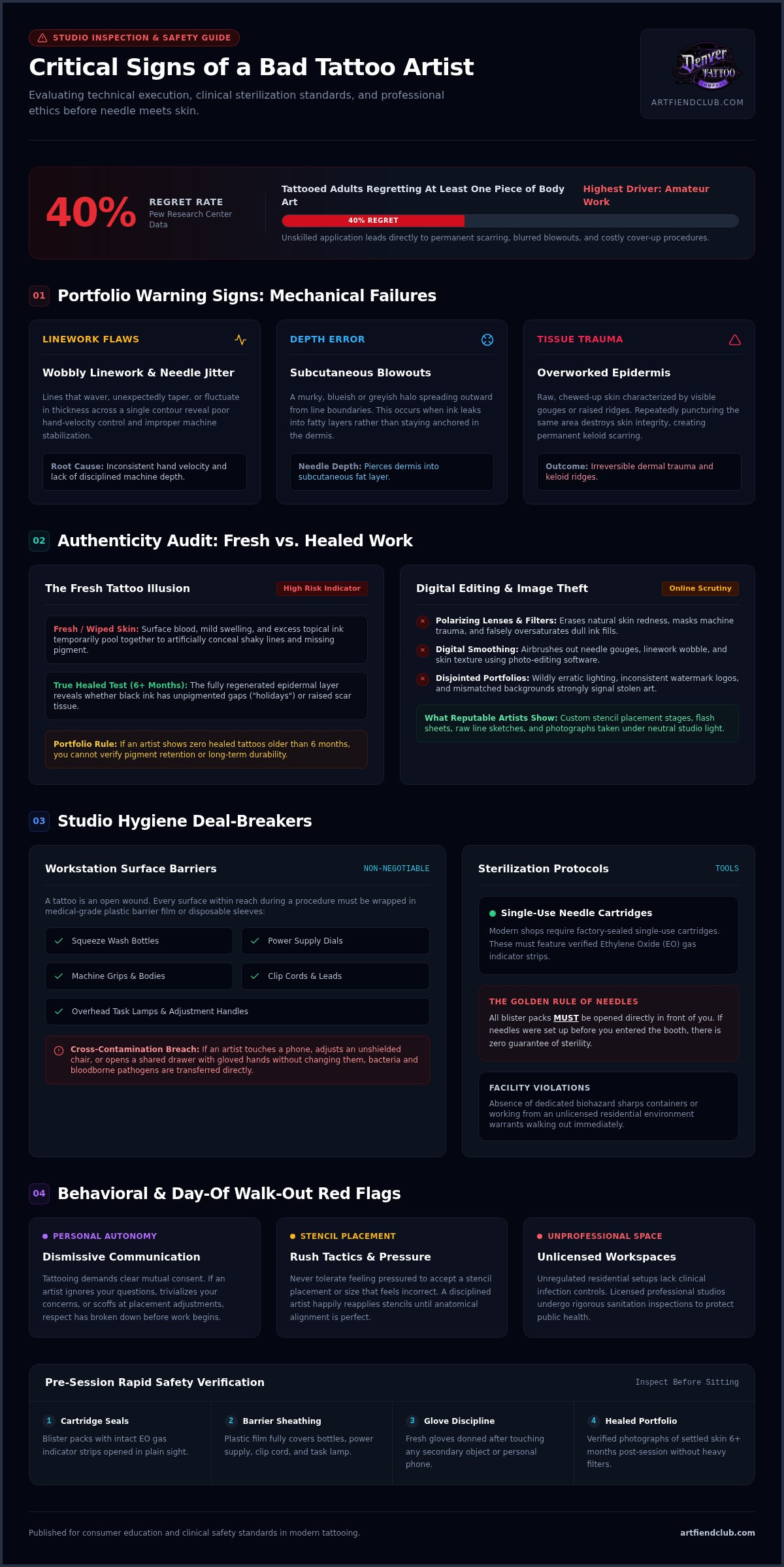
According to Pew Research Center data, up to 40 percent of tattooed adults regret at least one piece of their body art, with amateur work driving the highest dissatisfaction. Placing your trust in someone with a tattoo machine is an intimate decision, and anxiety around scarred skin, blurred blowouts, or cross-contamination is entirely valid. Learning how to identify the critical signs of a bad tattoo artist before sitting in the chair protects not just the appearance of your skin, but your long-term health.
You shouldn't have to guess whether a studio follows strict sanitation standards or whether an online portfolio relies on heavy contrast filters and digital smoothing. You will learn how to verify authentic healed craftsmanship, identify non-negotiable hygiene protocols like sealed single-use cartridges, and spot behavioral red flags that signal an unprofessional environment. Here is your essential checklist for evaluating any studio with clarity, giving you the confidence to enjoy your session or walk away without hesitation.
Key Takeaways
- Spot technical execution flaws in online portfolios, from inconsistent linework to heavily filtered images that conceal a lack of healed work.
- Recognize the critical signs of a bad tattoo artist through hygiene red flags, including cross-contamination and unsealed disposable equipment.
- Protect your personal autonomy by identifying dismissive communication, rush tactics, or pressure during design consultations and stencil placement.
- Use a practical day-of checklist to verify clinical sterilization standards and workstation hygiene before sitting in the chair.
- Learn how to evaluate veteran experience and style specialization to ensure your tattoo heals cleanly and stands the test of time.
Portfolio Warning Signs: How to Spot Poor Technical Tattooing
A tattoo portfolio is a direct record of an artist's mechanical control and discipline. Spotting the foundational signs of a bad tattoo artist begins with looking past aesthetic style and scrutinizing the raw mechanics of application. Clean tattooing demands steady hand speed, correct machine voltage, and uniform needle depth. When an artist lacks technical discipline, telltale mechanical errors quickly emerge across their work:
- Wobbly Linework and Needle Jitter: Lines that waver, taper unexpectedly, or shift thickness along single contours reveal inconsistent hand velocity or improper machine stabilization.
- Subcutaneous Blowouts: A murky, blueish halo spreading around line edges indicates the needle penetrated past the dermis into the underlying subcutaneous fat layer.
- Overworked Epidermis: Raw, chewed-up skin with visible gouges or raised ridges indicates the artist repeatedly passed over the same tissue, creating permanent scar tissue.
These structural flaws highlight the vast difference between untrained operators and disciplined practitioners grounded in professional tattoo artist training and apprenticeships.
The Problem with Missing Healed Work
Freshly completed tattoos look deceptively crisp. Surface blood, slight swelling, and excess topical ink temporarily fill in uneven spots and mask needle trauma. True craftsmanship only reveals itself after the epidermal layer fully regenerates.
If a gallery features only glistening, freshly wiped skin, treat it as one of the clearest signs of a bad tattoo artist. Without verified healed work, you cannot evaluate pigment retention or structural longevity. A fully settled piece, ideally photographed six months or more post-session, exposes whether an artist packs solid black without "holidays" (unpigmented gaps) or leaves behind raised, keloid scar tissue.
Digital Manipulation and Stolen Art Red Flags
Social media makes it easy to disguise technical deficiencies. Unethical practitioners frequently use polarizing lens attachments, high contrast, and aggressive digital smoothing to erase redness, hide shaky lines, and artificially saturate dull color fills.
Beyond digital editing, image theft remains an ongoing hazard. Watch for galleries with wildly disjointed photography styles, varying studio backdrops, and erratic watermark placements. Reputable artists openly document their creative process, displaying original flash sheets, custom stencil placement stages, and rough line sketches alongside clean, unaltered photographs taken in neutral studio light.
Hygiene and Sanitation Deal-Breakers in the Tattoo Studio
A tattoo is an open wound, making clinical hygiene just as critical as creative talent. While aesthetic flaws lead to regret, contaminated work environments carry risks of severe bacterial infections and bloodborne pathogens. Recognizing the hygiene-related signs of a bad tattoo artist will protect your health before needle ever meets skin.
Amateur setups and poorly managed shops often neglect the clinical precautions detailed in Mayo Clinic's tattoo safety and sanitation precautions. If you spot unwrapped cords, missing biohazard containers, or an artist working out of a residential space, step away immediately. Licensed professional studios operate under strict infection-control standards where sterile boundaries are non-negotiable.
Essential Cross-Contamination Protocols
Cross-contamination occurs in seconds. It happens whenever an artist touches an unsanitized surface with gloved hands, then resumes tattooing your skin without changing those gloves. Every surface within reach during a procedure must be shielded.
Look closely at the workstation. Squeeze bottles, power supply dials, clip cords, machine grips, and task lamps must be covered in disposable barrier film or plastic sleeves. If an artist adjusts their personal phone, touches their chair, or reaches into a shared drawer while wearing procedure gloves, cross-contamination has occurred. Exploring how a dedicated safe tattoo studio enforces medical-grade barrier standards shows you exactly what a clean setup looks like.
Sterilization Equipment and Single-Use Tools
Modern tattoo studios rely heavily on single-use, pre-sterilized disposable cartridges. These needles must be sealed in individual blister packs and opened directly in front of you. If an artist sets up needles before you sit down, you have no way to verify their sterility.
- Single-Use Cartridges: Ethylene oxide (EO) gas indicator strips on the packaging must show confirmed sterilization before the blister pack is broken.
- Sharps Disposal: Used needles and disposable prep razors must go directly into a rigid, labeled biohazard sharps container within arm's reach of the chair.
- Autoclave Testing: Studios utilizing reusable steel grips must maintain visible, up-to-date biological spore test logs confirming their autoclave functions correctly.
Professional skin art requires an uncompromising commitment to client safety. Scheduling an in-person tattoo consultation at a dedicated space like Art Fiend Club gives you a firsthand look at transparent sanitation protocols in action before you ever commit to ink.
Behavioral Red Flags: Communication, Consent, and Professionalism
Tattooing is a collaborative process built on clear communication and mutual trust. While mechanical proficiency and clinical hygiene are mandatory, professional conduct is just as revealing. Subtle behavioral lapses often serve as early signs of a bad tattoo artist long before any ink enters your skin. An artist should respect your autonomy, listen to your concerns, and maintain a calm, structured environment throughout the appointment.
The Danger of the Egotistical Artist
A true craftsman acts as a creative guide, not an authoritarian gatekeeper. If an artist reacts with hostility when you ask to adjust stencil placement by half an inch, take note. Pressure to enlarge a design, modify personal concepts without consent, or commit to an unfamiliar style caters to their ego rather than your vision. You live with the final result forever; you should never feel intimidated into settling.
Belittling your pain tolerance or dismissing your questions about the procedure creates an unsafe dynamic. A hostile environment makes it harder to speak up if you feel faint or need a brief pause. Reviewing what to ask during a tattoo consultation helps you vet an artist's temperament and ensure your creative goals align beforehand.
Intoxication and Environmental Chaos
Precision linework and accurate needle depth require peak physical stability and mental focus. Slurred speech, the smell of alcohol, bloodshot eyes, or trembling hands are immediate signs of a bad tattoo artist that justify walking away on the spot. Operating under the influence compromises judgment and ruins motor coordination.
Physical surroundings also reflect professional standards. Procedure areas must operate as controlled clinical environments. Frequent interruptions from wandering visitors, unrestrained pets, or people eating near setup trays violate safety codes and elevate infection hazards. As detailed in MedlinePlus tattoo health risks and safety precautions, unmonitored spaces drastically increase contamination risks. Selecting a quiet, focused tattoo only studio eliminates these chaotic disruptions, ensuring your session remains entirely dedicated to safe, meticulous craftsmanship.
The Tattoo Day Checklist: Immediate Walk-Out Red Flags
Walking into a studio should instill immediate confidence. When you arrive for an appointment, you have every right to evaluate the workspace before sitting down. Having an objective, step-by-step checklist helps you spot the operational signs of a bad tattoo artist without relying on gut instinct alone:
- Inspect the Facility and Documentation: Ensure the lobby and restrooms are clean. Look for clearly displayed municipal body art facility permits and state health licenses.
- Evaluate Station Surfaces: Confirm workstations feature non-porous stainless steel or medical-grade plastic, scrubbed with an EPA-registered hospital tuberculocidal disinfectant between appointments.
- Observe Hand Hygiene: Watch the artist wash their hands thoroughly before putting on a brand-new pair of nitrile gloves.
- Confirm Fresh Setups: All single-use needle cartridges and disposable ink caps must be arranged completely from scratch right in front of you.
- Verify Stencil Placement: Check the stencil in a full-length mirror while standing naturally, resting your limbs in relaxed posture to avoid distorted muscle flow.
Station Setup and Cleanliness Checkpoints
Every piece of equipment that cannot enter an autoclave must wear fresh protective plastic barrier film. Look closely at power pack knobs, wash bottles, and cords. If a machine wire rests directly against bare shop furniture without a disposable sleeve, the station is compromised.
Fabric chairs, wooden armrests, or open acoustic baffles near the procedure tray violate clinical safety codes because porous materials absorb fluids and resist chemical disinfection. Never allow a session to begin if ink caps appear pre-filled before your arrival. Pouring fresh pigment from the bottle into disposable caps must occur during your active setup.
Physical Discomfort and Pain Threshold Warnings
Tattoos naturally hurt, but the sensation should feel like steady scratching, not deep, tearing lacerations. Excruciating slicing sensations often mean an improper hand angle or excessive machine voltage is chewing through the skin. An artist who ignores your discomfort, mocks your pain tolerance, or denies reasonable requests for water breaks exhibits clear signs of a bad tattoo artist.
Forfeiting a deposit is inconvenient, but living with severe dermal scarring or managing prolonged medical treatment is far worse. If an artist dismisses your safety concerns or refuses basic hygiene protocols, stand up and walk away. When you are ready to work with veteran craftsmen who respect your safety, book a consultation with Denver Tattoo Company to experience an environment dedicated entirely to sterile, custom tattoo work.
How to Choose a Reputable Artist and Avoid Costly Cover-Ups
Preventing an unwanted tattoo requires due diligence before booking an appointment. While recognizing the behavioral and mechanical signs of a bad tattoo artist keeps you out of dangerous chairs, actively identifying dedicated craftsmanship ensures your piece ages gracefully for decades. Quality tattooing combines rigorous formal training, anatomical awareness, and specialized artistic control.
Begin by verifying professional foundations. Qualified tattooers complete traditional multi-year apprenticeships under established mentors, learning cross-contamination management, machine mechanics, and dermal trauma prevention. Always check for active bloodborne pathogen certifications and compliance with local public health regulations. Longevity matters in this craft; an artist with decades behind the machine brings a predictable standard of execution that amateur practitioners simply cannot replicate.
The Value of Specialized Style Mastery
Tattooing is not a one-size-fits-all trade. An artist who claims equal mastery over hyper-realism, traditional Americana, micro fine-line, and Japanese irezumi often delivers mediocre results across all of them. Generalist approaches are frequent signs of a bad tattoo artist who prioritizes volume over refined technique.
Look for specialists whose portfolios display deep consistency within your preferred aesthetic. Notice how seasoned masters design custom tattoo designs that flow naturally along muscle contours rather than slapping flat, rigid stencils across curved joints. Examine their healed line weights across complex anatomical bends like wrists, ribs, and elbows to verify that their needles maintain uniform saturation without spreading or dropping out over time.
Taking the Next Step with Confidence
Dedicated craftsmen view consultations as essential diagnostic steps. During an in-person discussion, an experienced artist will evaluate your skin type, discuss realistic sizing for long-term clarity, and explain their needle configurations. They welcome questions about ink brands, barrier protocols, and healing stages because their operational standards are transparent.
Choosing an artist should feel like entering a focused creative partnership. When a studio eliminates chaotic distractions and prioritizes sterile, skin-first craft, you get artwork you can wear proudly for life. Take the time to vet credentials, inspect healed work, and consult seasoned artists at Denver Tattoo Company to ensure your next piece receives the disciplined care and technical precision it deserves.
Demand Craftsmanship and Safety for Your Next Tattoo
Your skin deserves technical precision and clinical protection. By learning to identify the signs of a bad tattoo artist, from digitally filtered portfolios and absent healed photos to careless cross-contamination, you hold the power to safeguard both your health and your appearance. Never hesitate to advocate for yourself, request stencil adjustments, or walk away from any workspace that compromises on basic sanitation.
True body art requires disciplined mastery and absolute transparency. Led by veteran artist Jason Oz with over 20 years of professional tattooing experience, Denver Tattoo Company provides a clean, focused, tattoo-only studio environment in Englewood, Colorado. With a strict dedication to single-use, pre-sterilized disposable cartridges and premium inks, your safety and creative goals always come first. When you are ready to bring your next piece to life with complete confidence, experience uncompromised safety and custom craftsmanship at Denver Tattoo Company.
Frequently Asked Questions
How can I tell if a tattoo artist is licensed and certified?
Check for publicly posted local body art facility permits and health department licenses. In Colorado, reputable shops across Denver, Englewood, and Littleton openly display their county health inspection certificates and annual Bloodborne Pathogens training compliance. If an artist operates from an unpermitted residence or hesitates to show their credentials, leave immediately. Legitimate studios keep their licensing visible to confirm adherence to local public health standards.
What does an ink blowout look like and what causes it?
An ink blowout appears as a blurry, faint blueish or grayish halo spreading outward from a tattooed line. It happens when an artist lacks needle depth control and penetrates past the dermis into the subcutaneous fat layer. Once ink enters this deeper tissue, it spreads uncontrollably beneath the surface. Identifying blown-out linework in fresh photos is one of the quickest signs of a bad tattoo artist.
Is it acceptable to walk out of a tattoo appointment if I feel uncomfortable?
Yes, you have every right to stand up and leave at any stage of an appointment. Tattoos are permanent modifications to your body, and your health and autonomy always take precedence over shop etiquette or a lost deposit. If an artist pressures you, ignores your stencil feedback, or cuts corners on hygiene, walking out protects you from lifelong scarring, infection, or profound regret. Never compromise on your safety.
Why do some tattoo artists refuse to show healed portfolio work?
Inexperienced or careless artists often avoid displaying healed work because freshly finished tattoos hide significant flaws. Redness, swelling, and surface ink temporarily mask shaky linework, uneven saturation, and skin chewing. After several months of healing, poor technique becomes obvious through dropped pigment, raised keloid scars, or blotchy shading. A portfolio lacking healed photos is often one of the clearest signs of a bad tattoo artist hiding inconsistent application.
What hygiene practices should I see an artist perform before starting?
You should see the artist disinfect the workstation with medical-grade solution, wash their hands, and put on fresh nitrile gloves. They must wrap all cables, wash bottles, and power dials in disposable barrier plastic. Crucially, they should peel open single-use, pre-sterilized needle cartridges and pour fresh ink caps directly in front of you. At dedicated shops like Denver Tattoo Company in Englewood, these sterile routines are standard procedure for every client.
How do I know if my skin is being overworked during a tattoo?
Overworked skin feels like severe tearing or burning rather than steady scratching. Visibly, the epidermis looks chewed up, wet, or excessively raised, often accompanied by bleeding that continues long after the needle lifts. Overworking happens when an artist runs the machine voltage too high or makes repeated, heavy passes over the exact same spot. This excessive trauma ruptures skin tissue, creating thick scabs, color dropouts, and permanent raised scarring.
Can a poorly applied tattoo be fixed, or does it require removal?
Many flawed tattoos can be reworked or covered by a skilled professional who understands contrast and anatomical flow. Experienced artists throughout Denver and Lakewood often fix wobbly linework or design imbalances with custom cover-up work. However, if a piece is excessively dark or heavily scarred from needle trauma, you may need third-party laser lightening before a fresh piece can be applied. A thorough consultation determines the best corrective path.


