
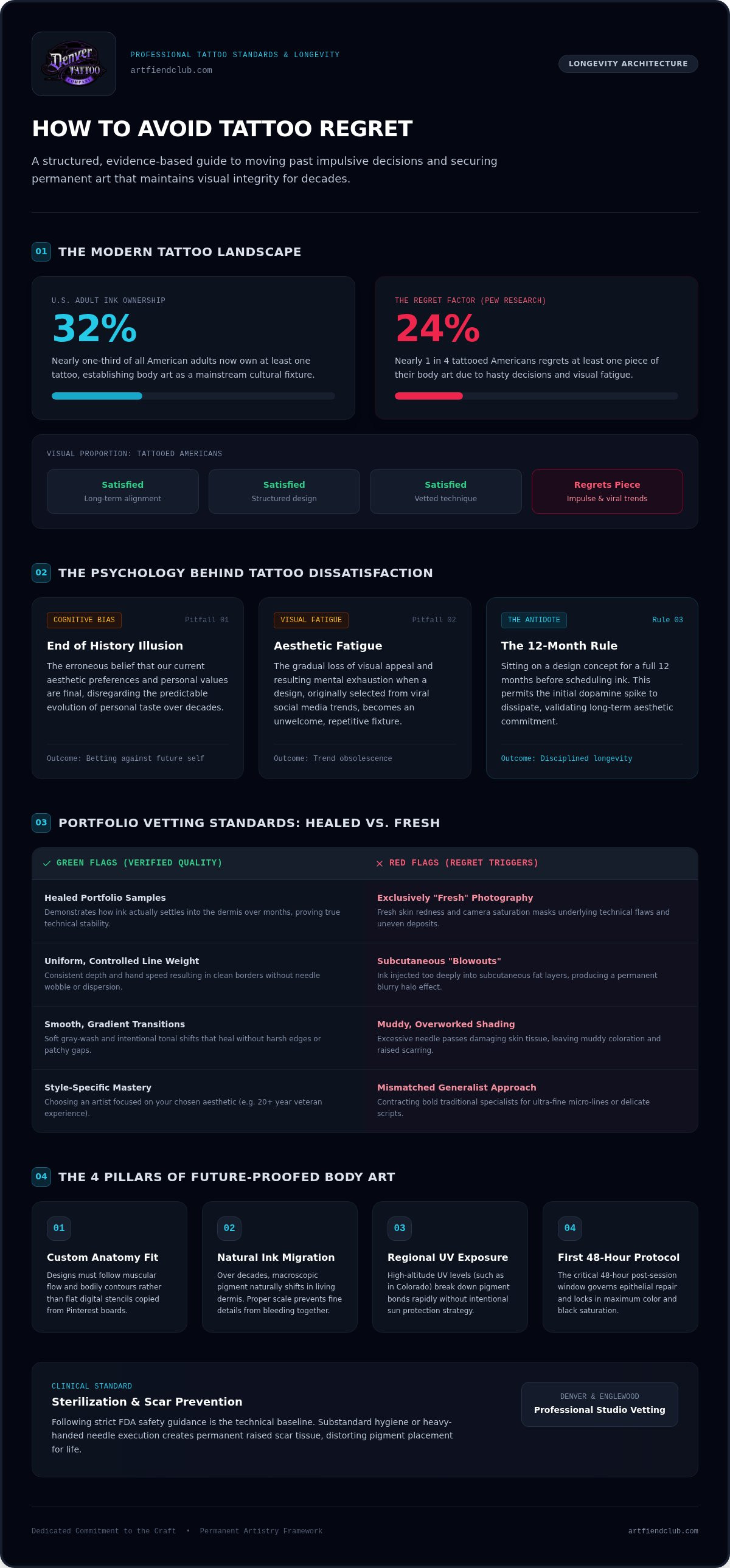
Did you know that nearly one in four tattooed Americans regrets at least one piece of their body art? With 32% of adults now owning ink, that 24% regret rate highlights a significant gap between initial excitement and long-term satisfaction. It's natural to feel a mix of adrenaline and anxiety when planning your next piece. You want something that reflects your identity, but the fear of a design aging poorly or an artist missing the mark can be paralyzing. Understanding how to avoid tattoo regret starts with moving past the impulse and into a structured, collaborative process.
This guide provides the professional framework you need to ensure your ink remains a source of pride for decades. Whether you're in Denver or Englewood, the difference between a masterpiece and a mistake often lies in the preparation. We'll walk through a systematic approach to vetting studios, the value of custom design over viral trends, and how to choose an artist whose skill aligns with your vision. By the end, you'll have the confidence to transform your concept into a permanent work of art that stands the test of time. This is about a dedicated commitment to the craft and your individual experience.
Key Takeaways
- Learn how the "12-Month Rule" helps you distinguish between fleeting trends and meaningful art that you'll value for a lifetime.
- Identify the specific hygiene standards and portfolio red flags to look for when choosing a professional studio in the Denver metro area.
- Discover how to avoid tattoo regret by prioritizing a custom consultation that tailors every detail of the artwork to your personal vision and anatomy.
- Understand the physics of aging on the skin, including how Colorado's UV levels and natural ink migration influence the long-term clarity of your work.
- Master the critical first 48 hours of aftercare to ensure your skin heals properly and maintains the vibrant saturation of the original application.
The Psychology of Permanent Art: Why Tattoo Regret Happens
Most clients view a new tattoo as a celebration of a specific moment, but the skin is a living canvas that evolves over decades. Understanding the mental shift between a temporary impulse and a permanent commitment is the first step in learning how to avoid tattoo regret. While the popularity of body art has surged, research from the Pew Research Center indicates that 24% of tattooed Americans regret at least one of their pieces. This dissatisfaction rarely stems from the physical application of ink; instead, it's often a breakdown in the psychological alignment between the wearer and the work.
A primary driver of this disconnect is the "End of History Illusion." This cognitive bias leads us to believe that our current tastes, values, and aesthetic preferences are final, even though we recognize how much they've changed over the last decade. When you choose a design rooted in a fleeting subculture or a viral social media trend, you're betting against your future self. Professional artists encourage a more methodical approach to ensure that your body art remains a source of pride rather than a candidate for the complex causes and realities of tattoo removal.
Impulse vs. Intentionality
Walk-in culture has its place, but spontaneous decisions are statistically more likely to result in future dissatisfaction. Pinterest and Instagram provide an endless stream of "perfect" images that often lack the structural integrity required for long-term wear. Many clients fall into the trap of aesthetic fatigue. Aesthetic fatigue refers to the gradual loss of visual appeal and the resulting mental exhaustion that occurs when a design, once perceived as novel or trendy, becomes a repetitive and unwelcome fixture in one's daily life. By adopting a "12-Month Rule"-sitting on a concept for a full year before booking-you allow the initial dopamine hit to fade, leaving room for a more disciplined evaluation of the design's longevity.
The Role of Meaning in Longevity
There's a common misconception that every tattoo must carry a profound, symbolic life story to be regret-proof. While deep personal narratives can anchor a piece, pure artistic appreciation is often just as durable. A custom design that flows with your natural anatomy and respects the technical limitations of the medium can be a timeless masterpiece. The key is balancing personal significance with visual integrity. Whether a piece is a tribute to a loved one or simply a stunning display of craftsmanship, the most successful tattoos are those created through a collaborative process between a dedicated artist and an intentional client. This synergy ensures the work feels like a natural extension of yourself rather than a temporary accessory.
Vetting Your Artist: Professional Standards in Denver and Englewood
Choosing an artist isn't just about finding someone who can draw; it's about finding a master of the medium who respects the permanence of the work. In Denver and Englewood, the density of studios means you must be discerning. A veteran artist with 20+ years of industry experience, like Jason Oz, understands how skin responds to ink in ways a newcomer might not. This technical depth is essential when considering how to avoid tattoo regret. You're looking for a creative partner who is as invested in the technical safety of the process as they are in the final aesthetic.
Portfolio Red Flags and Green Flags
A portfolio is a resume written in ink, and it should be your primary tool for evaluation. Look beyond the "fresh" photos that dominate social media feeds. Fresh tattoos are vibrant and often hide technical flaws that only appear during the healing process. Healed photos reveal the true skill level of the artist. When reviewing work, look for consistent line weight without "blowouts" or shaky edges. Shading should be smooth and intentional, rather than patchy or muddy. Most importantly, ensure the artist's specific style matches your vision. A specialist in bold traditional work may not be the best choice for a delicate fine-line piece. Matching the right hand to the right design is a critical step in how to avoid tattoo regret.
Safety as a Foundation for Satisfaction
Even the most beautiful design can be ruined by poor technical execution or substandard hygiene. If a studio doesn't prioritize sterilization, the risk of infection or scarring increases dramatically. Scar tissue distorts pigment and creates a raised, uneven texture that can ruin the look of your art for life. Following FDA tattoo safety guidance is the bare minimum for a professional shop. A dedicated environment uses single-use sterilized equipment and premium inks exclusively to protect the integrity of the work and the health of the client.
When you visit a studio, observe the environment. It should feel clean, focused, and organized. Professionals are always happy to discuss their sterilization protocols and show you their setup. Understanding Safe Tattoo Studio Denver: Why Sterilization Matters helps you identify a shop that respects both the craft and your body. This level of transparency builds the trust necessary for a successful collaborative process. If you want to see these standards in action, booking one of our tattoo consultations is an excellent way to vet the environment before committing to a design.
The Power of Custom Design and Consultations
Choosing a design from a wall of flash is a transaction, but a custom piece is a collaboration. When you sit down for a consultation, you're not just buying a drawing; you're engaging in a professional dialogue that prioritizes the longevity of your skin. This phase is the most vital step in how to avoid tattoo regret. It allows you to vet the artist's creative logic and technical boundaries before a single needle is touched. A seasoned expert uses this time to translate your abstract ideas into a composition that works with the physics of your body.
The collaborative process helps bridge the gap between imagination and reality. Statistics show that 48% of people who experience tattoo regret made an impulsive or spontaneous decision. By contrast, a custom-built project requires a level of intentionality that naturally filters out fleeting urges. It's a chance to build a relationship with your artist, ensuring they understand your aesthetic goals and your commitment to the craft. This mutual investment is what transforms a simple service into a lifelong work of art.
Preparing for Your Consultation
Effective communication is the foundation of a successful tattoo. You don't need to be an artist yourself to convey your vision; you simply need to provide the right context. Bringing reference images is helpful, but you should view them as a starting point rather than an exact blueprint. A professional artist will respect your inspiration while maintaining the right to say "no" to elements that won't age well or fit the chosen placement. Knowing what to ask during a tattoo consultation can help you navigate this conversation with confidence. Just as the FDA's guidance on tattoo safety highlights the importance of asking about sterile practices, you should also ask about the artist's design philosophy and long-term vision for the piece.
The Custom Design Advantage
Standardized designs often fail because they ignore the unique curves and muscle structures of the individual. When you opt for custom tattoo designs Denver, the artist tailors the flow and scale of the art to your specific anatomy. This bespoke approach ensures that the tattoo moves naturally with your skin, preventing the distortion that often plagues generic designs. Beyond the physical fit, there is a profound psychological benefit to owning a one-of-a-kind piece. A custom design is an expression of your personal narrative, making it far more resistant to the aesthetic fatigue that follows viral trends. Custom work also provides a strategic foundation for future expansion, allowing you to build cohesive sleeves or larger installations over time with a consistent artistic voice.
Future-Proofing Your Ink: Placement, Scale, and Aging
A tattoo is a permanent installation on a moving, changing surface. As your skin ages, ink particles naturally migrate within the dermis, a process known as ink spread. This means that tiny details which look sharp today can blur into unreadable shapes over the next twenty years. Understanding these biological realities is a cornerstone of how to avoid tattoo regret. Professional artists with decades of experience prioritize structural integrity over temporary aesthetics to ensure your art remains legible for a lifetime. They understand that what looks good on a screen might not look good on a forearm in two decades.
Living in Denver or Englewood adds a unique environmental challenge to the aging process. Colorado's mile-high elevation results in 20% to 25% higher UV exposure than sea-level locations. These UV rays act as a catalyst for pigment photolysis, breaking down the ink and causing premature fading. If you choose a placement that is constantly exposed to the sun, such as your outer arms or neck, you're essentially putting your investment on a fast track to degradation. Protective measures like high-SPF sunscreen are vital, but choosing the right placement from the start is your first line of defense.
Anatomy and Placement Strategies
Skin real estate refers to the available surface area on your body that offers the best canvas for detail retention and long-term stability. High-movement zones like elbows, knees, and hands are prone to rapid epidermal turnover and mechanical stress, which leads to uneven fading and loss of clarity within just a few years. A skilled realism tattoo artist Colorado will guide you toward flatter, more stable muscle groups. They use the natural flow of your anatomy to anchor the design, ensuring the art moves with your body rather than distorting against it. This strategic alignment is essential for photorealistic work that requires precise proportions.
The Reality of Aging Ink
The choice between black and grey or full color also impacts how your piece matures over time. Generally, black carbon-based pigments are the most stable and resistant to light-induced breakdown. Many veterans in the industry live by the rule that "bold will hold," meaning strong outlines and high contrast are the best defense against the natural softening of the skin. While micro-tattoos and fine-line styles are popular on social media, they often lack the "ink weight" necessary to survive the aging process without becoming unreadable blobs. Choosing a style that accommodates the natural aging process is a mark of a sophisticated client. If you're ready to discuss a design built for longevity, booking one of our custom tattoo designs is the best way to start your journey.
Preparation and Aftercare: Protecting Your Investment
Preparation begins long before you arrive at the studio. To ensure your skin is receptive to pigment, you must prioritize hydration and rest in the days leading up to your appointment. Avoiding skin irritants or excessive sun exposure is equally important; a sunburned or dry canvas compromises the artist's ability to achieve clean, saturated lines. This proactive mindset is a fundamental part of how to avoid tattoo regret. When your body is prepared, the technical application is more efficient, and the resulting work is more resilient.
The healing process is divided into several critical phases, but the first 48 hours are often called the "golden window." During this period, the skin is sealing in the fresh pigment while managing the initial inflammatory response. If this window is disrupted by poor hygiene or physical trauma, you risk ink loss or "fallout," which creates a patchy, unfinished appearance. This is often referred to as technical regret, where the dissatisfaction isn't with the design itself, but with a preventable failure in the healing process.
Immediate Post-Tattoo Care
Modern aftercare protocols often involve medical-grade adhesive films like Saniderm, which seal out contaminants while allowing the skin to breathe. If your artist uses a traditional bandage, the timing of its removal and the subsequent cleaning routine are vital. Use a fragrance-free, antibacterial soap and avoid over-saturating the wound with heavy ointments. A thin layer of moisturizer is all that's needed to prevent scabbing without suffocating the pores. During this time, it's normal to see some redness and swelling, but persistent heat or unusual discharge may indicate an early infection that requires professional attention.
Preserving Your Art for Decades
Once the initial healing is complete, your focus shifts to long-term maintenance. In a high-altitude environment like Denver, UV protection is the most significant factor in maintaining ink clarity. Consistent use of SPF 50 is non-negotiable for anyone serious about Long-Term Tattoo Care in Colorado. Beyond sun safety, your lifestyle choices directly impact the longevity of your work. Avoid swimming or heavy gym sessions for at least the first two weeks to prevent bacterial exposure and mechanical stress on the fresh ink.
It's also helpful to remember that skin is a living organ that changes over time. Periodic touch-ups are a standard part of the tattoo lifecycle, not a sign of technical failure. As you learn how to avoid tattoo regret, realize that maintaining a piece is a collaborative effort that continues long after you leave the studio. Protecting your investment ensures that the work remains as vibrant and meaningful as the day it was applied.
Investing in Art That Lasts a Lifetime
A tattoo is more than just pigment in the skin; it's a permanent reflection of your identity and aesthetic values. By moving away from impulsive decisions and embracing a structured, collaborative approach, you've already taken the most important step in understanding how to avoid tattoo regret. Success relies on balancing your creative vision with the technical realities of aging and anatomy. Prioritizing custom design over fleeting trends ensures your art remains as impactful in twenty years as it is on the day of your appointment.
At Art Fiend Club, we treat every project as a partnership. Jason Oz brings over 20 years of professional experience to the table, specializing in custom realism and complex designs within a strictly sterile, tattoo-only environment. This dedication to the craft ensures that your experience is safe, focused, and creatively fulfilling. If you're ready to transform your ideas into a timeless masterpiece, book a consultation with Jason Oz at Art Fiend Club to plan your regret-proof art. Your skin deserves the precision of a master artisan and a steady hand you can trust.
Frequently Asked Questions
How long should I wait before deciding on a tattoo design?
A standard recommendation is to wait at least three to six months once you have a finalized concept. This cooling-off period helps you move past the initial adrenaline and ensures the design has lasting personal appeal. For residents in Englewood or Denver, setting the image as your phone wallpaper during this time is a practical way to test for aesthetic fatigue. This methodical approach is a cornerstone of how to avoid tattoo regret.
Can a bad tattoo be fixed without full removal?
Yes, many poorly executed tattoos can be successfully reworked or covered through a strategic custom design. While we don't offer removal services, the artists at Art Fiend Club specialize in evaluating existing ink to determine if a cover-up is technically feasible. By using advanced shading techniques and purposeful composition, a veteran artist can transform a source of regret into a new, professional work of art that flows naturally with your anatomy.
Does the price of a tattoo correlate with the likelihood of regret?
The financial commitment often reflects the level of planning and artist vetting involved in the process. Higher-tier custom work in Denver involves extensive preparation, which is a key component of how to avoid tattoo regret. At Art Fiend Club, our rates align with the precision and technical safety required for long-term satisfaction. Cutting costs on a permanent procedure usually leads to technical flaws that are far more expensive to address later.
What are the most common tattoo styles people regret later?
Styles that rely on extremely fine details at a small scale, such as micro-realism, often carry higher regret rates due to natural ink migration over time. Additionally, tattoos in high-friction zones like fingers or palms tend to fade unevenly, leading to dissatisfaction. At Art Fiend Club, we advise clients on minimum legible sizes and placement strategies that respect the physics of aging, ensuring your art remains clear and intentional for decades.
How do I tell my artist I’m not happy with the sketch?
Open communication is essential to our collaborative process at Art Fiend Club. If a design doesn't perfectly match your vision, it's important to speak up during the consultation or before the stencil is applied. Our artists are dedicated professionals who value your creative fulfillment and would rather refine a sketch multiple times than apply a piece you aren't completely confident in. We view every adjustment as a step toward a masterpiece.
Is it possible to be allergic to tattoo ink?
Allergic reactions to ink are rare but possible, particularly with certain red or yellow pigments. To mitigate this risk, we use only premium, industry-literate inks and maintain a sterile, tattoo-only environment. If you have a history of severe skin sensitivities or allergies to metals, we recommend discussing this during your consultation at Art Fiend Club. Our focus on artistic integrity includes ensuring the technical safety of every pigment we use on your skin.
What should I do if I start feeling regret immediately after the session?
It is common to experience a temporary period of anxiety or "tattoo blues" while your body heals and adjusts to the new permanent change. We advise waiting at least six weeks for the piece to fully settle before making a final assessment. During this time, follow your aftercare protocol strictly to ensure the best technical result. If concerns persist after healing, a follow-up consultation can help address any specific elements you wish to refine.
How does skin type affect the way a tattoo looks as it heals?
Skin type influences how your body holds pigment and responds to the high-altitude Colorado climate. Oily skin may experience slightly more ink migration, while dry skin requires more disciplined moisturizing to prevent scabbing that can lead to patchy results. During the healing process, your skin's natural regeneration also acts as a filter over the ink. Our artists tailor their technical application to your specific skin needs to ensure the work ages gracefully and maintains its clarity.


