

Modern tattoo machines pierce the dermal layer between 50 and 3,000 times per minute. This process transforms your custom design into tens of thousands of microscopic open wounds that are highly vulnerable to bacterial infiltration. You've likely heard conflicting stories about "waterproof" films, but the reality of when can I swim after a tattoo is dictated by your body's biological healing pace, not a plastic barrier. It's natural to feel anxious about delaying a beach trip or a pool day, especially when you're excited to showcase your new piece and protect the financial investment you've made.
At Art Fiend Club, we view every tattoo as a collaborative investment that deserves meticulous care. In this 2026 guide, you'll discover the exact timeline required for your skin to "seal" and why dermatologists mandate waiting 14 to 30 days before submersion. We'll explore the serious risks of pathogens like Vibrio vulnificus, which carries a 20% mortality rate, and provide clear steps to take if your ink accidentally gets wet. Understanding these technical safety standards ensures your artwork remains as vibrant and sharp as the day Jason Oz finished it.
Key Takeaways
- Establish a firm timeline of two to four weeks for full skin recovery before you consider any form of water submersion.
- Understand the biological risks of osmotic leaching and why when can I swim after a tattoo depends on your skin's ability to lock in pigment.
- Identify the distinct hazards of different water sources, from the chemical bleaching effects of chlorine to the bacterial risks in natural oceans and lakes.
- Debunk the common misconception that medical adhesive films provide a safe seal for swimming, as water pressure can easily bypass these barriers.
- Learn how professional aftercare guidance from a seasoned expert like Jason Oz protects the longevity and integrity of your custom tattoo.
The Biology of Ink: Why Water is the Enemy of New Tattoos
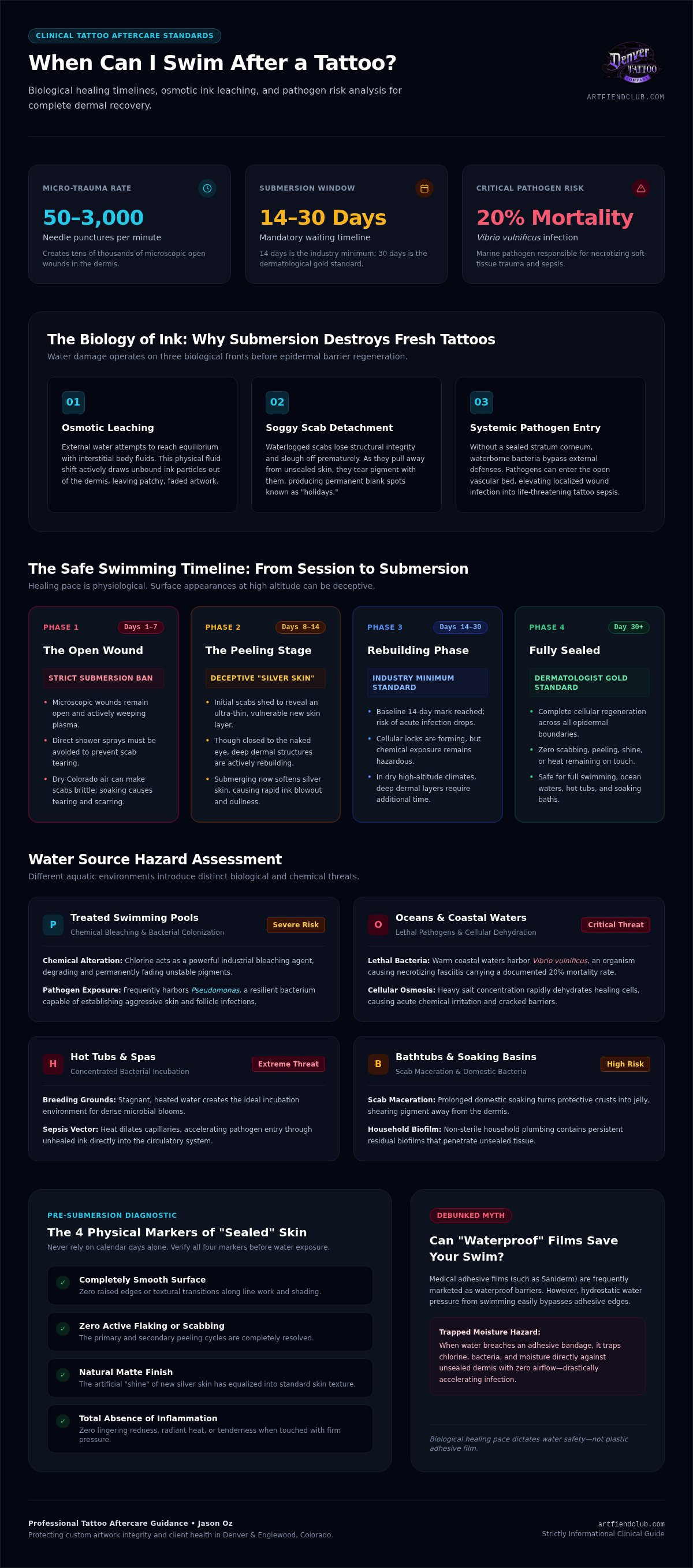
A custom tattoo is a significant artistic and financial investment, but biologically, it's a medical-grade trauma. Every session involves a needle piercing your skin between 50 and 3,000 times per minute. This physiological process of tattooing deposits ink into the dermis, but it also leaves the epidermis compromised. Until the skin regenerates a protective layer, your new piece is essentially a collection of thousands of microscopic open wounds. This is why the question of when can I swim after a tattoo is so critical; jumping in too early is a gamble with your body's natural defense system.
Water is destructive to fresh ink because of osmosis. When you submerge a healing tattoo, the fluid outside your body attempts to reach an equilibrium with the fluids inside. This movement can physically pull ink particles out of the dermis before they've had a chance to settle. This leaching process results in patchy, faded art. During the initial "weeping phase," your body produces plasma to flush out debris and begin the sealing process. The skin must remain breathable to form a healthy, thin protective barrier. If you soak the area, scabs become "soggy" and lose their structural integrity. These waterlogged scabs often fall off prematurely, taking pigment with them and leaving "holidays," or blank spots, in your intricate design.
The Risk of Pathogens and Infection
Natural and treated water sources are rarely sterile. Swimming pools often harbor Pseudomonas, while warm coastal waters can contain Vibrio vulnificus, a bacterium known to cause necrotizing soft-tissue infections. Hot tubs are particularly hazardous because the stagnant, heated water acts as a concentrated breeding ground for bacteria. Tattoo sepsis is a rare but life-threatening systemic infection that can occur when these water-borne pathogens enter the bloodstream through unhealed ink.
Ink Leaching and Fading
Chemicals and minerals pose a different set of threats to your healing skin. Chlorine is a powerful bleaching agent that can chemically alter or fade fresh pigment before it's stable. Salt water is equally harsh, as it aggressively dehydrates healing cells and causes painful irritation. Protecting your art requires patience and a clean environment. You can find more details on Long-Term Tattoo Care in Colorado: Preserving Ink at High Altitude to understand how our local environment affects your healing journey.
The Safe Swimming Timeline: From Session to Submersion
Patience is the most critical tool in your aftercare kit. While the industry-standard minimum for water avoidance is 14 days, waiting 30 days is the gold standard for protecting your health and the integrity of your ink. The question of when can I swim after a tattoo isn't just about the calendar; it's about the physical state of your skin. In the high-altitude, dry environment of Englewood and Denver, surface scabbing often happens quickly. This can be deceptive. While the top layer might look dry, the deeper dermal layers are still rebuilding. According to Mayo Clinic's tattoo aftercare advice, you should strictly avoid pools, lakes, and hot tubs until the healing process is entirely finished.
Before you consider diving back into the water, your tattoo must be "sealed." You can verify this by checking for these physical markers:
- The surface is completely smooth with no raised edges.
- There is no remaining scabbing, flaking, or peeling.
- The "shine" of the new skin has settled into a natural matte finish.
- There is no redness, heat, or tenderness when the area is touched.
Phase 1: The Open Wound (Days 1-7)
During this initial week, your skin is at its most vulnerable. You must avoid all submersion, including baths and soaking. When showering, keep the tattooed area away from the direct spray of the water. The intense dry air in Colorado can make scabs brittle and prone to cracking. If these dry scabs are suddenly soaked in water, they can soften and tear, leading to permanent scarring or ink loss. If you have concerns about how your specific design is settling, scheduling a tattoo consultation with a professional can provide personalized peace of mind.
Phase 2: The Peeling Stage (Days 8-14)
This phase is often the most dangerous because it feels like the end is in sight. As the initial scabs fall away, they reveal a thin, delicate layer known as "silver skin." While it looks closed, this tissue is extremely permeable and sensitive to chemicals. Submerging your ink during this stage can lead to "scab softening," where the remaining protective layers turn mushy and detach prematurely. Understanding when can I swim after a tattoo means recognizing that silver skin is still a developing barrier. At Denver Tattoo Company, we recommend waiting the full 14-day mark even for quick healers to ensure the longevity of our custom realism work.
Pools, Oceans, and Hot Tubs: Assessing Specific Risks
Not all water environments are created equal. Each body of water presents a distinct set of biological and chemical challenges for your new ink. While the mandatory healing timeline remains the same, understanding why these specific environments are hazardous helps you commit to the wait. Determining when can I swim after a tattoo requires looking beyond the surface of the water to the hidden risks beneath, especially when protecting a custom realism piece or intricate fine-line work.
The Chlorine Factor
Chlorine is a harsh chemical designed to kill life-including your healing skin cells. In a swimming pool, this chemical acts as a powerful bleaching agent that can permanently fade or alter the color of fresh pigment. Beyond the ink itself, chlorine strips the natural lipids and protective oils your skin needs to recover. In the arid climate of Englewood and Denver, this dehydration is particularly dangerous. Stripping these oils can lead to chemical burns or severe irritation, causing the skin to crack and peel prematurely. This disruption of the skin's pH balance can stall the healing process and compromise the integrity of your artwork.
Natural Water Hazards
There is a persistent and dangerous myth that salt water helps a tattoo heal. In reality, ocean water is home to abrasive sand and microscopic debris that can cause micro-abrasions in your delicate healing tissue. More critically, coastal waters harbor aggressive pathogens. You should review the CDC's recreational water and open wound guidelines to understand the severe risks of Vibrio and other water-borne bacteria that exploit open wounds. These infections can progress rapidly, turning a creative milestone into a medical emergency.
Closer to home, Colorado's freshwater lakes and rivers, such as Cherry Creek Reservoir, pose unique risks from agricultural runoff and seasonal algae blooms. These environments are impossible to regulate and can introduce parasites directly into the deeper layers of your skin. Additionally, swimming in open Colorado water exposes your healing skin to intense high-altitude UV rays. This combination of bacterial risk and sun damage is a primary reason we emphasize strict hygiene standards. For more details on maintaining a sterile recovery, see our guide on Safe Tattoo Studio Denver: Debunking 5 Common Safety Myths.
Finally, hot tubs represent the "perfect storm" for a fresh tattoo. The combination of high heat, which dilates your pores and blood vessels, and the concentrated presence of bacteria creates an ideal environment for infection. This heat can also accelerate pigment leaching by keeping the wound "open" longer than intended. Protecting your investment means staying dry until the skin has fully reclaimed its role as a waterproof barrier.
The Waterproof Bandage Myth: Can Saniderm Save Your Swim?
One of the most frequent objections we hear from clients involves the use of medical-grade adhesive films. Many enthusiasts believe that applying a product like Saniderm or Tegaderm creates an impenetrable barrier that allows for immediate pool or ocean access. While these bandages are revolutionary for healing, they aren't a shortcut for when can I swim after a tattoo. These films are technically semi-permeable, meaning they're designed to be breathable to allow oxygen to reach the wound while keeping out dirt and friction. They're excellent for a quick shower, but they aren't built for the hydrostatic pressure of full submersion.
The primary danger lies in the potential for a "leaking seal." If even a microscopic corner of the adhesive lifts during a swim, water enters the pocket. Because the bandage is designed to hold moisture in, it traps that contaminated water, chlorine, or salt directly against your open wound. This creates a warm, stagnant environment that is a perfect incubator for bacteria. Additionally, when these bandages become saturated with water, they grow heavy. The weight and the shifting of the adhesive can pull at the delicate "silver skin" or healing scabs, leading to physical trauma and pigment loss.
When "Waterproof" Isn’t Enough
It's vital to distinguish between being "showering-safe" and "submersion-safe." A shower involves water running over the surface of the bandage, whereas swimming forces water against the edges of the seal. At Denver Tattoo Company, we advise staying out of the water even if you have a fresh wrap. During the hot Englewood summers, sweat-trapping is another concern. If you're swimming in the sun, sweat can build up under the film, which irritates the skin and can cause the adhesive to fail prematurely. If you want to ensure your ink heals with the precision it was applied with, you can book tattoo consultations to discuss a personalized aftercare plan.
What to Do if Your Tattoo Gets Wet
Accidents happen, and knowing how to respond can save your artwork. If your healing tattoo is accidentally submerged, follow these steps immediately:
- Gently wash the area with lukewarm water and a fragrance-free, antibacterial soap to remove any chemicals or bacteria.
- Pat the tattoo dry with a clean, single-use paper towel. Do not rub or use a fabric towel, which can harbor bacteria or snag on scabs.
- Leave the area to air-dry completely before applying a very thin layer of breathable lotion.
- Monitor the site for "bubbling" scabs, which feel soft or mushy, or any sudden increase in redness and swelling.
Patience remains the most effective way to protect your investment. A few weeks of discipline ensures a lifetime of vibrant, sharp art.
Professional Aftercare Standards at Denver Tattoo Company
At Denver Tattoo Company, we believe the technical safety of your procedure is as vital as the creative fulfillment of the design. Led by Jason Oz, who brings over 20 years of expertise to every session, our Englewood studio prioritizes a sterile environment and comprehensive client education. While the question of when can I swim after a tattoo is a common one, we address it long before the first needle touches your skin. Our methodical approach begins during your initial consultation, where we provide a clear roadmap for the entire four-week recovery period.
We view ourselves as your creative partner and a steady hand throughout the healing process. Our commitment doesn't end when you leave the studio. We encourage our clients to reach out with any questions as they navigate the peeling and settling phases. This ongoing support ensures that the intricate design you've invested in remains a permanent, vibrant reflection of your vision. By providing clear, technical guidance tailored to the Denver climate, we help you avoid the pitfalls of premature water exposure.
Why Quality Application Matters
A successful healing journey starts with the precision of the application. Jason Oz specializes in custom realism and intricate designs, utilizing a disciplined technique that ensures optimal needle depth. This technical accuracy is crucial because it creates a more stable and resilient "seal" in the dermal layer. Amateur work often involves inconsistent depth, which can lead to excessive trauma and a more porous wound that is highly susceptible to water damage. By using premium inks and single-use sterilized equipment, we provide a foundation that resists environmental fading and supports a smoother recovery. You can learn more about our process by exploring Custom Tattoo Designs Denver: Crafting Your Unique Story.
Book Your Next Piece in Englewood
Choosing a dedicated, tattoo-only studio means you are entering an environment focused entirely on the craft of permanent body art. We don't offer distractions like piercings or removal services; our focus is solely on the integrity of our ink and the safety of our clients. Whether you are looking for a walk-in session or a complex custom piece, you'll find a clean, professional space designed for focus and quality. Your artwork is an investment worth protecting with expert guidance and superior technique. Schedule your custom tattoo consultation with Jason Oz today to begin your next collaborative project.
Protecting Your Art for a Lifetime
Your tattoo is more than just ink; it's a permanent investment in your personal story. Respecting the biological healing process is the only way to ensure your artwork remains as sharp and vibrant as the day it was created. Remember that the "gold standard" for safety is a full four weeks of water avoidance, allowing your skin to regenerate a complete, resilient barrier. Whether you're navigating the chemicals of a pool or the bacteria of a lake, patience is your most effective defense against fading and infection.
Determining when can I swim after a tattoo is ultimately about respecting your body's biological clock. At Denver Tattoo Company, we combine hospital-grade sterilization standards with the precision of custom realism to give your ink the best possible start. With over 20 years of industry experience, Jason Oz specializes in intricate art that is designed to stand the test of time and the Colorado climate. If you're ready to start your next piece, we invite you to Book a Consultation with Jason Oz at Denver Tattoo Company. We look forward to helping you create something truly exceptional.
Frequently Asked Questions
Can I swim with a 3-day-old tattoo if I use a waterproof bandage?
No, you should not swim with a three-day-old tattoo even with a medical adhesive wrap. These bandages are designed to be breathable, not fully waterproof under the pressure of swimming. If the seal breaks, contaminated water is trapped against your open wound, which significantly increases the risk of infection. We recommend waiting at least 14 days to ensure your skin has naturally sealed before considering any form of submersion.
What happens if I accidentally submerge my new tattoo in a pool?
If your tattoo is accidentally submerged in a pool, you must act quickly to minimize damage. Rinse the area immediately with lukewarm water and a mild, fragrance-free antibacterial soap to remove chlorine and bacteria. Pat the area dry with a clean paper towel rather than a fabric one. Monitor the site for signs of "bubbling" or excessive redness over the next 48 hours to ensure the pigment remains stable.
Is it okay to go in the ocean with a tattoo that has finished peeling?
You should wait until the "silver skin" phase has fully settled, which typically takes four weeks. Even if the initial peeling is finished, the new tissue is still thin and highly permeable. Ocean water contains sand and various pathogens that can irritate this delicate layer. For those in the Denver area planning a coastal trip, we advise finishing the full 30-day healing cycle to protect the intricate details of your realism piece.
Can I soak in a hot tub if my tattoo is on my arm and I keep it out of the water?
Soaking in a hot tub is discouraged even if you keep the tattooed limb out of the water. The intense heat and steam in a hot tub environment dilate your pores and increase perspiration, which can introduce bacteria into the healing site. The high humidity also softens scabs prematurely. It's safer to avoid the hot tub area entirely until your artist confirms the "seal" phase of your recovery is complete.
How do I know if my tattoo has an infection from water exposure?
Signs of a water-related infection include spreading redness, red streaks extending from the site, or a sudden increase in swelling and heat. You might also notice yellow or green discharge and a foul odor. If you experience these symptoms after swimming, contact a medical professional immediately. Knowing when can I swim after a tattoo helps prevent these complications, especially given Denver's specific reporting standards for communicable skin diseases.
Why does chlorine make my new tattoo itch or burn?
Chlorine is a harsh chemical that strips away the natural lipids your skin needs to recover. In our dry Englewood climate, this chemical exposure can lead to acute contact dermatitis or chemical burns on fresh ink. This irritation causes the intense itching or burning sensation you feel. Because chlorine acts as a bleaching agent, it can also cause permanent fading or color shifting in your new design before the pigment is fully locked in.
Can I go to a waterpark if I just got a small tattoo?
You should avoid waterparks entirely until your tattoo is fully healed, regardless of the size of the piece. Waterparks combine high concentrations of chlorine with heavy guest traffic, creating a high-risk environment for bacterial cross-contamination. The friction from slides and the force of moving water can also physically damage scabs and "silver skin." Small tattoos are just as vulnerable to these environmental stressors as larger, more intricate realism projects.
Does salt water help a tattoo heal faster?
The idea that salt water helps a tattoo heal faster is a common myth that can lead to serious complications. While sterile saline is used for cleaning, ocean water is far from sterile and often contains abrasive sand and dangerous bacteria. Understanding when can I swim after a tattoo means recognizing that natural bodies of water are unpredictable. Salt water aggressively dehydrates healing cells, which can lead to painful cracking and permanent scarring.


