
Research suggests that roughly 80% of women have stretch marks, yet these common textures often lead to a sense of self-consciousness. If you have been considering a new piece of art, you have likely asked yourself: can you tattoo over stretch marks safely? It is natural to worry about how the ink will settle or if the unique texture of a scar will cause the design to look blurred over time. These concerns are valid, as scarred tissue requires a specialized level of care and technical skill to ensure the longevity and clarity of the work.
We believe that every mark on your body tells a story, and our goal is to help you tell yours with confidence and precision. This guide explains the professional criteria for tattooing over textured skin, from assessing scar maturity to selecting the best artistic styles for camouflage. You will discover how expert techniques and a collaborative design process can turn your skin into a refined work of art. By understanding what to look for in a specialized Denver artist, you can approach your next session with the certainty that your vision and your skin are in expert hands.
Key Takeaways
- Learn why the "One-Year Rule" is essential for ensuring your skin is mature enough to hold ink without the risk of pigment migration.
- Discover how organic realism and black and grey shading can naturally integrate your skin's texture into a custom, cohesive design.
- Understand the technical requirements for when can you tattoo over stretch marks to achieve a seamless and high-quality artistic result.
- Find out why an in-person consultation is the most critical step in assessing skin texture and planning a successful camouflage piece.
- Gain insight into how specialized techniques and strict hygiene standards protect the integrity of your skin throughout the transformation process.
The Short Answer: Can You Tattoo Over Stretch Marks?
The straightforward answer is yes; you can transform these areas with ink, but the process requires more than just a standard design. To achieve a successful result, the skin must be fully healed and mature. Unlike undamaged skin, stretch marks, or striae, represent a change in the dermis where the collagen and elastin fibers have been disrupted. Because the skin is thinner and the texture is often uneven, the ink behaves differently than it would on a smooth surface. Without the right technical approach, pigment can spread or lose its intended shape.
Successfully planning Cover-up tattoos for scars involves understanding how your specific skin type holds pigment. When you ask can you tattoo over stretch marks, we look for stability in the tissue. If the marks are still in the active healing phase, the skin is too volatile to hold a precise line. Waiting for the right moment ensures that your investment becomes a permanent piece of art rather than a blurry memory.
Maturity Matters: Identifying Striae Alba
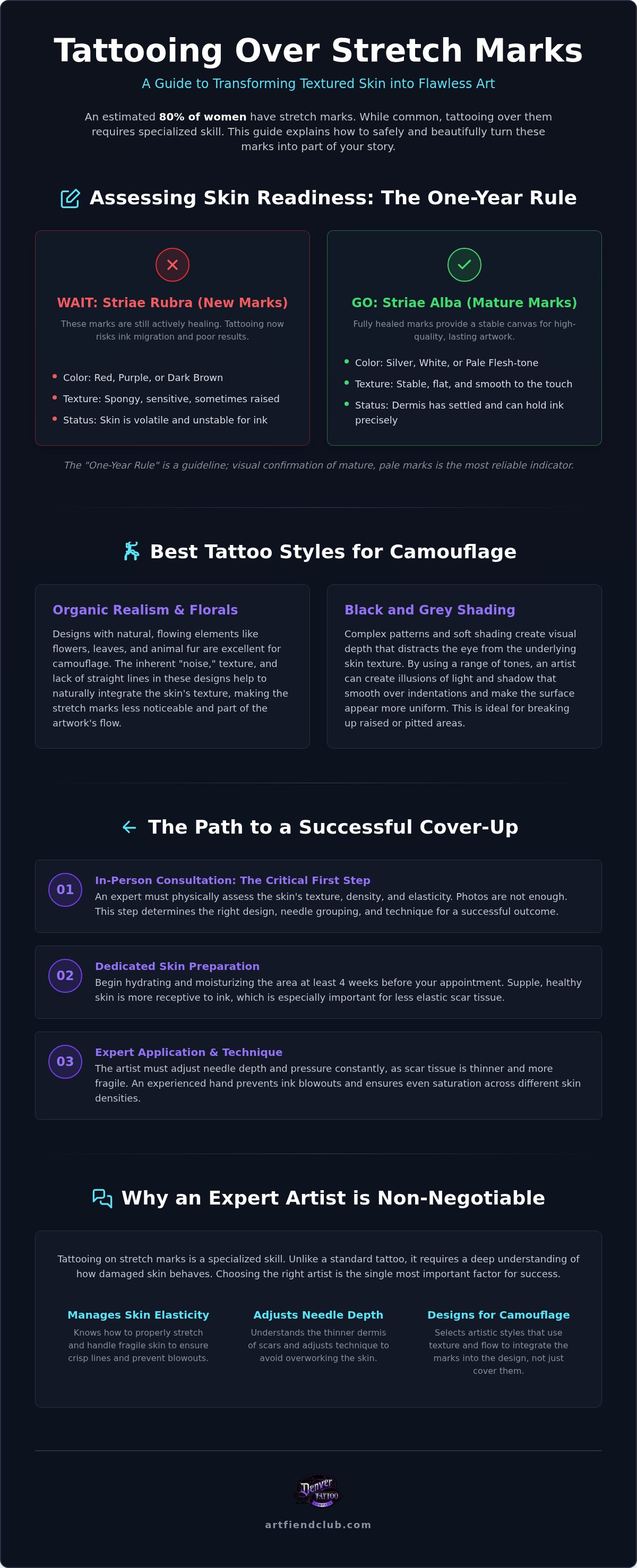
The most critical factor in your timeline is the maturity of the scar. We follow a general "One-Year Rule," but visual cues are more reliable than a calendar. You're looking for striae alba, which are older marks that have turned silver, white, or a pale flesh tone. These marks feel stable and flat under your fingertips. If your stretch marks are still red, purple, or dark brown, they're still vascularized and healing. Tattooing over "fresh" marks often leads to ink migration or "blowouts" because the skin is still too spongy and sensitive to retain the pigment correctly.
The Role of Skin Elasticity in Tattooing
Stretch marks significantly alter the skin's natural elasticity, which changes how an artist must apply tension during the session. In our local Colorado climate, the dry air can further impact skin suppleness, making preparation even more vital. A veteran artist's "hand" is essential here; someone with 20+ years of experience, like Jason Oz, understands how to adjust needle depth and pressure for varying skin densities. Because the dermis is thinner in these areas, the artist must balance the need for saturation with the fragility of the tissue. This level of precision is what differentiates a standard tattoo from a successful camouflage piece that integrates naturally with your body's contours.
Assessing Your Skin: Is Your Texture Ready for Ink?
A physical assessment is the most important step before committing to a design. While photos can help, a realism artist needs to feel the tissue to understand its density and depth. Every area of the body presents unique challenges. For instance, the stomach and thighs often have deeper "pitting" or indented textures compared to the arms. These variations dictate the needle grouping and saturation levels required for the work. If you're wondering can you tattoo over stretch marks without the ink looking muddy, the answer often depends on how the light hits these indentations. An experienced eye can determine if a design will sit flat or if the texture will distort the image. We look for the way the skin bounces back when pressed, which tells us how the dermis will react to the tattoo needle.
Texture vs. Color: What Can Be Hidden?
The visual success of your piece depends on the distinction between flat scars and hypertrophic (raised) tissue. Flat, silvery marks are generally the easiest to work with because they don't catch the light as aggressively. In contrast, raised texture requires a design that uses "noise" or complex patterns to break up the surface. During the selection of Best tattoo styles for stretch mark camouflage, we often look at the color contrast between the mark and your natural skin tone. If the contrast is high, bold saturation or detailed realism is usually necessary to bridge the gap. We must also recognize that striae rubra (new, red, or purple marks) are a hard "wait" for any ethical artist because the tissue is still actively changing and cannot safely hold ink without significant risk of migration.
Preparing Your Skin in the Denver Climate
Colorado's high-altitude environment presents specific challenges for skin elasticity. The lack of humidity can make scar tissue feel brittle or tight, which isn't ideal for receiving ink. We recommend starting long term tattoo care in Colorado at least four weeks before your appointment. This includes both topical moisturizers and significant internal hydration to ensure the dermis is supple and receptive.
Englewood clients should also be particularly careful with sun exposure. UV damage thins the skin and increases sensitivity, making the tattooing process more difficult and the healing more unpredictable. We suggest keeping the area completely covered for a full month prior to your session. Healthy, hydrated skin allows the needle to glide more smoothly, which results in less trauma and a faster recovery. If you are ready to see if your skin is prepared, a professional tattoo consultation can provide the clarity you need to move forward.
Best Tattoo Styles and Designs for Stretch Mark Camouflage
Selecting the right design is a technical decision as much as an artistic one. When considering can you tattoo over stretch marks, the goal shifts from simple coverage to visual integration. Rigid designs, such as tight geometric patterns or straight mandalas, often highlight the very irregularities you want to mask. If a straight line crosses a deep stretch mark, the physical indentation can cause the line to appear wavy or broken. Instead, we favor fluid, organic shapes that move with the natural grain of the scar tissue. Elements like botanical illustrations, flowing smoke, or animal fur provide the necessary visual noise to blend the texture into the artwork seamlessly.
Black and grey realism is frequently the preferred medium for this type of work. The wide range of tonal values allows an artist to manipulate how light and shadow interact with the skin's surface. By placing darker values in the recessed areas of a stretch mark and highlights on the surrounding healthy skin, we can flatten the appearance of the texture. This approach relies on color theory and contrast to neutralize the silver or white tones of mature striae, ensuring the eye focuses on the art rather than the underlying skin variation.
The Power of Realism and Shading
Experienced realism tattoo artists in Colorado often utilize "trompe l'oeil" techniques to create the illusion of a flat surface. This involves soft shading rather than hard packing of ink. While hard packing can sometimes highlight the thickness of a scar, soft, layered gradients allow the pigment to sit naturally within the thinned dermis. Black and grey remains the gold standard because it ages predictably on textured skin, maintaining its depth even as the body continues to change over the years.
Organic Flow and Placement
The most successful camouflage pieces use the body's natural curves to dictate the placement of the design. We look for ways to wrap vines, flowers, or waves along the same path as the stretch marks. This alignment makes the marks look like a deliberate part of the design's movement. We also utilize "distraction" elements in the foreground of the tattoo. By placing a highly detailed, high-contrast focal point away from the heaviest scarring, we draw the viewer's attention to the mastery of the art. This strategic placement ensures the tattoo remains beautiful and cohesive regardless of the skin's original texture.
What to Expect During Your Scar Coverage Session
Before any ink touches your skin, an in-person visit to our Englewood studio is mandatory. This consultation allows us to move beyond the visual and physically assess the tissue's density and elasticity. Photos often fail to capture the subtle variations in depth that dictate how a needle must enter the dermis. During this meeting, we discuss your goals and confirm if your skin is ready for the procedure. This collaborative step ensures that the technical plan is as unique as the texture we are working with. It's a conversation between you and a seasoned expert who is invested in both safety and artistic fulfillment.
A frequent concern for many is whether the process is more uncomfortable than a standard session. Because the skin in these areas is thinner and often more sensitive, you should expect a different sensation. Research confirms that tattooing over stretch marks can be more painful than working on undamaged skin. We manage this by adjusting our pace and focusing on your comfort throughout the session. We believe in a focused, dedicated environment where the quality of the work is never rushed. Our artists rely on the weight of their experience to navigate these sensitive areas with a steady, methodical hand.
The Technical Process of Scar Tattooing
Working with scarred dermis requires precise technical adjustments to needle depth and machine speed. The artist must stretch the skin with a specific level of tension to ensure the pigment settles evenly across the indentations. This is where the mastery of the craft becomes visible. Because scarred tissue is more fragile, we often schedule shorter sessions to avoid over-working the area. This approach prevents excessive trauma and helps maintain the integrity of the design over the long term. Our commitment to hygiene is reflected in our strict use of single-use, sterilized equipment, which is critical when working with the deeper layers of skin often found in textured areas.
Specialized Aftercare for Textured Skin
The healing process for a camouflage piece requires a more disciplined approach than a typical tattoo. Your tattoo aftercare advice must account for the way scar tissue retains moisture differently than healthy skin. In our dry Colorado climate, keeping the area hydrated is essential to prevent the skin from becoming brittle during the "itching" phase. You should monitor the area closely for any signs of prolonged irritation, as scarred skin can sometimes be more reactive. If you're ready to begin your transformation, you can schedule a tattoo consultation with our experienced team to discuss your specific needs.
Why Expert Consultation is Key at Art Fiend Club
Choosing the right environment for your session is just as important as the design itself. When you ask can you tattoo over stretch marks, you aren't just looking for a simple confirmation. You're looking for an artisan who understands the physics of scarred tissue and the nuances of skin regeneration. Jason Oz brings over 20 years of industry experience to every session, specializing in the realism and black and grey techniques required for effective camouflage. This depth of knowledge allows him to predict how different skin types will react to pigment, ensuring your work remains sharp and intentional for decades.
Our studio in Englewood is designed to be a clean, focused, and highly dedicated environment. We prioritize technical safety as much as creative fulfillment, utilizing single-use sterilized equipment to maintain the highest hygiene standards. This commitment to the craft creates a reassuring atmosphere where you can feel confident in the permanence of your work. By focusing exclusively on the art of tattooing, we provide a level of precision that is mandatory when working with the complex textures of stretch marks.
A Collaborative Approach to Body Art
The consultation is where your vision meets professional reality. We encourage you to research your tattoo consultation requirements to feel fully prepared for the conversation. During this time, we physically examine the texture, depth, and maturity of your marks to determine the most effective design strategy. We prioritize transparency, which means setting realistic expectations for your results. While a tattoo can beautifully camouflage and integrate texture into a new story, it's important to understand the difference between artistic coverage and the total physical disappearance of a scar. This honesty is the foundation of the trust we build with every client.
The Art Fiend Club Standard
Our studio is a specialized tattoo-only studio. We don't offer distractions like piercings or removal services; our focus is entirely on the application of high-quality ink. This specialization is critical for scar coverage, as it allows our team to dedicate their full attention to the technical safety and artistic integrity of the tattoo process. We exclusively offer custom work rather than pre-drawn designs because textured skin requires a bespoke approach that follows your body's unique contours. Every line and shadow is placed with your specific anatomy in mind. If you're ready to transform your skin into a custom work of art, you can schedule your consultation at Art Fiend Club today.
Transform Your Skin with Confidence
Deciding to evolve your skin’s narrative through ink is a powerful choice. As we have explored, the answer to can you tattoo over stretch marks is found in the intersection of skin maturity and technical mastery. By respecting the timeline of your body's healing and selecting organic, fluid designs, you can turn textured areas into a sophisticated canvas. This process is not about hiding imperfections, but about intentional transformation that honors your body's history.
Achieving these results requires a partner who values precision as much as you do. At Art Fiend Club, we leverage Jason Oz’s 20+ years of professional experience and a deep focus on specialized realism to guide you through every technical hurdle. Our commitment to single-use sterilization and a focused, tattoo-only environment ensures that your safety is never compromised. We invite you to move beyond uncertainty and begin a collaborative process that results in work you will be proud to wear for a lifetime.
Book Your Custom Consultation with Jason Oz today. We look forward to helping you create a permanent piece of art that flows perfectly with your skin.
Frequently Asked Questions
Does tattooing over stretch marks hurt more than normal skin?
Tattooing over stretch marks is generally more sensitive than working on healthy skin. Because the dermis is thinner in these areas, nerves are closer to the surface, resulting in a more intense sensation. We manage this through a methodical pace and frequent check-ins during your session. Our Englewood studio provides a calm, focused environment where we prioritize your comfort without ever rushing the technical application of the ink.
Will the ink in my stretch marks blur or 'blow out' over time?
Ink migration is a risk if the artist applies too much pressure or uses incorrect needle depth on compromised tissue. However, a veteran artist understands how to adjust for the unique elasticity of scarred skin. By using specialized techniques and precise hand speed, we ensure the pigment stays exactly where it's intended. This level of technical discipline is what prevents the fuzzy edges often seen in inexperienced work.
How old do my stretch marks need to be before I can tattoo them?
Your stretch marks should be at least one year old and fully mature before we begin. Look for a silver, white, or pale flesh-toned appearance, which indicates that the tissue has stabilized. If they are still red or purple, the skin is too vascular and will not hold ink predictably. A physical assessment at our studio is the most reliable way to confirm the skin is ready for a permanent piece.
Can a tattoo completely hide my stretch marks?
A tattoo can effectively neutralize the color contrast of stretch marks, but it won't remove the physical texture. While the ink camouflages the silver or white tones, the indentations may still be visible in certain lighting. We use organic realism and "trompe l'oeil" shading to distract the eye, making the texture look like a deliberate part of a complex, beautiful design. When you ask can you tattoo over stretch marks for total concealment, we focus on artistic integration.
What happens if I get new stretch marks after the tattoo is finished?
If your body undergoes significant changes after the tattoo is finished, new stretch marks can potentially tear through the existing ink. This may cause gaps or distortion in the artwork that require touch-ups later. To ensure the longevity of your piece, we recommend waiting until your weight or lifestyle has stabilized before proceeding with a large-scale camouflage project. This allows the custom design to maintain its intended shape and flow over time.
Are there certain colors that work better for covering scars?
Black and grey realism is frequently the best choice for integrating texture because it offers a wide range of tonal gradients. These soft transitions are more effective at masking the "noise" of a scar than solid blocks of saturated color. By using highlights and deep shadows, we can visually flatten the skin’s surface. This approach creates a more natural look that ages gracefully alongside your body in our high-altitude climate.
How do I find an artist in Denver who specializes in scar coverage?
You should look for a studio that specializes in custom realism and has a proven track record with textured skin. In the Denver and Lakewood areas, Art Fiend Club stands out as a tattoo-only environment dedicated to high-level artistry. We recommend scheduling a consultation to discuss your goals in person. A face-to-face meeting allows us to evaluate your skin's specific needs and build a collaborative plan that respects your body's history.
Can I get a realism tattoo over deep stretch marks?
Realism is actually the ideal style for deep marks because it uses light and shadow to manipulate visual depth. By placing darker values in the recessed areas and highlights on the ridges, we can create the illusion of a smoother surface. This requires a master artisan who can navigate the varying density of the tissue while maintaining the high detail required for a photorealistic result. This technical precision ensures the final piece looks cohesive across all textures.


