
A cheap tattoo is often the most expensive mistake you'll ever make. When you're planning a permanent addition to your skin, the price tag is more than just a number; it's a reflection of the artist's years of experience, the sterility of the environment, and the longevity of the final work. Most collectors feel a sense of hesitation when trying to figure out how much do tattoos cost in Denver, especially with the wide range of rates found across the Front Range. You want to ensure you're paying a fair price without compromising on the quality of the craft or your own safety.
In this 2026 guide, we'll demystify the local market to help you budget accurately for your next project. We'll explore the nuances of hourly fees versus flat project rates, explain why non-refundable deposits are a standard industry practice, and provide clarity on tipping etiquette. By the end, you'll have a realistic understanding of professional pricing and the confidence to partner with a master artisan who prioritizes both technical precision and your creative vision. From the initial consultation to the final healing stages, we'll cover every factor that influences the total investment of your body art.
Key Takeaways
- Demystify the pricing structure of professional studios, from base shop minimums to hourly rates that reflect master-level artistry and safety standards.
- Gain clarity on how much do tattoos cost in Denver by analyzing how intricate details and specific body placements influence the complexity of your project.
- Recognize the value of custom tattoo designs, which incorporate dedicated consultation and design time to ensure your unique vision is executed with technical precision.
- Budget accurately for the entire process by accounting for standard booking deposits, artist gratuity, and the high-quality aftercare products needed for proper healing.
- Learn why the specialized focus of Art Fiend Club provides a professional alternative to high-volume shops for those seeking longevity and artistic integrity.
Understanding Denver Tattoo Shop Minimums and Hourly Rates
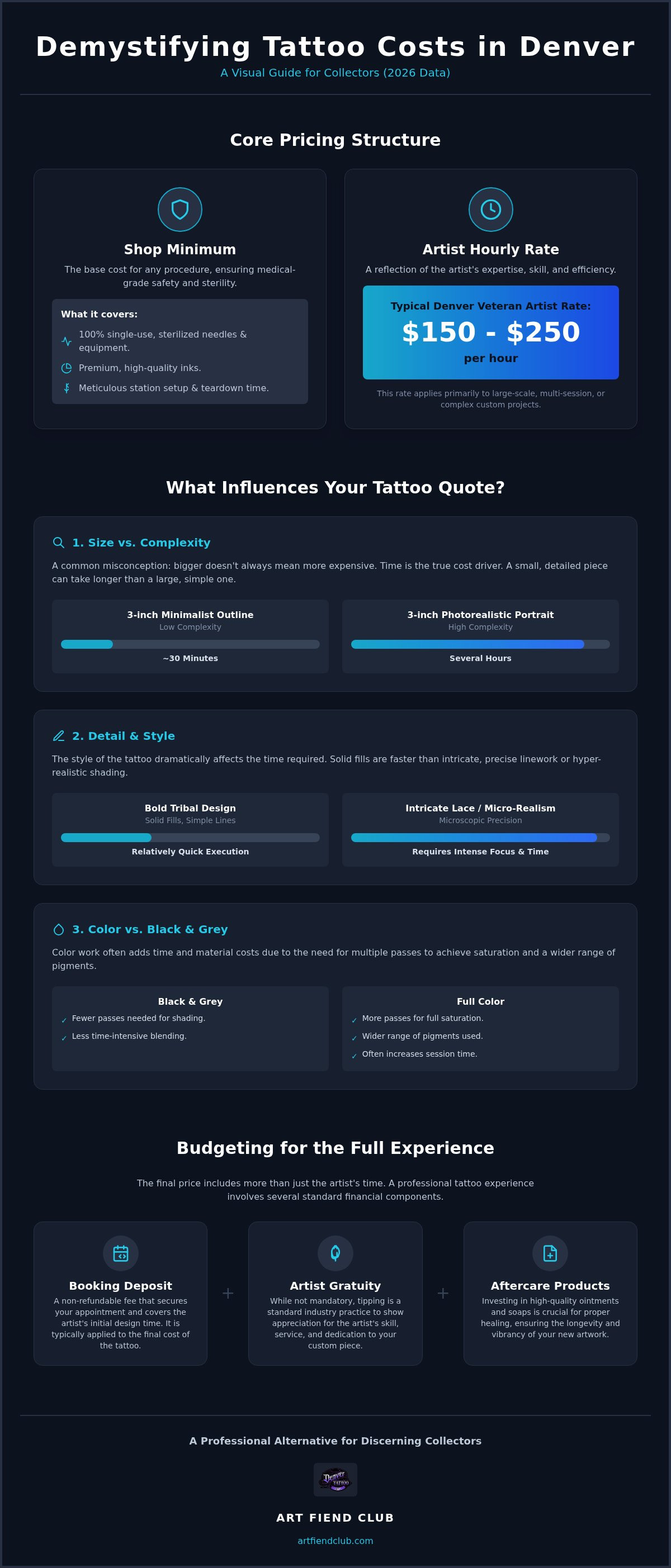
When you begin researching how much do tattoos cost in Denver, the first financial terms you'll encounter are the shop minimum and the hourly rate. These aren't arbitrary numbers; they're the foundation of a professional studio's business model. A shop minimum represents the absolute base cost required to open a sterile kit and prepare a station for a client, regardless of how small the design might be. In the Denver and Englewood metro area, these minimums tend to be higher than in rural regions because of the significant overhead costs associated with maintaining high safety standards and prime studio locations. At Art Fiend Club, we prioritize these standards to ensure every client receives the same level of care and technical precision.
An artist's hourly rate is a direct reflection of their years of technical mastery, specialized skill set, and the speed at which they can execute complex designs with precision. For veteran artists specializing in realism or intricate custom work in the Denver area, rates typically range between $150 and $250 per hour as of 2026. This rate ensures that the artist can dedicate the necessary focus to your piece without rushing the process. Essentially, an hourly rate is a reflection of an artist's years of technical mastery and speed.
Why the Shop Minimum Exists
The shop minimum ensures that every procedure, even a tiny symbol, adheres to strict medical-grade hygiene protocols. This fee covers the cost of 100% single-use sterilized needles, premium inks, and the time required for meticulous setup and teardown. While the history of tattooing shows how the craft has evolved from ancient rituals to modern art, the current emphasis on safety is what defines a reputable shop. Choosing a "cheap" alternative often means the artist is cutting corners on these critical safety overheads, which directly puts your health at risk. At our Englewood shop, this minimum is a non-negotiable standard that protects both the artist and the collector.
Hourly Rates vs. Flat Fees
Transparent pricing helps build trust between the artist and the collector. Generally, veteran artists at Art Fiend Club utilize hourly rates for large-scale projects like multi-session realism sleeves or complex custom back pieces. These projects involve shifting variables that make a flat fee difficult to predict accurately. Understanding these differences is essential when determining how much do tattoos cost in Denver for your specific vision. Conversely, smaller pre-designed flash art or simple walk-in designs are often quoted as a flat fee. Knowing what to ask during a tattoo consultation can help you understand which model applies to your project. This clarity ensures that you and your artist are aligned on the total investment before the first needle touches your skin.
Factors That Influence Your Tattoo Quote: Size, Detail, and Placement
Understanding how much do tattoos cost in Denver requires looking beyond simple dimensions. While many clients start by measuring their desired piece in square inches, size is merely the canvas. The true investment is determined by what fills that space. For example, a minimalist three-inch outline may only take thirty minutes, whereas a three-inch photorealistic portrait could require several hours of intense focus. Size provides the scale, but complexity dictates the schedule.
Detail density is often the primary driver of cost. A large, bold tribal design might be six inches across, but its solid fills are relatively quick to execute for a seasoned professional. In contrast, a smaller piece featuring intricate lace or micro-realism requires constant needle changes and microscopic precision. Additionally, the choice between color and black-and-grey impacts the final quote. Color work often requires more passes to achieve full saturation and uses a wider range of specialized pigments, which adds both time and material costs to the session. These variables are why a personalized quote is always more accurate than a general estimate.
The Complexity of Detail in Custom Realism
Achieving a lifelike image on skin is one of the most demanding tasks in the industry. Working with a realism tattoo artist Colorado collectors trust means paying for a specific level of technical expertise. This style involves layered shading and fine-line work that must be executed perfectly to ensure the piece ages well. High detail density doesn't just look better; it ensures the tattoo maintains its integrity over decades. Professional standards in our Englewood shop dictate that we never rush these intricate details, as the permanence of the work is our highest priority.
Body Placement and Technical Difficulty
Where you choose to place your art significantly affects the complexity of the session. Areas like the ribs, hands, feet, or neck are notoriously difficult to tattoo because the skin is thinner and the proximity to bone makes it harder for the artist to maintain a steady surface. These placements often incur a difficulty tax because they require the artist to work in more strenuous physical positions and may necessitate more frequent breaks for the client. This added time is naturally reflected in the final cost.
Technical difficulty also extends to the healing process. Following professional guidelines on tattoo safety and aftercare is especially vital for these high-motion areas to prevent ink loss. If you're unsure about which placement best suits your budget and design, you can always reach out for a consultation to discuss the logistics of your project with an expert. This collaborative approach ensures your investment results in a piece that looks as good in ten years as it does on day one.
Custom Art vs. Walk-in Flash: Comparing the Investment
Choosing between a bespoke creation and a pre-drawn piece is a major factor when evaluating how much do tattoos cost in Denver. Custom art is a collaborative journey that begins with your vision and ends with a unique piece that fits your specific anatomy. Because these designs are one of a kind, they require a higher investment of both time and budget. This isn't just about the time spent in the chair; it's about the hours of preparation that occur long before the first needle touches your skin. A custom project is a long term investment in a design that will never be replicated on another collector.
Flash art offers a different value proposition for those seeking high quality work with more predictable pricing. These are pre-vetted designs created by the artist, often displayed in portfolios or on studio walls. Since the artist has already completed the conceptual and technical drawing work, flash pieces usually come with a set price and allow for a quicker turnaround. At Art Fiend Club, walk-in sessions for flash designs provide a professional entry point for clients who want the expertise of a veteran artist for smaller or more spontaneous pieces.
The Value of Custom Design Time
Substantial effort happens behind the scenes between your initial consultation and the actual appointment. Veteran artists like Jason Oz, who brings over 20 years of experience to the craft, invest significant energy into custom tattoo designs Denver enthusiasts seek for their originality. This process involves research, anatomical flow planning, and multiple stages of stencil refinement. Most professional studios require a design deposit or drawing fee to compensate the artist for this specialized labor. This fee ensures that the technical mastery required to translate a complex idea into a permanent masterpiece is properly valued.
Walk-in Pricing Efficiency
Spontaneous ink sessions don't require a compromise on quality or safety. Flash art is often the most budget friendly way to work with a master artisan because of the inherent efficiency of the process. The artist is already familiar with the technical requirements of the design, which allows for a streamlined session. Even during a quick walk-in, we maintain the highest safe tattoo studio Denver standards, including 100% single use sterilized equipment. When you examine official artist wage data, it's clear that professional rates are grounded in the economic reality of maintaining a sterile, licensed environment. Choosing flash at a reputable shop ensures you receive the benefits of that professional infrastructure at a more accessible price point.
The True Cost of Ink: Deposits, Tips, and Aftercare Budgeting
When calculating how much do tattoos cost in Denver, it's essential to look beyond the sticker price of the session itself. A professional tattoo is a permanent addition to your body, and the total financial commitment includes several logistical and maintenance factors. To ensure you aren't caught off guard, your tattoo budget should include 15-20% for aftercare and gratuity. This allocation covers the necessary supplies to protect the skin and the customary thank you for your artist's dedication and technical precision.
Tipping serves as a meaningful way to show appreciation for the specialized skill and personal attention provided during your session. While it isn't a strict requirement, it's a deeply respected tradition within the Denver artist community. It acknowledges the master artisan's role as a creative partner in your journey. Most collectors find that planning for this gratuity ahead of time makes the final transaction feel like a seamless part of the professional experience.
Deposit Policies and Scheduling
A non-refundable deposit is a standard requirement for any reputable studio in the Denver metro area. This fee serves two critical purposes: it secures your specific date in the artist's calendar and compensates them for the time spent on design preparation. In our Englewood shop, deposits are typically applied toward the final cost of the tattoo on the day of the session. This policy protects the artist's livelihood in the event of a last-minute cancellation or no-show, ensuring the studio remains a focused and dedicated environment.
Rescheduling rules are designed to be fair to both the client and the artist. To avoid losing your deposit, most studios require at least 48 to 72 hours' notice. This window allows the shop to offer the time slot to another client on the waiting list. By respecting these scheduling boundaries, you help maintain the professional rhythm required for high-quality custom work.
Aftercare: Protecting Your Financial Investment
The healing phase is where the technical quality of the application meets the diligence of the collector. Budgeting for long term tattoo care in Colorado is particularly vital due to our unique environment. Our high altitude and notoriously dry air can cause skin to dehydrate rapidly, which may lead to heavier scabbing or ink loss if not managed correctly. You'll likely need to apply high-quality moisturizer more frequently than you would in a more humid climate.
Investing in medical-grade soaps and specialized ointments during the first 48 hours is a non-negotiable step in preserving your art. While it's tempting to use cheap, store-brand lotions, these often contain fragrances or alcohols that can irritate fresh ink and ruin a piece worth hundreds of dollars. Proper aftercare ensures that the clarity and saturation of your realism piece remain intact for decades. If you're ready to start your project with a team that values your investment as much as you do, you can book your consultation today at our Englewood studio.
Why Art Fiend Club Represents the Best Value for Your Art
Value is found at the intersection of technical mastery and uncompromising safety. Lead artist Jason Oz brings over 20 years of industry experience to every project at our Englewood studio. This depth of knowledge isn't just a credential; it's a guarantee of artistic proficiency. When collectors ask how much do tattoos cost in Denver, they often forget to factor in the potential price of future corrections or touch ups required by less experienced work. Our pricing reflects a commitment to the highest professional standards, utilizing premium inks and medical grade sterilization to ensure your art remains vibrant for a lifetime.
We maintain our best tattoo only studio Denver status by focusing exclusively on the craft of tattooing. By forgoing adjacent services like body piercing or tattoo removal, we've created an environment entirely dedicated to creative precision. You aren't paying for the overhead of unrelated departments or the distractions found in high volume retail shops. This specialization allows us to provide a focused, calm, and professional atmosphere where the individual's experience is the priority.
The Long Term Value of Expert Realism
Experience saves you money. A realism piece requires a sophisticated understanding of how ink settles into the skin over decades. A tattoo that looks impressive today must be applied with the technical foresight to look equally impressive in twenty years. Expert application means fewer touch ups and better aging, which represents a significant long term financial saving for the collector.
Artistic integrity is built into our custom designs. We create pieces that age gracefully by planning for the natural changes in the skin. Additionally, our sterile environment, which utilizes 100% single use equipment, prevents the complications that can lead to expensive medical visits or ruined artwork. We view every session as a collaborative creative process rather than a mere transaction.
Booking Your Session in Englewood
Quality is never accidental. We believe in providing a transparent and thorough quoting process for every custom project. When you inquire about how much do tattoos cost in Denver for a specific realism vision, we provide a detailed estimate based on the complexity and scope of your design. We intentionally avoid high volume turnover to ensure that every detail of your piece receives the meticulous attention it deserves.
Our Englewood shop serves as a professional alternative to the crowded city studios. We provide a steady hand and a creative partnership for both newcomers and seasoned enthusiasts. The process is methodical and intentional, designed to put the reader at ease from the first consultation through the final healing stages. Schedule your tattoo consultation at Art Fiend Club today to discuss your vision with a master artisan who is invested in the permanence of your work.
Investing in a Masterpiece That Lasts a Lifetime
Choosing to add a permanent piece of art to your skin is a significant decision that requires a clear understanding of the financial and technical commitment involved. We've explored the variables that determine how much do tattoos cost in Denver, from the essential shop minimums that guarantee your safety to the specialized skill required for high-detail realism. A professional quote isn't just a price tag; it's a reflection of the artist's dedication to hygiene, technical precision, and the longevity of your work.
At Denver Tattoo Company, we prioritize the individual's experience and the artistic integrity of every custom design. With over 20 years of industry experience, lead artist Jason Oz combines master-level realism with a meticulous approach to safety, using only 100% single-use sterilized equipment. Whether you're planning a full sleeve or a small custom piece, we invite you to Book Your Custom Tattoo Consultation in Denver to discuss your vision. We look forward to partnering with you on a creative journey that results in a piece of art you'll be proud to wear forever.
Frequently Asked Questions
What is the average hourly rate for a tattoo artist in Denver?
The average hourly rate for professional artists in the Denver metro area typically falls between $150 and $250 as of 2026. This figure reflects the artist's years of technical mastery and the operational costs of maintaining a sterile environment. When you're determining how much do tattoos cost in Denver, remember that veteran artists often work more efficiently, meaning you're paying for a higher level of precision and a smoother healing process.
Why do Denver tattoo shops require a non-refundable deposit?
Non-refundable deposits are a standard industry practice used to secure your appointment and compensate the artist for their preparation time. This fee protects the artist's schedule from last-minute cancellations or no-shows, which are costly for a professional studio. At our Englewood shop, this deposit is typically applied toward the final cost of your session, ensuring that both the client and the artist are committed to the scheduled project.
How much should I tip my tattoo artist in Colorado?
Tipping is a respected tradition in the Colorado tattoo community and serves as a way to show appreciation for your artist's skill. Most clients choose to tip between 15% and 20% of the total project cost. This gesture acknowledges the dedicated design time and technical effort invested in your piece. It's a thoughtful way to support the master artisan who has worked collaboratively with you to bring your creative vision to life.
Is there a shop minimum for very small tattoos in Englewood?
Yes, professional studios in Englewood maintain a shop minimum to cover the fundamental costs of medical-grade sterilization and single-use setup. Even for a tiny design, the artist must utilize the same high-quality inks and sterile equipment required for a larger piece. This base fee ensures that every client receives the same level of safety and hygiene, regardless of the size or simplicity of the tattoo they choose to receive.
Do custom tattoo designs cost more than walk-in flash art?
Custom tattoo designs generally require a higher investment than walk-in flash art because they involve dedicated research and drawing time. A custom piece is a unique creation tailored specifically to your anatomy and vision, whereas flash art consists of pre-drawn designs that are ready for immediate application. This extra preparation for custom work ensures a one-of-a-kind result that won't be replicated on anyone else, adding significant long-term value to your body art.
How much extra should I budget for tattoo aftercare supplies?
You should typically budget an additional 5% to 10% of your tattoo's cost for high-quality aftercare supplies. This budget covers medical-grade, fragrance-free soaps and specialized moisturizers that are essential for the first few weeks of healing. Investing in professional-grade products is vital in Colorado's dry climate to prevent ink loss and ensure your new art heals with the intended clarity and saturation that you expect from a master artisan.
Does the placement of the tattoo affect the total price?
Placement significantly impacts the final quote because certain areas of the body are more technically challenging to tattoo. Regions like the ribs, neck, or hands have thinner skin and sit closer to the bone, requiring the artist to work more slowly and carefully. When calculating how much do tattoos cost in Denver, remember that these difficult placements may increase the total time spent in the chair, which naturally influences the final hourly fee for your project.
Why is realism tattooing more expensive than other styles?
Realism is often more expensive due to the extreme level of detail and the time-intensive nature of the style. Achieving photorealistic textures and smooth gradients requires specialized techniques and a deep understanding of light and shadow. Artists like Jason Oz spend significantly more time on layered shading and fine-line work compared to simpler styles. This meticulous approach is necessary to ensure the piece maintains its integrity and ages gracefully over several decades.


