
What if the most important element of your tattoo isn't the image itself, but how that image respects the natural flow of your body? Finding an authentic Japanese tattoo artist Denver residents can trust involves more than just looking at a portfolio. It requires finding a master who understands the delicate balance between ancient symbolism and modern anatomy. You likely recognize that a true Irezumi piece is a lifelong commitment, and the fear of a culturally shallow or poorly composed design is a valid concern for any serious collector.
We understand that the prospect of a large-scale project can feel overwhelming, especially when considering the technical precision and time required. You deserve a collaborative experience where your vision is translated into a design that ages with grace and moves naturally with your skin. In this article, you'll discover the depth of traditional composition and the technical mastery necessary for a professional result. We will preview the essential differences between neo-Japanese and traditional styles, ensuring you have the clarity needed to begin your journey with confidence.
Key Takeaways
- Learn the fundamental differences between traditional Irezumi and Neo-Japanese styles to ensure your piece reflects your personal vision and cultural respect.
- Understand the layers of meaning behind common motifs like the dragon and koi fish to choose symbols that resonate with your own life story.
- See how a professional Japanese tattoo artist Denver enthusiasts trust uses traditional Gakubori framing to make designs flow naturally with your body's anatomy.
- Gain clarity on the multi-step tattooing process, from the initial custom design consultation to the precise execution of the foundational outline.
- Learn why a studio's commitment to clinical safety and veteran expertise is essential for the longevity and artistic integrity of large-scale Japanese work.
The Tradition of Japanese Tattooing in Denver
Irezumi is a comprehensive style of body art that prioritizes bold lines and large-scale storytelling to create a cohesive narrative across the skin. While its roots are deeply embedded in centuries of history, finding a skilled Japanese tattoo artist Denver allows you to experience this heritage without leaving the Front Range. The Tradition of Japanese Tattooing involves a sophisticated understanding of how motifs interact with the human form, moving beyond simple imagery to create a living piece of art.
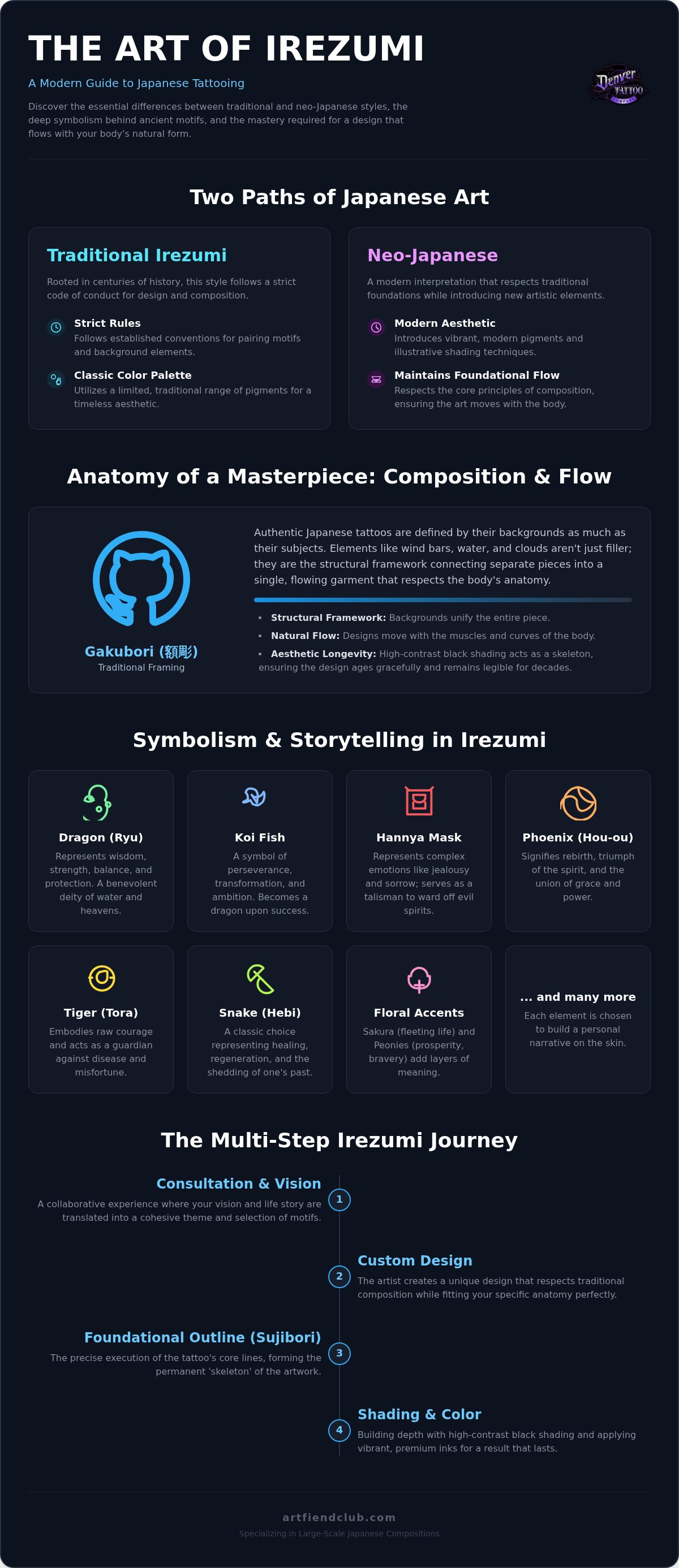
Distinguishing between traditional and modern interpretations is essential for any collector. Traditional Irezumi follows strict rules regarding the pairing of motifs and background elements, often utilizing a limited, classic color palette. In contrast, Neo-Japanese styles introduce vibrant modern pigments and illustrative shading while maintaining the foundational flow of the original art. Both styles require a deep respect for composition, but a specialist ensures that the cultural depth isn't lost in the transition to a modern aesthetic.
Why Specialization Matters for Japanese Art
Authentic Japanese tattoos are defined by their backgrounds as much as their primary subjects. Elements like wind bars, water ripples, and fire clouds aren't merely fillers; they provide the structural framework that connects separate pieces into a single, flowing garment. Managing these complex layers requires an environment free from the distractions of unrelated services. This is why a tattoo only studio Denver provides the necessary focus for such intricate work. A dedicated space allows the artist to concentrate solely on the technical safety and artistic precision required for large-scale Japanese compositions.
The Aesthetic of Longevity
A hallmark of quality Japanese work is its ability to age gracefully. High-contrast black shading acts as the skeleton of the tattoo, holding the colors in place and ensuring the design remains legible decades later. This focus on longevity is particularly important in our local environment. Denver’s high altitude and intense sun exposure can be harsh on pigments, making the technical mastery of a veteran Japanese tattoo artist Denver indispensable. By utilizing premium inks and proven application techniques, a professional ensures your tattoo retains its depth and clarity. Your investment should result in art that flows with your body's natural changes over time.
Symbolism and Storytelling: Common Japanese Tattoo Motifs
Choosing the right imagery is the most critical step in creating a piece that resonates for a lifetime. In Japanese art, every creature and flower carries a specific weight and history. A skilled Japanese tattoo artist Denver doesn't just place an image on your arm; they help you select motifs that reflect your personal journey and character. This collaborative approach ensures that your tattoo is more than just a visual choice. It's a narrative that you carry with you.
- The Dragon (Ryu): These water deities represent wisdom, strength, and the balance of the elements. They are seen as benevolent protectors who command the heavens and the seas.
- The Koi Fish: A symbol of perseverance and transformation. According to legend, a koi that swims against the current to the top of a waterfall transforms into a dragon, a motif often called the "Dragon-Koi" in modern 2026 trends to symbolize ambition.
- The Hannya Mask: This mask represents complex human emotions like jealousy and sorrow. In the context of Irezumi, it serves as a protective talisman to ward off evil spirits and bad luck.
- Floral Accents: Sakura (cherry blossoms) represent the beauty and fleeting nature of life. Peonies, often called the "King of Flowers," symbolize prosperity, bravery, and a noble spirit.
Animals and Mythical Creatures
Beyond the primary subjects, other creatures offer layered meanings to a composition. The Phoenix (Hou-ou) signifies rebirth and the triumph of the spirit, often paired with the dragon to represent the union of grace and power. The Tiger (Tora) acts as a guardian against disease and misfortune, embodying raw courage. For those seeking symbols of regeneration, the Snake (Hebi) is a classic choice that represents healing and the shedding of the past. If you're ready to explore these narratives, you can start a custom design consultation to find the imagery that fits your story.
Elemental Backgrounds and Secondary Imagery
The background of an Irezumi piece is what provides the work with its legendary flow. Wind bars and clouds create a sense of atmosphere, framing the main subjects to make them stand out against the skin. Water motifs, such as crashing waves, are used to direct the eye and create movement across the limbs. A professional artist ensures these elements are paired correctly according to tradition. For example, certain creatures are naturally associated with specific elements like wind or water. This attention to detail ensures the entire composition feels intentional and balanced.
The Anatomy of a Japanese Tattoo: Composition and Flow
A successful Irezumi piece is defined by how it respects the architecture of the human body. Unlike Western styles that often treat the skin as a flat canvas for individual images, Japanese tattooing utilizes a concept known as Gakubori. This is the traditional framing of the work, where the background elements like clouds or waves create a decorative border that contains the main motifs. Finding a skilled Japanese tattoo artist Denver who understands these structural rules is vital. They don't just apply a design; they map it to your specific musculature so the art moves naturally as you walk or gesture.
The difference between a collection of "stamp" tattoos and a cohesive Japanese project lies in the planning. A stamp is a standalone image with no connection to the surrounding space. In contrast, authentic Irezumi is designed as a garment. The collaborative nature of custom tattoo designs Denver artists provide ensures that every element flows into the next. This creates a unified story that wraps around the limb or torso, utilizing the natural curves of the body to breathe life into the imagery.
Planning the Japanese Sleeve
Designing a sleeve requires a careful balance of primary imagery and background flow. An experienced Japanese tattoo artist Denver relies on to execute these projects will first determine the "break" points. These are the specific areas at the wrist and elbow where the tattoo ends or transitions. To ensure a 360-degree flow, the artist integrates inner-arm designs that complement the outer motifs. This consistency in shading and line weight is what prevents the piece from looking disjointed, ensuring the sleeve looks complete from every angle.
Backpieces and Large Scale Horimono
The back is widely considered the ultimate canvas for Japanese storytelling because of its size and relative flatness. A large-scale backpiece, or Horimono, allows for a central figure to be framed by symmetrical background elements that extend toward the shoulders and thighs. This level of work requires extensive consultation to map out the multi-session journey. A master artisan will use this time to ensure the central motif is perfectly centered, allowing the secondary imagery to radiate outward in a way that emphasizes the strength and shape of the wearer's back.
Preparing for Your Session: The Multi-Step Irezumi Journey
Embarking on a large-scale Japanese tattoo is a marathon that requires both physical and mental preparation. This journey begins with a detailed tattoo consultation to discuss your specific motifs, desired placement, and the overall scale of the work. Collaborating with an experienced Japanese tattoo artist Denver residents trust ensures that the vision is technically sound before the first needle touches the skin. During this meeting, you'll establish a roadmap for the coming months, covering everything from the foundational linework to the final color saturation.
The first active session focuses on the outline. This sets the permanent framework for the entire composition. Once the linework has healed, typically after two to three weeks, you will return for shading and color sessions. These appointments build the depth and contrast that define the Irezumi style. Managing your health between these visits is vital. Staying hydrated and following a strict aftercare routine helps your skin recover, ensuring the next session can proceed as scheduled without delays caused by irritation or poor healing.
Managing Multi-Session Projects
The timeline for a full project varies based on complexity. A full sleeve may take 15 to 30 hours, while a complete backpiece can extend well beyond 50 hours of work. Maintaining skin health throughout this duration is essential for achieving a crisp, vibrant result. Understanding what to ask during a tattoo consultation can help you set realistic expectations for your budget and schedule. If you are ready to begin this process, book your initial consultation to discuss your project roadmap.
Tattoo Safety and Sterilization Standards
Safety is the bedrock of professional tattooing, especially during long-term projects where the skin undergoes repeated sessions. At Denver Tattoo Company, we maintain clinical standards through the use of single-use sterilized equipment and premium, high-quality inks. Our studio in Englewood provides a clean and focused environment where hygiene is never compromised. We invite you to read our guide on choosing a safe tattoo studio Denver to understand the protocols that protect your health and your art. Every session is conducted with meticulous attention to detail, mirroring the precision required in the art of Irezumi itself.
Why Denver Tattoo Company is Your Destination for Japanese Art
Choosing a studio for a large-scale project is a decision that impacts your skin for a lifetime. When searching for a Japanese tattoo artist Denver residents can rely on for technical precision and artistic integrity, the choice often comes down to experience and environment. Denver Tattoo Company, led by veteran artist Jason Oz with over 20 years of industry experience, offers a specialized setting designed specifically for custom artistry. Our Englewood studio prioritizes a clean, focused, and professional atmosphere where the complex requirements of Irezumi are treated with the seriousness they deserve. By maintaining a tattoo-only focus, we ensure that every client receives the undivided attention required for intricate, multi-session work.
A Veteran Perspective on the Craft
Decades of experience are particularly valuable when executing the bold lines and high-contrast shading central to Japanese art. Jason Oz’s long-standing career allows for a deep understanding of how ink behaves in the skin over time, ensuring your investment remains a permanent legacy rather than a fading memory. We intentionally avoid the "flash shop" mentality, where speed often overrides quality. Instead, we foster a collaborative design process where every piece is tailored to the individual's anatomy and personal narrative. This focus on custom work ensures that your tattoo is a unique expression of the craft, backed by twenty years of technical refinement. We treat every project as a collaborative partnership, prioritizing your comfort and the technical safety of the application. Finding a Japanese tattoo artist Denver collectors trust means finding someone who respects the weight of the tradition while applying it with modern clinical standards.
Booking Your Consultation in Englewood
The journey toward a custom Japanese design begins with an initial inquiry. We serve clients across Denver, Englewood, and the surrounding metro area who are looking for a dedicated partner in their creative process. When you arrive for your first of many tattoo consultations, bringing reference art, specific placement goals, and a clear idea of your preferred motifs will help us establish a strong foundation. This meeting isn't just about the design; it's about building a professional relationship that will span multiple sessions and months of work. We believe the process should be as fulfilling as the final result, characterized by transparency and a shared commitment to excellence. Our clinical safety standards and single-use sterilized equipment provide the peace of mind you need to focus entirely on the artistic fulfillment of your new piece.
Begin Your Custom Irezumi Journey
Finding the right Japanese tattoo artist Denver provides is the first step toward a piece that respects tradition while flowing perfectly with your anatomy. We've explored how authentic Irezumi relies on deep symbolism and meticulous composition to create a permanent legacy on the skin. This isn't just about selecting a motif; it's about a collaborative process that ensures your art ages with grace and clarity. Choosing an artist who understands the technical demands of large-scale work is essential for a result that moves naturally with your body.
At Denver Tattoo Company, we provide a specialized tattoo-only environment where your project receives the focused attention it requires. Led by Jason Oz with 20+ years of experience, our studio maintains strict sterilization and safety protocols for every session. Whether you're planning a full sleeve or a complex backpiece, we're here to guide you through every stage of the multi-session process with professional care. Book a consultation with our veteran artists at Denver Tattoo Company to discuss your vision and start your custom design today. We look forward to helping you translate your story into a timeless work of art.
Frequently Asked Questions
How long does a Japanese sleeve tattoo typically take to complete?
A full Japanese sleeve typically requires between 15 and 30 hours of active tattooing to complete. This time is divided into multiple sessions to allow for proper healing and to manage your stamina during the process. The exact duration depends on the complexity of the motifs and the density of the background shading. We recommend booking a consultation to establish a realistic timeline for your specific custom project.
Is Japanese tattooing more painful than other styles?
The sensation of getting a Japanese tattoo is similar to other styles, but the duration of the sessions can increase physical fatigue. Large-scale pieces often involve long hours of consistent work on sensitive areas like the inner arm or ribs. We prioritize your comfort by maintaining a calm, professional environment and allowing for breaks as needed. Our artist's 20 years of experience helps ensure the application process is efficient.
Can I start with a small piece and expand it into a full sleeve later?
You can certainly start with a single motif and expand into a full sleeve later. However, it's beneficial to mention this goal to your Japanese tattoo artist Denver during the initial consultation. Planning for future expansion allows the artist to design the first piece with a flow that accommodates future Gakubori framing. This ensures the final composition looks cohesive and intentional rather than a collection of disjointed images.
What is the difference between Irezumi and Neo-Japanese tattoos?
Traditional Irezumi follows strict cultural rules regarding motif pairings and specific background elements like wind or water. It typically uses a classic color palette and bold, high-contrast shading. Neo-Japanese tattoos take these foundations and add modern illustrative techniques, including a wider range of vibrant colors and realistic shading. Both styles require a deep understanding of body flow, but Neo-Japanese offers more flexibility for contemporary artistic expression and detail.
How should I care for my tattoo in Colorados dry climate?
Caring for a tattoo in our dry, high-altitude environment requires extra attention to hydration and sun protection. We recommend using a high-quality, fragrance-free moisturizer to prevent the skin from cracking or peeling prematurely during the healing phase. Since the Colorado sun is intense, keeping your healing tattoo covered and applying sunscreen once it's fully healed is essential for preserving the ink's vibrancy and preventing long-term fading over the years.
Does Denver Tattoo Company accept walk-ins for Japanese designs?
Denver Tattoo Company does accept walk-ins for smaller, less complex Japanese designs during our regular business hours in Englewood. For large-scale projects like sleeves or backpieces, a scheduled consultation is required. This allows us to dedicate the necessary time to discuss your custom design, placement, and project timeline. Our studio focuses on providing a professional environment for both spontaneous art and long-term collaborative pieces that require extensive planning.
What motifs are best for a first-time Japanese tattoo?
For those new to the style, we often suggest starting with a single, powerful motif like a koi fish or a peony. These designs are visually striking as standalone pieces but can also serve as the anchor for a larger composition later. Choosing a motif that represents a personal value, such as perseverance or bravery, ensures your first piece of Japanese art feels meaningful and carries the cultural depth this style is known for.
How much does a custom Japanese backpiece cost in Denver?
The cost of a custom Japanese backpiece is determined by the total hours required to complete the intricate detail and shading. Factors such as the size of the canvas and the complexity of the background elements influence the final investment. Because every project is a unique collaboration, we provide pricing estimates during the initial consultation process. This ensures you have a clear understanding of the commitment required for such a significant permanent legacy.


