
A tattoo consultation is far more than a simple booking appointment; it is a professional audit of the safety, style, and synergy between you and your artist. Choosing the right expert requires looking past a digital portfolio and understanding the technical discipline behind the craft. You likely feel a mix of excitement and valid concern about the permanence of your piece, the sterility of the environment, or how your custom ideas will translate to skin. These feelings are the mark of a client who values their body and the integrity of the art they choose to wear.
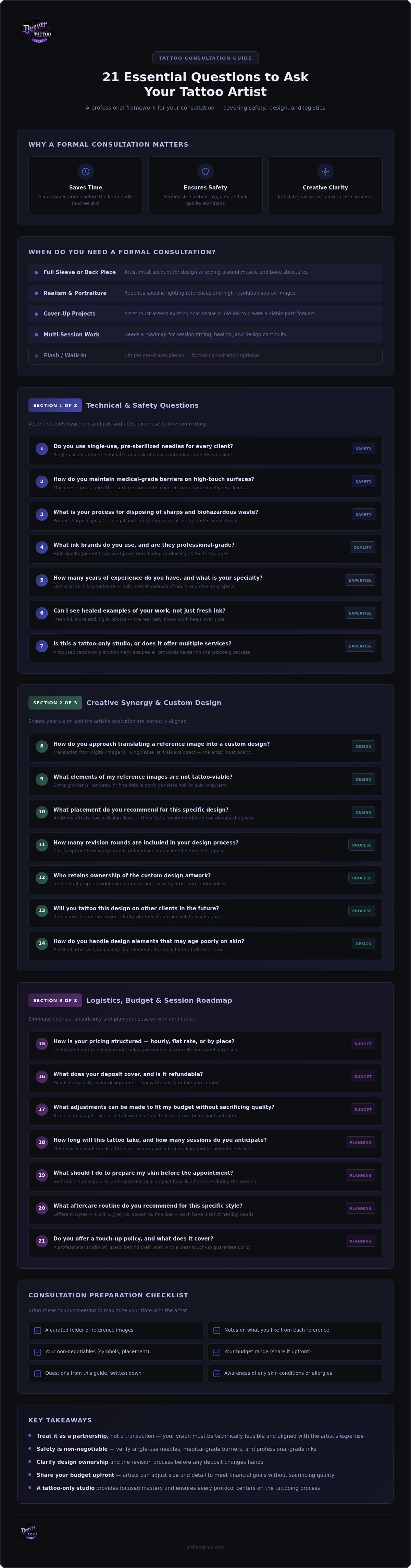
This article provides a structured framework of 21 essential questions to ask tattoo artist during consultation meetings to ensure your vision is realized with precision and care. By mastering this dialogue, you'll gain a clear roadmap for your session and the confidence that comes from a truly collaborative partnership. We will explore critical topics including hygiene standards, custom design ownership, and pricing transparency. This guide empowers you to move from uncertainty to total clarity, ensuring your next tattoo is a source of pride for a lifetime.
Key Takeaways
- Approach the consultation as a collaborative partnership to ensure your artistic vision is technically feasible and aesthetically aligned with the artist's expertise.
- Prioritize your safety by verifying that the studio adheres to strict sterilization protocols, including the exclusive use of single-use needles and premium inks.
- Use our professional framework of questions to ask tattoo artist during consultation to gain clarity on custom design ownership and the artist's revision process.
- Eliminate financial uncertainty by establishing a clear understanding of pricing structures, deposit policies, and the projected roadmap for your session.
- Understand the benefits of a tattoo-only environment where focused mastery and decades of experience ensure the longevity and precision of your investment.
The Role of a Tattoo Consultation in Your Creative Journey
A tattoo consultation serves as the intellectual foundation for your physical art. It's a dedicated window where your ideas meet the technical constraints of skin, ink, and anatomy. Skipping this professional step often results in misaligned expectations, particularly with complex custom work where the translation from digital image to living tissue isn't always direct. While a walk-in chat is suitable for small, pre-drawn flash pieces, a scheduled custom consultation at Denver Tattoo Company allows for a deeper dive into the composition. It's during this time that our studio builds trust, ensuring every client feels heard before the first needle is even sterilized. We view this meeting as a collaborative creative process rather than a simple transaction.
When Do You Need a Formal Consultation?
Not every tattoo requires a deep strategic meeting, but for projects involving significant real estate or intricate detail, it's essential. If you're planning a full sleeve or a complex back piece, the artist needs to account for how the design wraps around muscle and bone. Styles like realism and portraiture demand even more precision; these aren't just tattoos but technical recreations that require specific lighting and high-resolution references. Similarly, cover-up projects or multi-session work are inherently unpredictable. A formal meeting allows the artist to assess existing scar tissue or old ink, creating a viable path forward that a simple phone call cannot provide. This focused mastery is why our tattoo-only environment is so critical for high-stakes custom designs.
Preparing for Your Meeting
Walking into your appointment with a clear vision helps maximize the time spent with your artist. Bring a collection of reference images, but don't just show them; explain what you like about each one. Perhaps you admire the line weight in one and the color saturation in another. Identify your non-negotiables early, such as exact placement or specific symbols that must be included. This clarity allows you to focus on the technical questions to ask tattoo artist during consultation rather than trying to decide on the concept on the fly. You can maintain the artistic integrity of your piece by sharing your budget range upfront, allowing the artist to suggest size or detail adjustments that fit your financial goals without sacrificing quality. This transparency ensures that both you and the artist are moving toward the same creative outcome with zero surprises.
Technical and Safety Questions: Ensuring Professional Standards
Safety in a tattoo studio isn't merely about following local laws; it's about a meticulous commitment to the client's health and the art's longevity. Identifying the right questions to ask tattoo artist during consultation helps you vet the studio's technical standards before the session begins. When you walk into a professional environment, the organization of the space should reflect the precision of the work. A 'tattoo-only' studio, like our space in Englewood, eliminates the distractions found in multi-service shops. This focused mastery ensures that every protocol is centered entirely on the tattooing process. Inquiring about the brands and quality of pigments used is another critical part of your technical audit. High-quality inks are essential for long-term vibrancy, preventing premature fading or blurring as the tattoo ages.
Sterilization and Hygiene Protocols
Understanding the difference between an autoclave system and a 100% disposable setup is vital for your peace of mind. While autoclaves are traditional for sterilizing reusable tools, many modern experts prefer single-use sterilized equipment to eliminate any risk of cross-contamination. You should feel comfortable asking your artist to walk you through their setup process. Specific points to cover include:
- Do you use single-use, pre-sterilized needles and tubes for every client?
- How do you maintain medical-grade barriers on high-touch surfaces like machines and lamps?
- Can you explain your process for disposing of sharps and biohazardous waste?
A professional artisan will welcome these inquiries, as they demonstrate your respect for the craft's safety standards. Our commitment to single-use equipment ensures that your experience is as safe as it is creative.
Artist Experience and Specialization
Technical skill is cumulative, built over thousands of hours and diverse projects. While fresh ink often looks striking in photos, the true test of an artist's ability is how their work heals over time. Always ask to see a portfolio of healed tattoos specifically in the style you want, whether that is realism, fine line, or traditional. This transparency reveals how the ink settles into the skin and whether the artist's technique maintains its integrity long-term. Jason Oz brings over 20 years of industry experience to every custom design, providing a level of technical precision that only decades of practice can produce. If you're ready to see how this level of expertise translates to your vision, you can start your journey with a professional consultation today. This seasoned perspective is what separates a standard tattoo from a piece of fine art that stands the test of time.
Creative Synergy: Questions for Custom Tattoo Design
Custom tattooing is a collaborative journey that transforms a personal concept into a permanent masterpiece. During your meeting, focus on how the artist interprets your ideas into a design that works specifically for the medium of skin. Not every digital illustration translates well to a living canvas. You need to understand the artist's specific process for revisions and final approvals. Asking the right questions to ask tattoo artist during consultation ensures you aren't surprised on the day of your appointment. Inquiring about design ownership is also vital. A professional artisan creates a unique piece for you, but they maintain the creative integrity of the work. This synergy is what separates a generic image from a custom piece that truly tells your story. It's about finding that sweet spot where your personal meaning meets their technical mastery.
The Design Evolution Process
Most high-end custom projects involve a specific evolution from the first sketch to the final stencil. You should ask how many iterations are typical for a piece of your complexity. Some artists provide a rough layout first, while others prefer to present a near-final rendering. It's equally important to discuss 'artistic liberty.' You've chosen an expert for their specific style, so ask how they plan to refine your concept using their professional eye. This balance of your vision and their technical expertise is the hallmark of custom tattoo designs Denver enthusiasts expect. By defining these boundaries early, you create a smoother path from the initial sketch to the final application. Don't be afraid to ask how they handle a situation where your vision might conflict with what is technically possible on skin.
Placement and Longevity
A design must do more than look good on paper; it must interact harmoniously with your anatomy. Ask how the piece will 'flow' with your muscle structure and any existing tattoos you already wear. Realism, in particular, requires careful scaling to ensure that fine details don't blur into a dark mass over the next decade. Inquire about the longevity of specific details in your chosen placement. For instance, a highly detailed portrait on a high-motion area like a forearm requires a different technical approach than one on a flat surface like the back. A master artisan understands that a tattoo's beauty is measured in years, not just the first week of healing. They'll suggest adjustments to size or contrast to ensure the work remains legible and striking as your skin naturally changes over time.
Logistics, Budgeting, and the Session Roadmap
The logistics of a tattoo session are the structural supports for your creative vision. Clear communication regarding time and cost prevents stress, allowing you to focus entirely on the artistic experience. When considering the questions to ask tattoo artist during consultation, prioritize the roadmap of the session itself. You need to know if the artist works on an hourly rate or a flat-fee basis for specific projects. Hourly rates are common for large-scale, unpredictable work like sleeves, while flat fees are often reserved for smaller, defined pieces. Understanding the deposit policy is equally vital; professional studios use deposits to secure your time and begin the custom design process. These funds typically apply to the final cost of your tattoo, acting as a mutual commitment between you and the artisan. You should also clarify how many sessions the project requires and the necessary healing time between them.
Budgetary Transparency
For multi-session realism or large custom pieces, a ballpark estimate is a necessary starting point. While the exact time can vary based on skin texture and detail density, a veteran artist can provide a reliable range based on similar past projects. Inquire about any potential additional costs, such as specialized aftercare products or future touch-up policies. This level of transparency builds a foundation of respect and trust. It ensures that the financial aspect remains a secondary detail to the collaborative art being created. Knowing the total investment upfront allows you to plan your sessions without financial surprises or interrupted progress.
Preparing for the Big Day
Your physical preparation directly impacts how well your skin accepts the ink and how comfortable you remain during the process. Ask your artist for specific skin preparation tips in the days leading up to your appointment. Proper hydration and gentle exfoliation create a better canvas for the pigment. Optimal skin health is the single most important factor in achieving the high-contrast detail required for realism tattoos. If you're visiting our Englewood studio for a multi-hour session, consider what will help you maintain your stamina. We recommend bringing light snacks, water, and comfort items like a tablet or headphones. Finally, verify the studio's cancellation and rescheduling policies to protect both your deposit and the artist's schedule. Ready to map out your next project? Book your professional consultation to discuss your roadmap with our expert team.
Why Denver Tattoo Company is the Right Choice for Your Custom Piece
Choosing where to get your tattoo is as important as the design itself. At Denver Tattoo Company, we operate on a master artisan philosophy that prioritizes the longevity of your art and the technical safety of your experience. Our Englewood studio is a tattoo-only environment, which means our focus isn't divided between different cosmetic services. We don't offer body piercings or permanent makeup; we dedicate 100% of our energy to the mastery of custom skin art. This specialization allows us to maintain a clean, quiet, and highly focused space where you can feel entirely confident in the creative process. It feels like a collaborative studio rather than a high-volume shop.
Leading our team is Jason Oz, a veteran artist with over 20 years of industry experience. This depth of craft means he's encountered nearly every skin type and technical challenge imaginable. When you prepare your questions to ask tattoo artist during consultation, you'll find that Jason's answers reflect a sophisticated understanding of both the artistic and medical sides of the process. His expertise in realism ensures that your vision is translated with a level of precision that only decades of practice can produce. We believe that experience is the foundation of trust, and we provide that through every needle stroke and design choice.
A Dedication to Artistic Integrity
We believe that every custom piece deserves a collaborative partnership. Unlike high-volume shops that focus on rapid turnover, we prioritize the individual's experience. This is especially critical for intricate realism and detailed custom work that requires both patience and technical discipline. Our commitment to excellence extends to our hygiene standards, which you can explore in our guide to finding a safe tattoo studio Denver. By focusing on a limited number of high-quality projects, we ensure that your art receives the meticulous attention it deserves. Your tattoo is a permanent investment, and we treat it with the gravity it requires.
Booking Your Englewood Consultation
Starting your creative partnership with us is a straightforward and professional process. When you walk into our studio on Henger Street, you'll immediately notice the difference that a dedicated, sterile environment makes. We invite you to reach out and share your initial concepts with us to see how we can bring them to life. This is the ideal time to bring your list of questions to ask tattoo artist during consultation so we can provide the transparency and roadmap you need for a successful session. Reach out to our team today to begin crafting a piece that reflects your unique story with the precision of a master artisan.
Crafting Your Permanent Legacy with Confidence
A successful tattoo begins long before the needle touches your skin. It starts with a professional dialogue that aligns your creative vision with technical reality. By preparing specific questions to ask tattoo artist during consultation sessions, you protect your health and ensure your artwork ages with integrity. You now have the framework to evaluate studio hygiene, understand pricing transparency, and vet an artist's specialization in realism. It's about moving from a place of uncertainty to a position of total clarity.
Denver Tattoo Company offers a focused, tattoo-only environment where artistic mastery is the single priority. Led by Jason Oz, who brings over 20 years of industry experience, our studio maintains a 100% sterile workspace dedicated to intricate custom detail. We invite you to experience a collaborative process that values your input as much as the technical execution. Book your custom tattoo consultation at Denver Tattoo Company today to begin a partnership that honors the permanence of your art. Your vision deserves the steady hand and disciplined eye of a seasoned expert.
Frequently Asked Questions
Is a tattoo consultation free at most Denver shops?
Consultation policies vary across Denver and Englewood studios. Some artists provide these meetings at no cost to explore the project's feasibility, while others require a small fee or a deposit that later applies to the final price of the tattoo. It's best to verify the specific studio policy when you call to book. This meeting ensures both the artist and client are aligned on the custom design before any ink is applied.
How long does a typical custom tattoo consultation last?
A typical meeting usually lasts between 15 and 30 minutes, though complex realism pieces or full sleeves may require more time. During this window, you'll discuss the technical questions to ask tattoo artist during consultation regarding placement, size, and detail. The goal is to establish a clear roadmap for the session. This focused time allows veteran artists like Jason Oz to provide an accurate estimate of the labor involved for your specific piece.
Can I bring a friend with me to my tattoo consultation?
You can generally bring one friend for moral support or a second opinion during the discussion phase. However, many professional studios in Englewood have limited space in the consultation area. It's helpful to check with the shop beforehand to ensure they can accommodate an extra guest. While a friend's input is valuable, the primary focus remains on the direct creative collaboration between you and your artist to ensure the final design meets your expectations.
Do I need to have a final drawing ready before the meeting?
You don't need a finished drawing; in fact, most custom artists prefer to create the design themselves to ensure it's technically sound for the skin. Bringing reference images, photos, or rough sketches is highly encouraged. These visuals help the artist understand the style and elements you admire. The consultation is where your ideas are refined into a professional stencil that accounts for your anatomy and the longevity of the ink.
What happens if I don't like the artist's initial design sketch?
You should feel comfortable requesting specific revisions if the initial sketch doesn't match your vision. Honest communication is a vital part of the collaborative process. Most professional artists include a round of minor adjustments as part of the custom design service. Clear feedback during this stage prevents mistakes later. It's much easier to adjust a drawing on paper than it is to change a permanent piece of art once the session begins.
How do I know if a tattoo artist's style matches my idea?
Reviewing an artist's portfolio is the most reliable way to gauge style compatibility. Look for consistency in line work, shading, and healed results in the specific genre you want, such as realism or black and grey. A veteran with 20 years of experience will have a diverse body of work showing how their style adapts to different concepts. If their past projects resonate with your aesthetic, it's a strong indicator that they can successfully execute your vision.
What should I do if the artist's studio doesn't look clean?
If a studio in the Denver area doesn't meet professional hygiene standards, you should prioritize your safety and leave. A clean, organized workspace is a non-negotiable requirement for any reputable tattoo-only studio. Look for medical-grade barriers, single-use sterilized equipment, and a generally tidy environment. Your health is the most important factor in the tattooing process. A master artisan will always maintain a sterile environment and will be happy to explain their safety protocols.
Should I tip my tattoo artist after a consultation?
When considering the questions to ask tattoo artist during consultation, many clients wonder about gratuity. Tipping is generally reserved for the actual tattoo application rather than the initial meeting. Since the consultation is a preliminary step to discuss the project and budget, a tip isn't expected at this stage. However, if the artist spends significant time helping you refine a complex idea, a small gesture of appreciation is welcomed. Most clients tip after the final session.


