What if the most critical stage of your tattoo journey happens before a single drop of ink is even prepared? While the final artwork is the goal, the consultation is where the foundation of trust and precision is built. Most clients arrive at a studio with a blend of creative excitement and underlying anxiety about hygiene, pricing, or whether the artist truly understands their vision. It's a significant investment in your body, and feeling a bit protective of that canvas is exactly how you should feel. Knowing exactly what to ask during a tattoo consultation is the best way to move from uncertainty to a place of creative clarity.
I understand that you want a result that reflects your identity while ensuring the highest standards of safety. This guide provides you with a professional framework to vet an artist's experience, from their mastery of custom design to their adherence to Denver County's strict health regulations. You'll learn how to discuss session timing and budgets with transparency, ensuring your collaboration with a master artisan is as focused and intentional as the work itself. We will break down the essential questions that guarantee your safety is prioritized and your artistic expectations are exceeded.
Key Takeaways
- Understand how a professional consultation serves as a collaborative design phase to ensure your vision is technically feasible and artistically sound.
- Learn to evaluate an artist's portfolio for style mastery and long-term design integrity rather than just immediate visual appeal.
- Gain confidence by knowing exactly what to ask during a tattoo consultation to verify that the studio utilizes single-use, pre-sterilized equipment.
- Navigate the financial and time commitments of your piece by learning how to discuss transparent pricing and session scheduling with your artist.
- Identify the essential communication cues and environmental standards that distinguish a master-artisan studio from a standard shop.
The Purpose of a Tattoo Consultation Denver
A tattoo consultation is a dedicated, non-binding session where your artistic vision meets technical reality. It's a professional dialogue designed to ensure your idea can be translated into a permanent, high-quality piece of art. Many clients think of this meeting as a simple transaction, but it's actually the most critical phase of the creative process. It allows you to build rapport with the artist and determine if their specialized style aligns with your aesthetic goals. It isn't a commitment to get inked that day; it's a professional alignment between two creative partners.
Denver-area artists who specialize in high-end custom work often prioritize these meetings over walk-in requests. This preference reflects a commitment to the craft that a master artisan brings to every project. It's a focused environment where you can evaluate the studio's atmosphere and the artist's professional demeanor. You're looking for a space that feels clean, organized, and intentional. This is also where you'll learn about the tattooing process and safety standards to ensure your health is protected. Knowing what to ask during a tattoo consultation helps you distinguish between a shop that simply applies ink and a studio that operates with absolute precision.
There is a significant difference between a price quote and a design consultation. While a quote provides a financial estimate, a consultation addresses the technical feasibility of the artwork. An experienced artist will discuss how the ink will age, how the colors will interact with your skin tone, and whether the level of detail is sustainable over time. This transparency ensures that your investment results in a piece that looks as good in ten years as it does on day one.
Why Custom Work Requires a Meeting
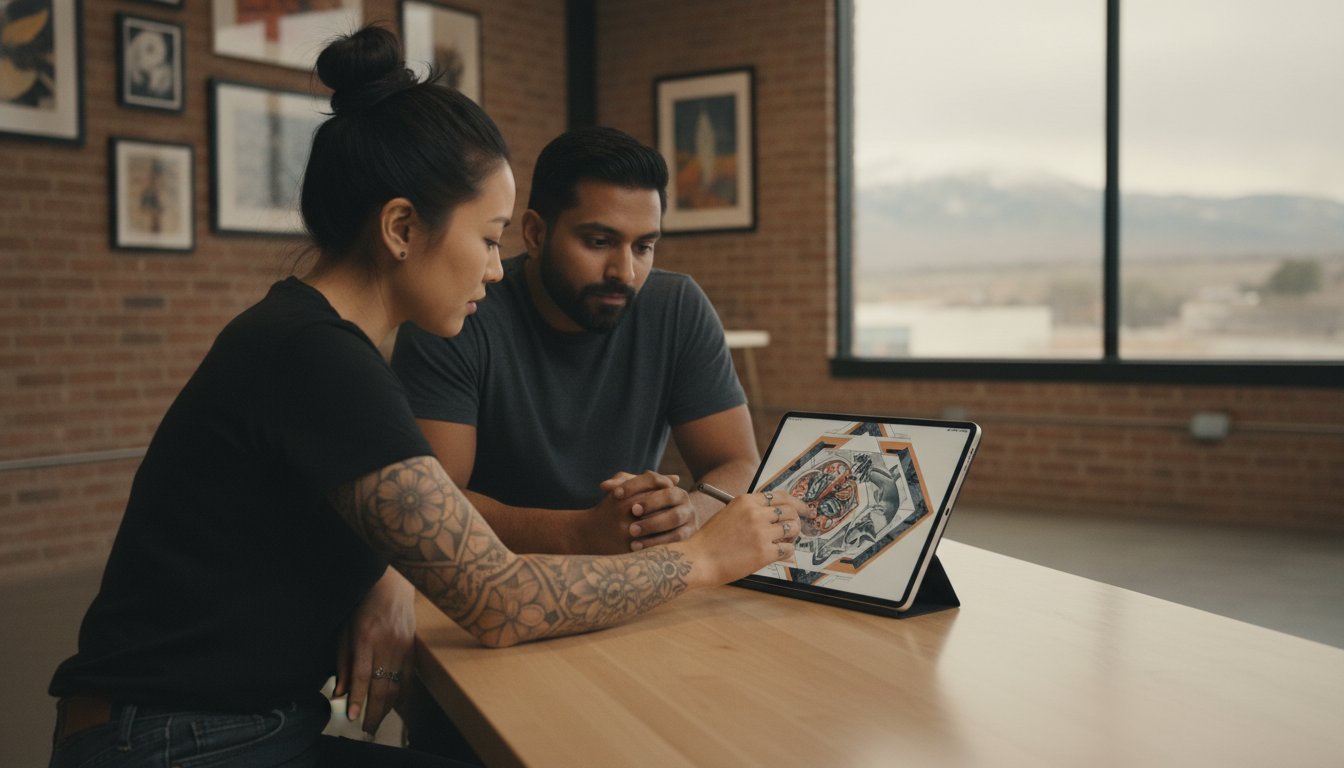
Large-scale or complex projects, such as full sleeves or hyper-realism, cannot be planned through an email or a phone call. An artist needs to assess your skin and the unique contours of your body. Anatomy plays a vital role in how a design flows. A piece that looks great on paper might need adjustments to move naturally with your muscles. Custom work is a true collaboration. You provide the inspiration, and the artist provides the technical expertise to make that vision work for the long term.
What to Bring to Your Appointment
Coming prepared ensures you get the most value from your time. Bring several reference images that capture the mood, color palette, or specific elements you like. Use these as a starting point rather than asking for a direct copy of someone else's work. You should also have a clear idea of the desired size and body placement. Finally, bring a written list of questions. Having a list ensures you don't forget what to ask during a tattoo consultation regarding the artist's specific experience with your chosen style or their sterilization protocols.
Vetting Artistic Mastery and Design Longevity
A tattoo is a permanent addition to your identity, making the vetting process about much more than a simple price check. While many people ask "how long have you been tattooing," a more insightful question focuses on specialization. Ask your artist which specific styles they have mastered, whether it's hyper-realism, fine line, or neo-traditional work. Mastery in one area doesn't always translate to another, and a dedicated artisan will be transparent about where their strengths lie. This is a primary point of what to ask during a tattoo consultation to ensure the hand behind the needle matches your aesthetic vision.
Looking at a portfolio is standard, but you should specifically request to see photos of healed work. Fresh tattoos often look vibrant and sharp, but the true test of an artist's skill is how the ink looks after six months or even six years. Healed photos reveal if the lines have stayed crisp or if the shading has maintained its depth. During this review, it's also wise to consider broader health implications. Reviewing FDA tattoo safety guidelines helps you understand how different inks and processes might interact with your skin over time. Seeing how a design evolves from a raw sketch to a final stencil provides insight into the artist's technical precision and collaborative spirit.
Portfolio Deep-Dives
When reviewing a portfolio, look for consistency in line weight and the smoothness of gradients. If you're planning a piece for a specific body area, ask if the artist has experience with that particular anatomy. Skin texture varies significantly between an inner bicep and a calf, and an experienced professional knows how to adjust their technique accordingly. Verify that the work shown consists of original custom designs rather than copied flash. If you're ready to see how a master artisan approaches these details, you can schedule a custom design consultation to discuss your specific concept.
Technical Design Questions
One of the most valuable things regarding what to ask during a tattoo consultation is how the design will age over the next 10 to 20 years. Ink naturally spreads slightly over time, so asking about the level of detail possible within your chosen size is vital. A design that is too crowded may become a blur in two decades. Inquire about color theory as it pertains to your skin type; certain pigments hold better on specific undertones. A master artist will guide you on whether black and grey or a full-color palette will offer the best longevity for your unique canvas.
Safety, Sterilization, and Professional Standards
While the artistic vision is the heart of your project, technical safety is the foundation upon which it's built. A professional studio prioritizes hygiene as much as the artwork itself. When considering what to ask during a tattoo consultation, your questions should focus on the specific protocols that protect your health. A master artisan doesn't just follow basic rules; they create a controlled environment where every surface and tool is managed with medical-grade precision. This transparency builds the trust necessary for a successful collaborative experience.
Verifying a studio's commitment to tattoo safety and regulations is a critical step for any Denver client. In Denver County, artists are required to hold a Body Artist License, which must be renewed annually and requires up-to-date bloodborne pathogen training. Don't hesitate to ask if the artist's certifications are current. A reputable shop will be proud to show you their credentials and explain how they meet or exceed local health department standards in Englewood or Denver. This level of professionalism ensures that your investment is handled with the care it deserves.
Beyond the needles, pay attention to the studio's cross-contamination prevention. This includes the use of medical-grade cleaning agents and barrier films on all high-touch surfaces, such as power supplies and workstations. A clean, focused environment is a hallmark of a dedicated professional. If a station looks cluttered or messy, it's a sign that safety protocols might be secondary to volume. Choosing a studio that values precision in its physical environment is as important as choosing one that values precision in its art.
The "Single-Use" Standard
Modern industry standards have shifted away from older sterilization methods like autoclaves in favor of 100% disposable setups. Master-artisan studios favor single-use, pre-sterilized needles and disposable grips to eliminate any risk of cross-contamination. When you're in the chair, watch for the artist to open these sealed packages directly in front of you. Asking "do you use a fully disposable system?" is a vital part of what to ask during a tattoo consultation to ensure the highest hygiene standards are met. It's a simple question that provides immense peace of mind.
Ink and Pigment Quality
The quality of the ink used is just as important as the skill of the artist. Inquire about the specific brands of premium pigments the studio stocks and whether they're sourced from reputable manufacturers with safety certifications. If you have sensitive skin or a history of allergies, this is the time to discuss a patch test. A professional can explain the composition of their inks, including whether they offer vegan or organic options. Understanding the origin and quality of the pigments ensures that your skin's health is respected throughout the entire tattooing process.

The Logistics: Pricing, Timing, and Booking
Establishing the framework for your project's timeline and cost is a vital step in the professional relationship. Once you have aligned on the artistic vision and safety standards, you must turn your attention to the practicalities of the investment. A master artisan values transparency as much as technical skill. Understanding what to ask during a tattoo consultation regarding logistics prevents surprises and ensures both parties are respected throughout the process. This stage is where a creative concept transforms into a scheduled reality.
Most professional studios in the Denver area structure their fees using either an hourly rate or a flat rate per piece. Hourly rates are typical for large-scale custom work where the exact time required may fluctuate based on detail and skin response. Conversely, a flat rate might be applied to smaller, well-defined designs. You should also clarify the studio's deposit policy. Deposits are standard practice to secure your appointment and compensate the artist for their initial design time. Typically, this amount is deducted from the final cost of your session, but you should confirm if it is non-refundable in the event of a late cancellation.
Rescheduling and cancellation windows are equally important to discuss. Professional artists manage tight schedules; providing a 48 to 72-hour notice for changes is a common courtesy that allows the studio to fill the vacancy. Ask about the specific timeframe required to move your appointment without forfeiting your deposit. Clear communication about these boundaries ensures a smooth, professional experience from the first sketch to the final sit.
Budgeting for Custom Art
Custom work rarely comes with a fixed price tag because every skin canvas is unique. Factors like the complexity of the design, the placement on the body, and even your personal pain tolerance can influence the total time spent. Ask your artist for a ballpark estimate rather than a hard number. This range accounts for the meticulous nature of high-end artistry. Additionally, it's helpful to inquire about tipping etiquette. While not mandatory, a 15% to 20% tip is a standard way to show appreciation for a master artisan's dedication to your piece.
Scheduling Multi-Session Projects
Large designs often require multiple visits to ensure the best results. Ask your artist: "How much time do we need between sessions for proper healing?" Generally, a period of two to four weeks is necessary to allow the skin to settle before adding more detail. You should also discuss booking lead times, as experienced artists in Englewood may be scheduled weeks or months in advance. Finally, inquire about touch-up policies. Most professionals offer a complimentary touch-up within a specific window after the tattoo has fully healed to ensure the work meets their high standards. If you are ready to begin this process, you can book a tattoo consultation to discuss your project's specific timeline.
Red Flags and Finalizing Your Booking
The final stage of your meeting is as much a psychological assessment as it is a technical one. After you have covered the logistical and artistic details, take a moment to evaluate how the conversation felt. A master artisan treats your inquiry with respect and seriousness, recognizing the permanence of the work. If you leave the studio feeling more confused than when you arrived, it's likely a sign that the partnership isn't the right fit. Knowing what to ask during a tattoo consultation is your first line of defense, but your intuition serves as the final filter for your decision.
Transitioning from a discussion to a confirmed booking should feel like a natural progression. Once you're satisfied with the design concept, safety protocols, and pricing structure, the artist will typically request a deposit to secure your date. This commitment signals that both parties are ready to move forward. Ensure you receive a clear receipt or digital confirmation that outlines the date, time, and how your deposit applies to the final cost. This level of organization is a hallmark of a professional environment where the client experience is prioritized alongside the art itself. It provides the peace of mind needed to step into your session with total confidence.
Consultation Red Flags
Be alert for specific warning signs that suggest a lack of professional integrity. A major red flag is an artist who is dismissive when you ask to see healed portfolio photos or refuses to explain their sterilization steps in detail. Transparency is non-negotiable in a modern studio. You should also be wary of any pressure to "size up" a piece or alter your design in a way that feels uncomfortable. While an artist should offer expert feedback on what works technically, they should never override your personal vision for the sake of their own preference. Finally, watch for a lack of clarity regarding financial terms. If the deposit or hourly rate feels like a moving target, it's best to look elsewhere for a more reliable authority.
The Denver Tattoo Company Difference
At our Englewood shop, we believe the consultation is the cornerstone of a successful tattoo. Led by Jason Oz, who brings 20+ years of industry experience to every project, our studio is designed to be a clean, welcoming, and highly focused environment. We specialize in custom designs that are built to last, ensuring that every client receives honest, expert feedback during the planning stage. We prioritize single-use sterile equipment and maintain a standard of precision that mirrors the complexity of our physical work. When you're ready to experience a collaborative and respectful creative process, we invite you to schedule a consultation at our Englewood studio. We're here to ensure your vision is executed with the highest level of artistic mastery and technical safety.
Secure Your Vision with Professional Precision
A tattoo is a permanent commitment to your identity, and the consultation is the essential safeguard for that investment. By focusing on artistic longevity and technical safety, you ensure your vision is executed with the precision it deserves. We have explored how to vet an artist's portfolio for healed results and how to verify that a studio adheres to the highest sterilization standards. Knowing what to ask during a tattoo consultation transforms a simple appointment into a collaborative partnership built on mutual respect and professional integrity.
At Denver Tattoo Company, we provide a premier custom studio environment in Englewood, CO, where every detail is managed with a master artisan’s touch. Led by Jason Oz, who brings 20+ years of professional tattooing experience, our shop prioritizes strict single-use sterilization protocols to protect your health. We invite you to bring your ideas to a space that values quality and focus over volume. You can Book Your Custom Tattoo Consultation with Jason Oz today to begin your creative journey with absolute confidence. Your skin deserves the care of a seasoned expert who is as invested in the permanence of the work as you are.
Frequently Asked Questions
Do I have to pay for a tattoo consultation in Denver?
Most professional studios don't charge a dedicated fee for the initial consultation itself. This meeting is viewed as a professional courtesy to ensure artistic alignment and technical feasibility before any work begins. However, if you decide to proceed with the project, you'll typically be asked to provide a deposit. This amount secures your appointment date and compensates the artist for the time spent on your custom design, eventually applying toward the final cost of your tattoo.
How long does a typical tattoo consultation take?
A typical consultation usually lasts between 15 and 30 minutes. This provides ample time to discuss your vision, review reference images, and determine the best anatomical placement for the piece. For highly complex projects like full sleeves or intricate realism, the session might run slightly longer to address every technical detail. It's a focused, intentional dialogue designed to put you at ease and establish a clear creative roadmap.
Can I get tattooed the same day as my consultation?
Same-day sessions are rarely possible for custom work because the artist needs time to finalize your unique design and prepare the stencil. While walk-in tattoos are available for simpler, pre-drawn flash pieces, custom artistry requires a dedicated preparation period. This gap between the meeting and the application ensures that the master artisan can focus entirely on the precision and integrity of your permanent artwork.
Should I tip my artist for the consultation time?
Tipping is not expected for the consultation time alone, as this meeting is considered part of the studio's professional planning process. Most clients wait until the actual tattooing session is complete to show their appreciation for the artist's dedication and skill. If you find the artist's expert feedback particularly helpful when deciding what to ask during a tattoo consultation, you can always factor that into your final tip once the ink is applied.
What if I decide not to book after the consultation?
You are under no obligation to book an appointment if you don't feel a professional or creative connection with the artist. The consultation is a non-binding meeting designed for both parties to assess if the project is a good fit. If the studio's environment or the artist's specialized style doesn't meet your expectations, it's perfectly acceptable to thank them for their time and continue your search for the right creative partner.
Is it okay to bring a friend to my tattoo consultation?
Bringing one trusted friend for support is generally acceptable, but it's best to check with the studio's specific policy beforehand. Many professional environments are designed for focused collaboration, and large groups can be distracting in a busy shop. Having a second pair of eyes can help when you're considering what to ask during a tattoo consultation, but the primary focus should always remain on your direct dialogue with the artisan.
What happens if the artist says my idea won’t work?
If an artist suggests your idea won't work, they are providing honest feedback based on years of technical experience. Certain designs may not age well due to ink spread, or they might not flow naturally with your body's anatomy. A master artisan won't simply dismiss your idea; they'll offer professional alternatives that preserve the spirit of your vision while ensuring the final result remains crisp and beautiful for decades.
Do I need to have my design 100% finished before the meeting?
You don't need a finished design to have a productive meeting. In fact, many artists prefer starting with rough concepts or reference images so they can use their expertise to build a design that works perfectly for your skin. The consultation is the collaborative phase where your inspiration meets the artist's technical skill. It's the ideal time to explore design flow and ensure the artwork is tailored specifically to your body.


