

Getting your first tattoo at forty is an intentional artistic statement, not an impulsive youth experiment. While the average person gets inked in their early twenties, getting a tattoo at 40 for the first time gives you a level of self-assurance and taste that younger collectors rarely possess. You know who you are, what matters to you, and how you want to present yourself. Still, it's easy to wonder if you'll feel out of place in a modern shop, or whether changing skin elasticity might compromise the longevity of your piece.
Those concerns are completely valid, especially when you're facing unfamiliar questions about pain tolerance, healing speed, and aging tissue. The reality is that mature skin holds pigment beautifully when handled with experienced technique and thoughtful design. This guide breaks down the distinct advantages of starting your collection at forty, offering practical insight on skin preparation, resilient placements, and how to choose a sterile, welcoming studio for your first collaborative consultation.
Key Takeaways
- Understand why getting a tattoo at 40 for the first time offers distinct creative confidence, ensuring your artwork reflects enduring personal significance rather than passing trends.
- Discover how natural shifts in collagen and elasticity affect pigment retention, and how an artist's needle depth prevents blowouts on mature skin.
- Learn which anatomical placements and design scales age most gracefully over time, preserving clarity and structural integrity as skin naturally changes.
- Prepare your body effectively for the chair by calibrating pain expectations across specific anatomical zones and dialing in proper hydration and rest.
- Identify critical studio hygiene standards and portfolio markers to find a sterile, collaborative artist who respects your input and vision.
Why Getting a Tattoo at 40 Is a Distinct Creative Advantage
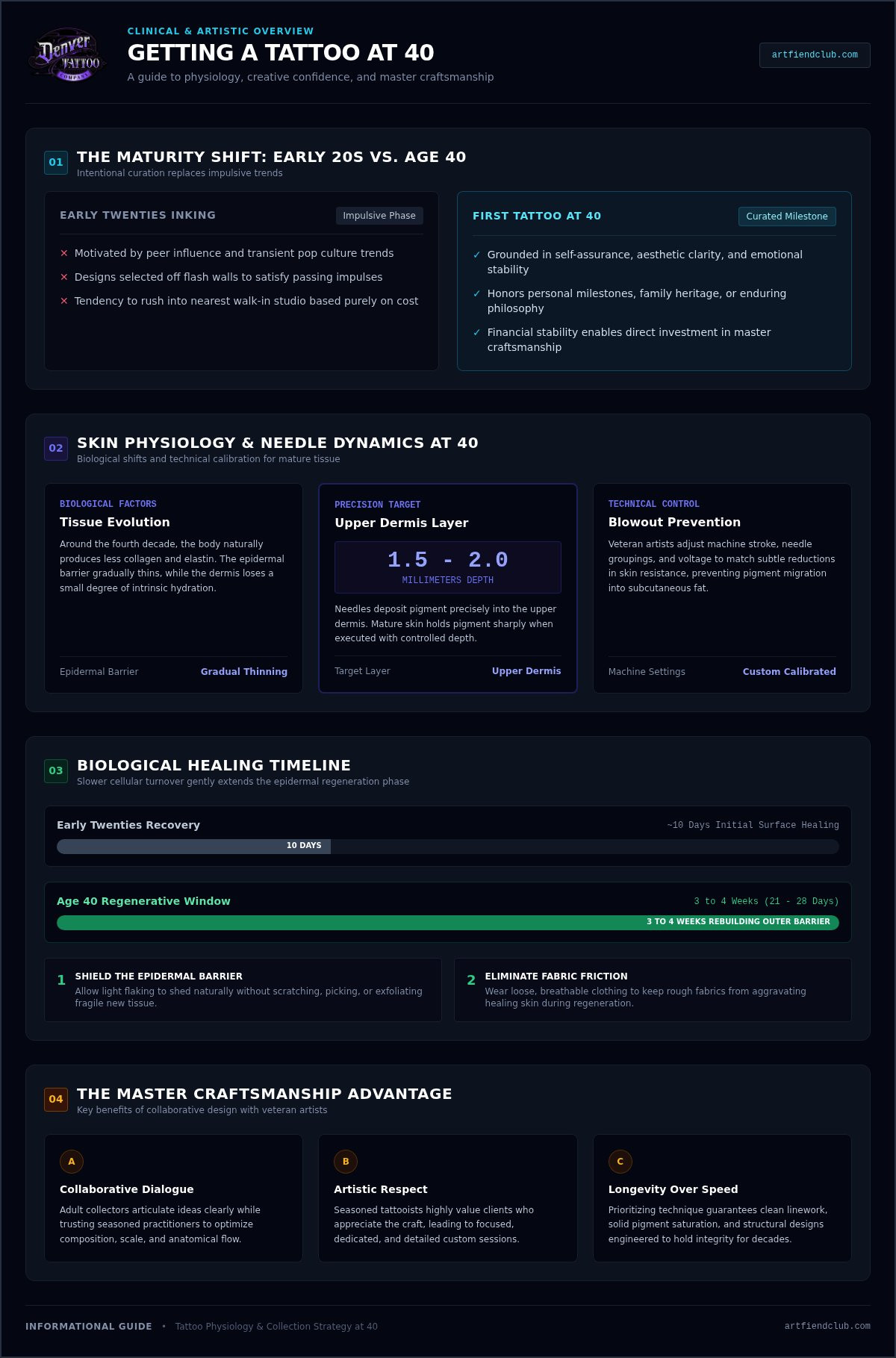
Popular media often frames midlife body art as an act of rebellion or a sudden reaction to aging. In reality, getting a tattoo at 40 for the first time represents a thoughtful craft decision rooted in discernment. While early twenties tattoos frequently stem from impulse or peer influence, approaching the medium at forty allows you to act as an intentional curator. You bring decades of life experience, aesthetic clarity, and emotional stability to the drawing table. The deep history and cultural significance of tattoos demonstrates that body markings have long marked major life transitions and hard-won maturity, rather than reckless youth.
Professional culture has shifted alongside these creative perspectives. Visible ink no longer carries the corporate stigma it did decades ago; leaders across tech, finance, and creative industries display custom artwork openly. Paired with financial stability, entering the craft later in life frees you from bargain shopping, enabling you to invest directly in veteran artists who respect your vision.
Intentionality Versus Impulsive Youth Trends
First-time collectors at forty rarely select designs off a flash wall to satisfy a passing impulse. Instead, you have the self-awareness required to separate transient pop culture fads from timeless personal narratives. Decades of lived experience provide rich creative material, whether you are honoring personal milestones, family heritage, or enduring philosophical values. Because you know your identity, the design process becomes efficient and decisive. You don't second-guess whether a concept fits your lifestyle; you already know it does.
The Value of Investing in Master Craftsmanship
Patience and resource stability fundamentally change how you interact with an artist. Rather than rushing into the nearest walk-in studio based purely on cost, discerning adults prioritize technical excellence and portfolio depth. This mindset establishes an ideal foundation for collaborative design work:
- Collaborative dialogue: You can articulate your ideas clearly while trusting a seasoned practitioner to optimize composition, scale, and flow.
- Artistic respect: Seasoned tattooists value clients who appreciate the craft, leading to focused, highly detailed work.
- Longevity over speed: Prioritizing master craftsmanship ensures you receive clean linework, solid pigment saturation, and designs engineered to hold their integrity for decades.
Choosing to approach getting a tattoo at 40 for the first time means partnering with experienced professionals who understand mature skin and personal aesthetics, resulting in an enduring piece of custom art.
How Skin at 40 Interacts with Tattoo Needles and Pigment
A central concern when getting a tattoo at 40 for the first time is whether mature skin holds ink cleanly. Around your fourth decade, your body naturally produces less collagen and elastin. The epidermal barrier gradually thins, while the dermis loses a small degree of intrinsic hydration. These biological shifts alter how skin responds to trauma, but they do not prevent crisp pigment saturation. Understanding the underlying physiology allows you to approach the session with realistic expectations and proactive preparation.
Collagen Loss, Dermal Elasticity, and Ink Stability
Tattoo needles deposit pigment into the upper dermis, roughly 1.5 to 2 millimeters beneath the skin's surface. In mature tissue, maintaining precision at this depth requires experienced technical execution. Veteran artists adjust machine stroke, needle groupings, and voltage to accommodate subtle reductions in skin resistance. This controlled technique prevents ink blowouts, which occur when pigment penetrates too deeply into subcutaneous fat. Far from inevitably blurring, ink placed into healthy 40-year-old dermis remains sharp when executed with a disciplined hand.
Managing the Extended Biological Healing Window
Cellular turnover slows as we age, gently extending the standard recovery phase. While a person in their early twenties might complete initial surface healing in ten days, skin at forty often requires three to four weeks to rebuild the outer barrier. During this extended regenerative window, protecting your skin from complications outlined in clinical guidance on tattoo safety and health risks requires disciplined care:
- Shield the epidermal barrier: Allow light flaking to shed naturally without scratching, picking, or exfoliating fragile new tissue.
- Eliminate friction: Wear loose, breathable clothing to keep rough fabrics from abrading healing pigment.
- Avoid water immersion: Skip baths, saunas, and swimming pools entirely until the surface layer fully closes.
Combating Environmental Dryness and Dehydration
Skin hydration plays a pivotal role in needle glide and pigment acceptance. If your tissue is chronically dry, the needle encounters uneven friction, increasing local trauma. Drink plenty of water and apply a clean, fragrance-free moisturizer twice daily for two weeks prior to your appointment. For those living in arid regions or high elevations, reviewing specialized guidance on long term tattoo care in Colorado helps safeguard skin elasticity against harsh climatic stress. Preparing your skin ahead of time makes getting a tattoo at 40 for the first time smooth, predictable, and comfortable; when you are ready to plan your session, you can book a dedicated consultation through artfiendclub.com to evaluate your skin with an experienced artist.
Choosing Placements, Scale, and Styles Built to Age Gracefully
Successful tattoo design requires balancing personal expression with anatomical reality. When getting a tattoo at 40 for the first time, you have the advantage of knowing your daily routine, wardrobe, and physical changes over time. Consulting medical insights on the risks and precautions of getting a tattoo reveals that skin thickness, sun exposure, and friction dictate how well body art endures. Selecting the right canvas area and design scale ensures your investment stays crisp for decades.
Evaluating Anatomical Placements for Longevity
Different body zones age at distinctly different speeds. Areas with dense underlying muscle and minimal everyday sun exposure preserve pigment saturation best:
- Upper outer arm and shoulder blade: These muscular zones retain dermal firmness, resist stretching, and offer effortless discretion beneath corporate attire.
- Calf and outer thigh: Generous surface areas here provide stable ground with minimal skin shifting across changing decades.
- High-movement areas: Inner wrists, fingers, and feet endure constant friction and rapid cellular shedding, causing premature fading.
- Variable tissue zones: The stomach, hips, and chest experience greater flux from weight variations, making them trickier choices for intricate geometric linework.
Why Scale, Contrast, and Breathing Room Outlast Micro Trends
Social media frequently highlights miniature fine-line tattoos, but these designs often age poorly. Over several years, dermal macrophage cells naturally shift microscopic pigment particles, causing lines to soften and broaden. If ultra-delicate script or tiny symbols are packed too closely together, they run the risk of blurring into an illegible mark.
Bold illustrative styles and rich black-and-grey realism age with superior dignity. These styles incorporate structural dark values alongside generous negative space, allowing the design to breathe as tissue naturally shifts. Commissioning tailored custom tattoo designs in Denver ensures the artist configures scale, contrast, and line weights specifically for your body, turning your first piece into an enduring visual asset.
What to Expect in the Chair: Pain, Preparation, and Safety
Sitting in the studio chair for the first time can feel intimidating, but clear preparation removes the mystery. When getting a tattoo at 40 for the first time, your life experience and emotional discipline become major assets. Understanding procedural sensations, priming your physical body, and knowing what hygienic benchmarks to look for turns an intimidating session into an empowering artistic milestone.
The Reality of Tattoo Sensations After 40
Most first-timers find the physical sensation far more manageable than anticipated. The needle creates a focused vibration combined with a scratching sensation rather than sharp agony. Maturity grants you the mental patience to settle your nervous system through slow, rhythmic breathing. If you need to shift position or take a quick stretch, professional artists welcome open communication.
Avoid taking aspirin, ibuprofen, or drinking alcohol the night before, as these thin your blood and cause excessive bleeding during the session. Unvetted over-the-counter numbing creams should also be skipped; they can alter skin texture, interfere with needle depth, and impede clean ink retention.
Physical Preparation Protocols the Day of the Session
Preparing your body properly prevents lightheadedness and helps maintain physical endurance throughout your appointment:
- Eat a hearty meal: Consume complex carbohydrates and protein about two hours before your appointment to stabilize blood sugar and prevent dizziness.
- Hydrate thoroughly: Drink plenty of water throughout the preceding forty-eight hours to keep your skin plump and resilient under the machine.
- Rest and dress comfortably: Secure a full night of sleep and wear loose, dark clothing that grants effortless access to your placement site.
Inspecting Studio Safety and Sterilization Standards
Never hesitate to verify clinical hygiene before an artist begins their setup. A reputable studio operates with the meticulous discipline of a medical clinic. Reputable artists always unwrap pre-sterilized, single-use needle cartridges and disposable ink caps in your direct view. You should also observe clear protective barrier film wrapped around power packs, clip cords, and machine grips to eliminate cross-contamination risks.
Learning how a safe tattoo studio in Denver establishes hospital-grade hygiene protocols ensures you feel completely confident in your surroundings. To experience an ego-free, pristine studio environment firsthand, schedule a dedicated tattoo consultation to review your ideas and inspect our safety standards in person.
Starting Your Journey: Finding the Right Studio and Artist
Selecting the right practitioner is the most consequential decision you will make when getting a tattoo at 40 for the first time. The days of having to endure intimidating, chaotic street shops are long gone. Discerning first-timers deserve an ego-free, welcoming sanctuary where communication is clear and artistic standards are uncompromising. Partnering with a dedicated professional ensures your concept receives the technical precision, hygienic discipline, and focused care it warrants.
Evaluating Portfolios for Healed Quality and Technical Cleanliness
Fresh tattoos can look deceptive under bright studio ring lights, but healed photography reveals an artist's true technical ability. When browsing galleries, look specifically for pieces that have settled into the dermis for six months or longer. High-caliber portfolios demonstrate distinct technical benchmarks:
- Consistent linework: Contours should maintain uniform weight and smooth trajectories without wobbles, gaps, or blurred edges.
- Smooth tonal transitions: Shading in realism or illustrative work should blend seamlessly across the tissue without patchy, overworked spots.
- Style specialization: Seek an artisan whose catalog consistently demonstrates mastery in the exact aesthetic you desire, rather than a generalist attempting every trend.
The Consultation: Aligning Vision and Collaborative Respect
A private consultation acts as an essential discovery session for both you and the artist. It provides a dedicated space to discuss sizing, evaluate placement contours, and gauge personal chemistry before committing to needle work. Preparing ahead by reviewing what to ask during a tattoo consultation helps you navigate this discussion with complete clarity.
Pay close attention to how the artist responds to your questions. A seasoned professional listens closely to your personal narrative, provides honest technical feedback about how the piece will age, and treats your ideas with genuine respect. They will outline session pacing, discuss custom revisions transparently, and make sure you feel completely comfortable moving forward. Approaching the craft collaboratively turns getting a tattoo at 40 for the first time into an empowering, creative milestone that honors your life story.
Taking Your First Step with Clarity and Confidence
Stepping into the studio in your fourth decade is an act of authentic self-expression backed by clear intent. By pairing mature aesthetic vision with resilient anatomical placement and disciplined skin preparation, getting a tattoo at 40 for the first time becomes an empowering creative milestone. You bring life perspective and self-assurance to the table; a seasoned artisan provides the technical precision to ensure your piece endures.
At Denver Tattoo Company, veteran artist Jason Oz brings over two decades of professional tattooing experience to guide first-time collectors through every stage of the design process. Our Englewood studio maintains an ego-free, calm atmosphere supported by hospital-grade hygiene and 100% single-use sealed equipment, so you can explore your concepts with total peace of mind. When you are ready to bring your vision to life, schedule a personalized consultation with veteran artist Jason Oz at Denver Tattoo Company to craft custom artwork that honors your story.
Frequently Asked Questions
Is 40 too old to get a tattoo for the first time?
No, forty is not too old; in fact, it is an ideal age to begin collecting body art. Adults in their forties possess established personal identities, distinct aesthetic tastes, and the resources to invest in master artists. Mature collectors rarely experience the regret seen in younger demographics because their choices reflect authentic personal milestones rather than passing trends.
Can aging skin hold detailed tattoo ink cleanly without blowout?
Mature skin holds detailed ink cleanly when worked by an experienced artist who understands shifting tissue density. A veteran technician adjusts their machine stroke and needle depth to accommodate slight collagen reduction, placing ink precisely into the upper dermis. This controlled application prevents blowouts and ensures crisp linework that heals evenly.
How much more painful is getting tattooed at 40 compared to 20?
Getting a tattoo at 40 for the first time is rarely more painful than getting one at twenty, and many adults find it easier to manage. While skin loses a small amount of underlying fat padding, older adults possess greater emotional discipline and perspective. Controlled breathing and mental endurance make sitting through a session straightforward.
What happens if my body weight or muscle tone changes after getting tattooed?
Normal fluctuations in body weight or muscle tone have minimal visual impact on well-placed tattoos. Placements on the outer shoulder, calf, forearm, or upper back shift naturally with the body without noticeable distortion. Extreme, rapid weight changes can stretch skin, but gradual fitness shifts simply move with your skin's natural architecture.
Is it safe to get a tattoo if I take routine prescription medications?
It is generally safe, but you should always disclose ongoing medications to your artist during the consultation. Blood thinners, immunosuppressants, and certain systemic acne treatments alter clotting or cellular healing. A professional studio will coordinate with your medical provider's advice to ensure your skin is safe for needle application.
How long does a first-time tattoo take to fully heal on mature skin?
Surface recovery typically wraps up in three to four weeks, while deeper dermal regeneration takes approximately eight to twelve weeks. Because cellular turnover naturally moderates with age, skin past forty benefits from gentle, patient aftercare. Keeping the area clean, moisturized, and protected from direct sunlight ensures complete healing.
Can an artist design a custom piece that complements existing scars or sun damage?
Yes, veteran artists regularly construct custom compositions that integrate or camouflage existing scars and localized sun spots. During an initial consultation, the artist evaluates skin texture, raised tissue, and pigmentation variations. They then tailor line density, contrast, and shading flow to ensure the final design sits harmoniously across irregular areas.


