

What if your first tattoo appointment is less a test of toughness and more a careful conversation? It’s normal to wonder what to expect first tattoo session, especially if you’re unsure how the process works or how it will feel. You don’t have to hide your nerves or push through discomfort in silence. A good appointment gives you room to ask questions, share what you need, and work with your artist at a steady pace.
This guide walks you through the experience from arrival to aftercare, so you can feel prepared without needing to know everything in advance. You’ll learn what may happen as you review the design and placement, what sensations are common during tattooing, and how to ask for a pause. We’ll also cover what to bring, how to assess a studio’s hygiene practices, and why clear aftercare instructions matter once the session ends. The goal isn’t to eliminate every uncertain feeling. It’s to help you make informed choices and approach your first tattoo as a collaborative process.
Key Takeaways
- Knowing what to expect first tattoo helps you follow the appointment’s steps, from checking the design and placement to receiving aftercare guidance.
- Tattoo sensations vary, so tell your artist how you’re feeling and ask for a pause if needed.
- Compare a consultation with a walk-in to decide which option suits your design, then confirm arrangements and studio policies directly.
- Prepare by checking appointment details and bringing what you need for a comfortable visit.
- Before leaving, make sure you understand your artist’s aftercare instructions and follow them consistently.
What to Expect at Your First Tattoo Appointment, From Arrival Onward
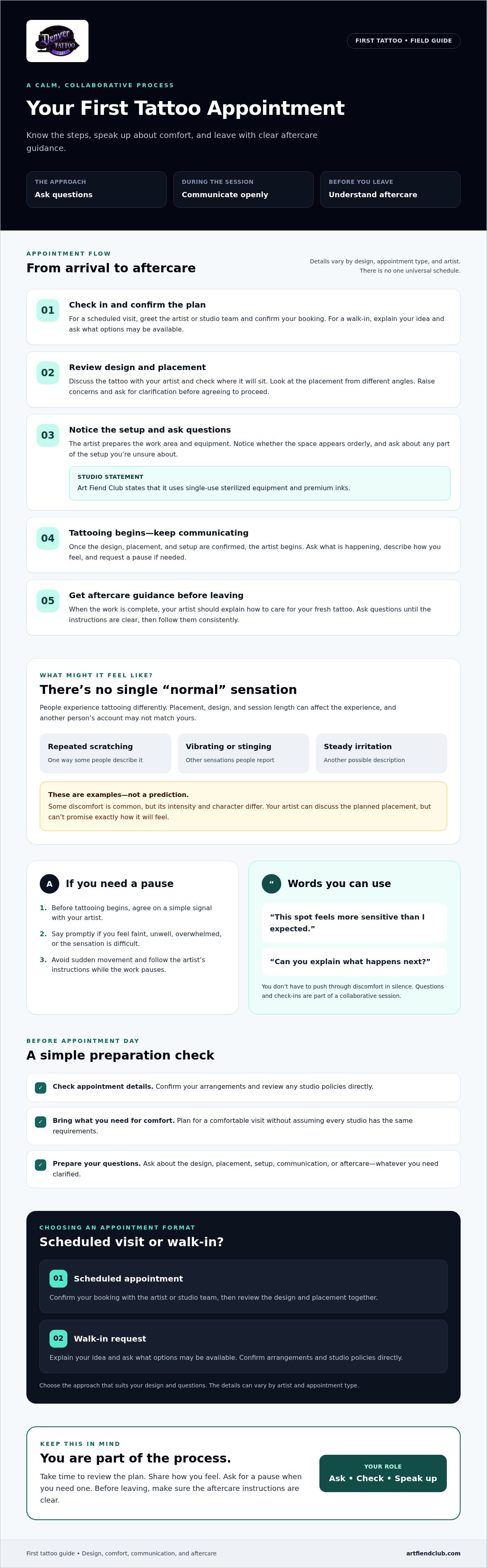
Feeling nervous before your first appointment is common, especially when you’re unsure how the visit will unfold. It can help to know the basic steps: check in, review the design and placement, prepare for the tattoo, communicate during the session, and get aftercare guidance before you leave. The details can vary with the design, appointment type, and artist, so there isn’t one universal schedule.
A tattoo appointment is a collaboration. You and the artist review the design and placement, discuss your comfort, and check in as the work progresses. If you’re researching what to expect first tattoo, remember that asking questions is part of the process, not an interruption.
What happens when you arrive at a tattoo studio?
At a scheduled appointment, you’ll generally greet the artist or studio team and confirm your booking. For a walk-in request, explain the idea you have in mind and ask what options may be available. The artist will discuss the tattoo, then review the design and where it will sit on your body. You may be asked to check the placement before tattooing begins. Take time to look at it from different angles and speak up if anything feels off.
Raise concerns before agreeing to proceed. Ask for clarification about the design, placement, or next step. A tattoo is permanent, and you should feel comfortable with the plan before the session moves forward.
How does a tattoo artist prepare the work area?
Before tattooing starts, the artist prepares the work area and equipment. Notice whether the space appears orderly, and ask the artist to explain any part of the setup you’re unsure about. Art Fiend Club states that it uses single-use sterilized equipment and premium inks. These are practices the studio describes. If you’re comparing studios in the Denver area, this guide to safe tattoo studio practices offers further points to consider.
Once you and the artist have confirmed the design and placement and the setup is ready, tattooing begins. The artist can guide you through what’s happening and check in as needed. When the work is complete, the artist should explain how to care for your fresh tattoo and answer questions before you leave. For broader context on tattooing, its history, and cultural significance, see this comprehensive overview of tattoos.
What a First Tattoo Feels Like, and How to Communicate During It
There isn’t one sensation everyone should expect. People describe tattooing differently, and what you feel can change with the placement, design, and length of the session. Some describe repeated scratching, vibrating, or stinging; others say it feels more like steady irritation. These are examples, not a prediction of how your session will feel.
If you’re wondering what to expect first tattoo, plan for communication rather than a particular pain level. Tell your artist if the sensation is becoming difficult, ask a question if you’re unsure what’s happening, and speak up if you feel unwell. You don’t need to prove you can tolerate discomfort silently.
Is getting your first tattoo painful?
Some discomfort is common, but its intensity and character differ between people. Placement, design, and session length can all affect the experience. There’s no reliable way to rank areas for everyone, so someone else’s account may not match yours. Your artist can explain what to expect for the planned placement, but can’t promise exactly how it will feel.
Pay attention to your own response and describe it clearly. For example, you might say, “This spot feels more sensitive than I expected,” or ask the artist to explain the next step. For information about possible ink reactions and other health considerations, consult the FDA’s guidance on tattoo safety and ink regulations.
Can you take a break during a tattoo?
Yes, you can ask for a pause. Before the work begins, ask your artist how they’d like you to signal that you need to stop. Agreeing on a simple cue can make it easier to speak up once the session is underway. If you feel faint, unwell, or overwhelmed, tell the artist promptly rather than trying to push through.
Breaks and check-ins are part of communicating during the session. The artist may need a moment to pause the work safely, so avoid sudden movement and follow their instructions. Clear communication helps the artist respond to your needs and keep the session collaborative. If you’re unsure, ask how to request a pause before the tattooing begins.
If a conversation beforehand would help you feel more prepared, explore tattoo consultation options and discuss your questions with an artist.
What to Confirm Before Your First Tattoo in Englewood or Denver
For a first tattoo, the right appointment format depends on how much discussion your idea needs. Denver Tattoo Company, located in Englewood, offers tattoo consultations and walk-ins during open hours. A consultation gives you room to discuss personalized artwork and placement. A walk-in request depends on current hours and availability. Confirm the details directly before planning your visit, whether you’re coming from Denver, Englewood, Lakewood, Highlands Ranch, or Littleton.
Should you book a consultation or ask about a walk-in?
A consultation is a useful starting point if you want custom artwork or time to talk through your idea and placement with the artist. A walk-in may suit someone with a simpler plan, but availability can change. Ask whether the studio can accommodate your request and what to expect next. For more preparation, see these questions to ask during a tattoo consultation.
Consultation
May suit: A personalized design or an idea you’d like to discuss before committing to the session.
Ask: How will we review the design and placement, and what appointment details should I confirm?
Walk-in
May suit: Someone seeking to discuss a tattoo during the studio’s walk-in hours, subject to availability.
Ask: Are you accepting walk-in requests, and what information should I bring?
What should you ask the artist before the session?
Direct questions help you and the artist establish shared expectations before permanent work begins. Keep your first-visit checklist practical: ask how the session will unfold, when you’ll review placement, how to request a break, and what aftercare instructions you’ll receive. Confirm arrival expectations, identification requirements, current hours, and accepted payment methods with the studio, since these details can vary.
- Should I arrive at a particular time, and what should I bring?
- Will I have a chance to check the design and placement before tattooing starts?
- How should I signal if I need a pause?
- What aftercare guidance will I receive before I leave?
For broader health context, Mayo Clinic’s guidance on tattoo risks and aftercare can help you prepare questions to discuss with your artist. A clear conversation before your appointment is a practical way to make the first visit feel more predictable, without assuming every studio follows the same process.
How to Feel More Prepared on the Day of Your First Tattoo
A little practical planning can make your first visit feel more straightforward. You don’t need an elaborate routine. Confirm the details with the studio, choose clothing that works for the tattoo placement, and know how to raise a question or request a pause. If you’re still asking what to expect first tattoo, use this checklist to focus on what you can prepare in advance.
What should you bring and wear to a first tattoo?
Choose comfortable clothing that lets the artist reach the area being tattooed without requiring you to hold an awkward position. Consider how the garment can be adjusted while still allowing you to feel appropriately covered. Before leaving, check with the studio about identification requirements, appointment information, and accepted payment methods rather than assuming its policies.
How can you make the appointment feel more manageable?
Arrive with enough time to settle in and go over any last-minute questions. If you have a health, medication, or skin concern, discuss it with an appropriate healthcare professional and tell the studio before the session so you can ask what steps make sense. Don’t stop or change prescribed medication based on general tattoo advice.
- Confirm the appointment. Verify the date, arrival expectations, current studio hours, and any policies directly with the artist or studio.
- Wear practical clothing. Pick something comfortable that provides access to the tattoo placement.
- Bring confirmed essentials. Pack identification or appointment details if the studio asks you to bring them.
- Prepare your questions. Note anything you want clarified about the session, placement review, or aftercare.
- Agree on a check-in cue. Ask how to signal that you need a pause or want to speak with the artist.
If you have design references, bring a few that help explain the idea you’ve already discussed. Keep them relevant to your planned tattoo, and let the artist guide the conversation. This checklist is about feeling ready for the appointment, not a substitute for detailed design planning.
Preparation isn’t about controlling every detail. It’s about arriving with the information you need and feeling comfortable speaking up. If you’d like to talk through your idea and appointment questions beforehand, schedule a tattoo consultation.
What Happens After Your First Tattoo, and Where to Get Guidance
The session isn’t quite finished when the tattooing stops. Before you leave, your artist should explain how to care for the fresh tattoo and give you a chance to ask questions. Those instructions are for your tattoo and the way it was completed, so follow them rather than combining conflicting advice from websites or social media. If something is unclear, ask the artist to explain it again while you’re still at the studio.
What should you know before leaving the studio?
Make sure you understand the care steps your artist recommends, and ask what to do if you have a follow-up question once you’re home. Confirm the best way to contact the studio and whether there’s anything specific you should watch for. Don’t leave with uncertainty about the instructions simply because you feel ready to go.
Keep online research focused. General guidance may not account for your tattoo’s placement or the artist’s approach, so avoid adding extra routines to the instructions you received. For more on maintaining healed work over time, read this guide to long-term tattoo care in Colorado. It covers ongoing care beyond the immediate steps your artist gives you.
How can you take the next step with Denver Tattoo Company?
If you’re still learning what to expect first tattoo, it’s reasonable to ask questions before deciding how to proceed. Denver Tattoo Company is a tattoo-only studio in Englewood, led by Jason Oz, who has more than 20 years of industry experience. The studio offers custom tattoo consultations and walk-ins during open hours. A consultation gives you a chance to discuss a custom idea. If you’re considering a walk-in, confirm current hours and availability first.
You don’t need every detail settled before starting a conversation. Ask about the appointment process, clarify what you should bring, or discuss whether a consultation is a suitable next step. Before making plans, confirm the studio’s current arrangements and any policies that apply to your visit. That check can help you approach the next step with clear expectations and room to make a considered decision.
For a first tattoo in Englewood or the wider Denver area, including Lakewood, Highlands Ranch, and Littleton, reach out to Denver Tattoo Company to ask about a consultation or confirm walk-in availability. Take the time you need to feel informed before you commit.
Take Your First Step With Confidence
Knowing what to expect first tattoo can make the appointment feel more manageable: you’ll review the design and placement, communicate with your artist during the session, and leave with guidance for caring for your tattoo. Sensations vary, so asking questions or requesting a pause is a reasonable part of the experience. Before you go, confirm practical details such as arrival expectations, identification requirements, and current availability.
At Denver Tattoo Company in Englewood, artist Jason Oz brings more than 20 years of industry experience. The studio states that it uses single-use sterilized equipment and premium inks. If you’re considering a custom design, a consultation offers an opportunity to discuss your idea. If you’re interested in a walk-in, confirm current hours and availability first.
Explore Denver Tattoo Company and ask about your first tattoo when you’re ready to take the next step. You don’t need every answer before starting a conversation. A thoughtful discussion can help you feel informed and comfortable as you decide what feels right for you.
Frequently Asked Questions
What happens during your first tattoo appointment?
Your first tattoo appointment typically includes checking in, reviewing the design and placement, preparing the work area, tattooing, and receiving aftercare instructions. The exact sequence can vary with the design, appointment type, and artist. Before work begins, take time to check that the placement feels right and ask questions about anything you’re unsure of. The artist should explain the next steps and give you a chance to communicate during the session.
Can you ask a tattoo artist to stop or take a break?
Yes, you can tell your artist you need a pause or want to stop. Before tattooing begins, ask how they’d like you to signal this, especially if you’re worried you might find it hard to speak up. During the session, communicate clearly and avoid sudden movement while the artist pauses their work. Check-ins are part of the conversation, and you don’t need to prove you can tolerate discomfort.
What should you wear to your first tattoo appointment?
Wear comfortable clothing that lets the artist reach the area being tattooed while helping you feel appropriately covered. For example, consider how a sleeve, waistband, or neckline may need to move to provide access to the placement. Choose something that won’t leave you holding an uncomfortable position. Check with the studio beforehand about any specific arrival expectations, and bring identification or appointment information if requested.
How long does a first tattoo appointment take?
There isn’t one standard appointment length. The time depends on factors such as the design, its size and detail, placement, and whether the visit includes discussion or other preparation. Ask the artist how much time to allow for your particular appointment, including the design and placement review. Avoid scheduling around a fixed estimate from someone else’s experience, since their tattoo and appointment may be different from yours.
Should you book a consultation or get a walk-in tattoo?
A consultation can suit a custom idea that needs discussion, while a walk-in request depends on the studio’s current hours and availability. Denver Tattoo Company is an Englewood studio offering tattoo consultations and walk-in tattoos. If you’re in Denver, Englewood, Lakewood, Highlands Ranch, or Littleton, contact the studio to confirm current arrangements before visiting. A consultation is a useful way to discuss personalized artwork and placement with the artist.
What should you do after your first tattoo?
Follow the specific aftercare instructions your artist gives you before you leave. Ask them to clarify any steps you’re unsure about and how to contact the studio with follow-up questions. Keep healing guidance consistent rather than mixing advice from different online sources, which may not fit your tattoo or your artist’s approach. If you’re searching “what to expect first tattoo,” remember that care after the session is part of the process too.


