
A watercolor tattoo without a black outline doesn't have to be a ticking clock on your skin. While many enthusiasts fear that painterly, no-outline pieces will inevitably fade into a blurry smudge, the reality is that longevity depends entirely on the technical discipline of the person holding the machine. Finding a skilled watercolor tattoo artist in Denver is the first step toward ensuring your body art remains as vibrant and defined in ten years as it is on day one.
It's natural to feel hesitant about the durability of soft gradients and delicate color transitions. You want a custom piece that reflects your personal style without sacrificing the permanence that traditional tattooing provides. This guide bridges the gap between artistic vision and technical reality. We'll demystify the science of ink saturation and explain why a veteran's hand is essential for this specific style. You'll learn exactly what to look for in a professional portfolio, how the Denver consultation process works at a dedicated studio like Denver Tattoo Company, and how Jason Oz's 20 years of experience helps translate fine-art concepts into lasting skin art. By the end, you'll have the confidence to move forward with a custom design that stands the test of time.
Key Takeaways
- Learn how watercolor techniques mimic fine art through soft gradients and brushstrokes while maintaining the structural integrity of a permanent tattoo.
- Discover why the "Black Skeleton" technique is vital for providing the hidden foundation needed to keep your vibrant colors from blurring over the years.
- Identify the specific portfolio markers you should look for when choosing a watercolor tattoo artist in Denver to ensure technical safety and artistic precision.
- Prepare for your custom consultation by understanding which reference materials and body placements best support a "flowy," painterly aesthetic.
- Explore the benefits of working with a veteran artist in a dedicated, focused studio environment that prioritizes custom art and single-use sterilization.
What Defines a Watercolor Tattoo Artist in Denver?
A watercolor tattoo artist in Denver works with a philosophy that differs fundamentally from traditional schoolings. While American Traditional styles rely on bold black outlines to contain color, the watercolor approach treats the skin like a cold-press paper. Artists use techniques that mimic the fluid motion of a brush, creating the illusion of splatters, drips, and soft gradients. This style requires a deep understanding of how pigment behaves under the skin without the safety net of a heavy border. It is a disciplined departure from the rigid structures of the past, favoring a more organic and expressive aesthetic.
Denver’s rich creative culture provides a unique backdrop for this evolution. The vibrant murals and galleries found in the Santa Fe Arts District have influenced local creators to push the boundaries of what ink can achieve. Many clients now seek out a watercolor tattoo artist in Denver who can translate the spontaneity of a gallery piece into a permanent design. This connection to the local art scene encourages a collaborative environment where the tattoo becomes a piece of custom fine art rather than a replicated image from a book.
Technical mastery in this field often draws inspiration from the long history of painterly ink techniques found in classical Eastern art. Modern artists adapt these ancient concepts by using "negative space" effectively. By allowing your natural skin tone to show through the design, the artist creates the "high lights" and transparency seen in actual watercolor paintings. This strategic use of untouched skin gives the tattoo its characteristic lightness and depth.
The Aesthetic: From Soft Pastels to Vibrant Splatters
The painterly look is defined by color bleeds and transparent layers that suggest motion. Unlike flash art, which is often designed to be static and universal, custom watercolor tattoos are built around the specific anatomy of the individual. The artist considers how the colors will wrap and flow with the body's natural curves. The watercolor tattoo style is a fusion of fine art techniques and modern pigment dispersion. This focus on customization ensures that the "splatters" and "bleeds" look intentional rather than accidental, requiring a steady hand and a sophisticated eye for composition.
Watercolor vs. Illustrative Realism
Modern Colorado studios often see an overlap between watercolor and illustrative realism. While both styles prioritize detail, they serve different visual purposes. Realism focuses on photorealistic accuracy and light sources, whereas watercolor is more about the impression and emotional weight of the color. Some collectors prefer a "pure" watercolor look with no visible lines, while others opt for a hybrid style that uses light illustrative sketching to ground the piece. If you are debating between a soft, painterly look and something more defined, you may want to compare these techniques with the work of Top Realism Tattoo Artists in Colorado to see which approach resonates with your vision.
Technical Mastery: How Denver Artists Apply Watercolor Ink
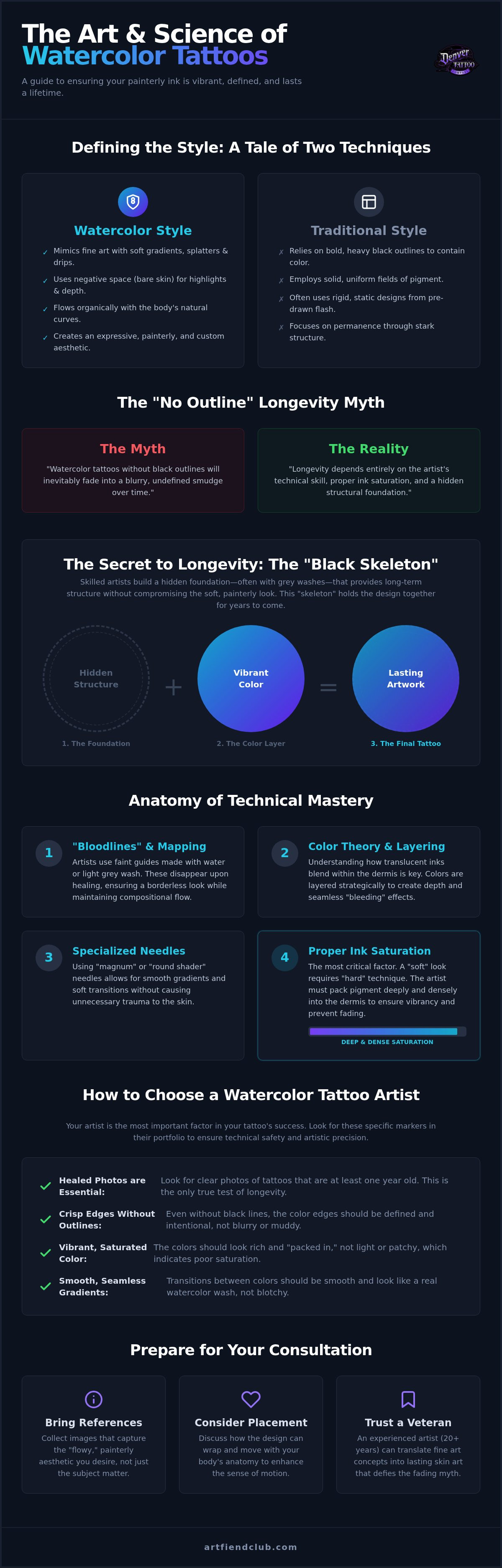
Executing a painterly design on skin requires a level of precision that goes far beyond traditional methods. While a watercolor tattoo looks fluid and spontaneous, it is actually the result of a highly structured technical process. A professional watercolor tattoo artist in Denver often begins the work with "bloodlines." These are faint guides made with water or a very light grey wash that disappear as the tattoo heals. This mapping allows the artist to maintain the composition's flow without relying on permanent black borders, ensuring the final piece retains its delicate, ethereal quality.
Color theory is the second pillar of this mastery. Because tattoo ink is translucent, colors don't sit on top of each other like acrylic paint; they layer and blend within the dermis. A skilled artist understands which pigments must be saturated first to create depth and which should be layered to produce a "bleeding" effect. This requires specialized needles, often "magnum" or "round shaders," which allow for smooth gradients and soft transitions without causing unnecessary trauma to the skin. Using premium, high-pigment inks is non-negotiable for achieving the vibrancy this style demands.
The Importance of Color Saturation
There is a common misconception that a "soft" tattoo is applied with a light touch. In reality, longevity requires "hard" technical application. To prevent the artwork from fading into a faint smudge, the ink must be packed deeply and consistently into the skin. Veteran artists distinguish between diluting ink with water and layering pigment to achieve a transparent look. Proper saturation ensures the color survives the body's natural healing process. This meticulous approach prevents the "bruised" or patchy appearance often seen in work from less experienced hands. If you're looking for a piece that remains vivid, reaching out for custom tattoo designs from an expert is the most reliable path forward.
Sterilization and Safety in Custom Art
The technical beauty of a watercolor piece is only as good as the environment in which it's created. Because this style involves frequent pigment blending and needle changes, maintaining a sterile field is paramount. Choosing a safe tattoo studio Denver residents can trust means verifying that the shop uses single-use, medical-grade equipment for every session. This prevents cross-contamination and ensures that the pigments remain pure and vibrant.
At our Englewood studio, we adhere to strict professional standards that mirror tattoo ink safety standards set by national health authorities. Jason Oz brings over 20 years of experience to every project, ensuring that the technical safety of the process matches the creative fulfillment of the client. When you work with an experienced watercolor tattoo artist in Denver, you aren't just getting art; you're investing in a disciplined, hygienic process that prioritizes your long-term health and the permanence of your ink.
Longevity and the "No Outline" Myth
A common concern found in online forums is that watercolor tattoos eventually "disappear" or fade into an unrecognizable blob after a few years. While it's true that poorly executed color work can lose its definition, this is a failure of technique rather than a flaw in the style itself. A professional watercolor tattoo artist in Denver understands that longevity is built into the design from the very first drop of ink. By using a "Black Skeleton" technique, an artist can hide structural dark tones or black ink within the color gradients. This hidden foundation provides the necessary contrast to keep the artwork legible as the skin naturally ages over time.
Longevity also depends on the artist's ability to manage the Denver environment. Our high altitude and intense UV exposure mean that ink is under constant stress from the sun. Without a disciplined application, colors can break down faster than they would at sea level. Maintenance is a collaborative effort between the creator and the client. While a high-quality piece shouldn't need constant attention, a "refresh" session every seven to ten years can help restore the original punch of the pigments, ensuring the custom art remains a vibrant part of your story.
Aging Gracefully: What to Expect After 5 Years
All tattoos experience a slight amount of pigment spread as the body's immune system interacts with the ink over several years. To mitigate this, placement is a critical factor in the design process. Choosing stable areas like the outer forearm or shoulder, while avoiding high-friction spots like the palms or ankles, helps preserve the delicate details of a painterly piece. The absence of a traditional black border requires significantly higher pigment density within the color fields to maintain sharp edge definition as the tattoo matures. When an artist packs the color correctly, the edges remain distinct even without a heavy outline.
Colorado Sun and Tattoo Preservation
Living in the Mile High City means your skin is closer to the sun's rays, which can act like a laser treatment on your ink if you aren't careful. High UV exposure is the primary enemy of vibrant color work. For those living in the Rockies, following a strict protocol for long term tattoo care Colorado is essential for keeping your artwork from dulling. Applying a high-SPF sunscreen every time you step outside is the most effective way to protect your investment. When you work with an experienced watercolor tattoo artist in Denver, they'll provide specific aftercare instructions tailored to our unique climate, helping your custom piece stand the test of time.
Planning Your Custom Watercolor Tattoo Consultation
A successful watercolor project begins long before the needle touches the skin. It starts with a conversation where abstract ideas meet technical reality. When you meet with a watercolor tattoo artist in Denver, your goal is to provide enough visual information for the artist to interpret your style while leaving room for their professional expertise. Gathering references is a vital part of this preparation. You don't need to find an existing tattoo to copy; in fact, bringing in actual watercolor paintings, digital illustrations, or even photographs of nature can help your artist understand the specific color transitions and "brushstroke" textures you desire.
Trusting your artist's vision for color is equally important. What looks vibrant on a screen may need adjustment to work with your specific skin tone and ensure long-term visibility. A veteran artist will evaluate how different pigments interact and suggest a palette that remains legible as it heals. Budgeting for this work in the Denver metro area should account for the custom nature of the design. Because watercolor pieces often require more time for layering and blending than traditional linework, they are an investment in a unique piece of fine art that cannot be rushed.
Preparing for Your Denver Consultation
When you visit our shop in Englewood, come prepared to discuss the emotional "weight" of the piece. Are you looking for soft, ethereal pastels or a bold, high-contrast splash of color? Describing these painterly elements helps the artist choose the right needle groupings and ink saturation levels. If you're unsure how to start the conversation, it's helpful to review What to Ask During a Tattoo Consultation to ensure you cover all the technical and creative bases during your visit.
Placement Strategy for Movement
The "flowy" nature of watercolor art makes placement a strategic decision. This style works exceptionally well on "wrapping" muscle groups like the forearm, outer thigh, or ribs, where the natural curves of the body enhance the illusion of motion. Avoiding clutter is essential in complex color designs. A skilled watercolor tattoo artist in Denver will use negative space to separate different color fields, preventing the piece from looking crowded. If you're considering future additions or "sleeving" your art, discuss this early. Watercolor elements can be designed to bleed into future pieces, creating a cohesive, large-scale composition over time. To begin your journey with a one-on-one expert session, you can book your tattoo consultations today and start refining your vision.
Denver Tattoo Company: Professionalism in Every Stroke
Choosing a watercolor tattoo artist in Denver involves more than just browsing a gallery; it requires finding a practitioner who treats your skin with the reverence it deserves. Denver Tattoo Company, located in Englewood, serves as a hub for those seeking high-end custom art in a focused environment. By eliminating the distractions of adjacent body services, we provide a space where the craft of tattooing is the singular priority. This dedication ensures that every client receives the full attention of their artist, from the initial sketch to the final pass of color.
Our commitment to custom storytelling means that no two pieces are ever the same. We prioritize the individual's experience, understanding that a watercolor piece is often a deeply personal expression. By using premium inks and maintaining a meticulously clean studio, we ensure that your vibrant artwork is backed by the highest technical safety standards in the industry. Every session is a collaborative process designed to result in a piece of body art that you'll be proud to wear for a lifetime.
The Expertise of Jason Oz
Experience is the most reliable tool in an artist's kit, especially when dealing with the complexities of color layering and skin anatomy. Jason Oz brings over 20 years of industry experience to the studio, having spent decades refining his approach to custom ink. His history of serving the communities of Denver, Littleton, and Lakewood has established him as a steady hand for both newcomers and seasoned collectors. This depth of knowledge is particularly valuable for watercolor styles, where the lack of a traditional border demands a master's understanding of pigment depth.
Jason's philosophy is rooted in the belief that specialization leads to superior results. This is the core reason why choosing a tattoo only studio Denver residents trust makes a significant difference. When an artist isn't splitting their focus between disparate services, they can dedicate their entire career to mastering the nuances of the needle. This focus translates directly into the quality of the work, ensuring that your custom watercolor tattoo artist Denver has the technical discipline to execute a painterly look that lasts.
A Clean, Collaborative Environment
The physical environment of a studio should reflect the precision of the work being performed. Our Englewood shop is designed to be a clean, welcoming space where clients can feel at ease during long, intricate sessions. We utilize only single-use sterilized equipment and medical-grade supplies, ensuring that every custom design is applied in a hygienic setting. This focus on safety is non-negotiable, providing professional reassurance that allows you to focus entirely on the creative fulfillment of the session.
We believe that the best tattoos come from a collaborative partnership between the artist and the client. Whether you're looking for a small, ethereal accent or a large-scale painterly sleeve, we take the time to understand your goals and provide honest, expert feedback. If you're ready to transform your vision into a permanent masterpiece, the next step is simple. Schedule a consultation with Denver Tattoo Company today to begin your custom journey with a premier watercolor tattoo artist Denver.
Bringing Your Painterly Vision to Life
Watercolor tattoos represent a sophisticated fusion of fine art and technical discipline. By selecting a watercolor tattoo artist in Denver who prioritizes ink saturation and structural "black skeletons," you ensure that your painterly design remains a vibrant asset for years to come. Longevity isn't a matter of luck; it's the result of a master's touch and a deep understanding of how pigments interact with the skin's natural aging process.
At Denver Tattoo Company, we provide the focused environment necessary for high-end custom work. Led by Jason Oz, a veteran with 20+ years of experience, our Englewood studio operates as a premier tattoo-only space. We maintain strict medical-grade sterilization standards to ensure your creative journey is as safe as it is fulfilling. When you're ready to translate your vision into a permanent masterpiece, our team is here to guide you through a collaborative consultation.
Your body art is a lifelong investment that deserves the precision of a seasoned expert. Book Your Custom Watercolor Consultation at Denver Tattoo Company today and discover the difference professional dedication makes. We look forward to helping you achieve a piece of art that stands the test of time.
Frequently Asked Questions
Do watercolor tattoos hurt more than traditional tattoos?
The pain level for a watercolor tattoo is comparable to any other style, though the sensation can feel different. Because this technique involves more soft shading and layering than heavy linework, clients often describe the feeling as a consistent scratch rather than sharp pressure. Your personal pain tolerance and the location of the tattoo on your body are the primary factors in your comfort level. Shorter sessions are generally easier to manage for newcomers.
How much does a watercolor tattoo cost in Denver?
Pricing for a watercolor tattoo artist Denver is determined by the size and intricacy of the custom design. Professional artists in the area typically base their rates on the total time required for layering and blending pigments. You'll need to provide your artist with specific details about your vision during a consultation to receive an accurate quote. Most studios also require a non-refundable booking fee to reserve your time on the schedule.
Can I get a watercolor tattoo over a scar?
Watercolor techniques are often an excellent choice for tattooing over healed scars because the organic, fluid shapes can naturally mask irregular textures. However, a consultation is necessary to evaluate the scar's age and stability. The skin must be fully healed, which typically takes at least one year. Your artist will work with the unique contours of your skin to ensure the pigments settle evenly and the design looks intentional and cohesive.
How long does the healing process take for color-heavy tattoos?
The initial healing of the skin's surface takes about two to three weeks, but the full process continues for several months. During the first few days, your tattoo will be sensitive and may experience light flaking. It's vital to follow your artist's specific aftercare instructions to protect the vibrant pigments from fading or patchiness. Once the skin has fully settled, the colors will take on their true, permanent vibrancy within the deeper layers of the dermis.
Do I need a black outline for my watercolor tattoo to stay sharp?
You don't strictly need a visible black outline, but your artist must build technical structure into the piece. Many professionals use a "Black Skeleton" or light grey mapping to provide the contrast needed for long-term definition. This approach allows the tattoo to retain its painterly aesthetic while preventing the colors from blurring together as the skin ages. A skilled artist balances the soft look with the disciplined application required for permanent art.
What happens if my watercolor tattoo fades over time?
If your tattoo begins to dull after several years, a professional refresh session can restore its original punch. All tattoos experience some level of pigment spread as the body's immune system interacts with the ink over time. A veteran artist can pack new color into the existing design to sharpen the edges and brighten the gradients. Consistently protecting your skin from UV rays with high-SPF sunscreen is the most effective way to prevent premature fading.
Is Denver Tattoo Company open for walk-in watercolor designs?
Denver Tattoo Company offers walk-in tattoos for smaller projects, though we recommend an appointment for complex watercolor designs. These painterly pieces require a high level of customization and technical planning that is best handled through our consultation process. Scheduling a session ensures that your artist has the necessary time to develop a unique color palette and composition that aligns with your vision. This collaborative approach leads to the most successful and vibrant results.
How should I prepare my skin for a long watercolor session?
Preparing your skin involves staying hydrated and maintaining a healthy moisture barrier in the weeks before your session. Avoid sun exposure or tanning, as tattooed skin must be healthy and undamaged for the ink to saturate properly. On the day of your appointment, ensure you've eaten a full meal and are wearing comfortable clothing. Bringing a snack and water can also help you stay comfortable during the focused, multi-hour process of a custom design.


