
A truly authentic Japanese tattoo sleeve isn't just a collection of images; it's a living narrative that must move in perfect harmony with your body’s unique musculature. For those seeking a Japanese style tattoo sleeve Littleton residents can carry with pride, the difference between a generic design and a masterpiece lies in the intentionality of the background and the flow of the composition. Every dragon, koi, or lotus must serve a larger story that respects the heritage of Irezumi while fitting your frame perfectly.
You likely understand that a project of this scale is a significant commitment of both time and trust. It's natural to feel a bit of apprehension about the artistic flow or finding an artist who treats these deep-rooted traditions with the respect they deserve. We believe that the process should be as disciplined and professional as the final result on your skin.
This guide will help you discover the profound symbolism and the meticulous multi-session process required to plan a custom sleeve with a master artisan near Littleton. We will outline the collaborative consultation process and the technical roadmap from the initial sketch to the final session. This ensures your journey is grounded in clear communication and a shared dedication to artistic integrity.
Key Takeaways
- Distinguish between "Japanese-inspired" art and traditional Irezumi to ensure your sleeve respects the cultural motifs and structural rules of the craft.
- Navigate the multi-session commitment of a Japanese style tattoo sleeve Littleton enthusiasts can expect to span 20 to 50+ hours of dedicated artistry.
- Learn how "Mikiri" and seasonal background elements like clouds and waves create the essential flow that allows a large-scale piece to move with your body.
- Prepare for your journey by understanding the physical requirements of long-format sessions and the importance of a collaborative consultation with a seasoned expert.
- Discover why 20+ years of experience and a commitment to single-use sterilization are vital for the safety and longevity of your custom tattoo design.
Understanding the Art of the Japanese Style Tattoo Sleeve in Littleton
The art of traditional Japanese tattoos (Irezumi) is a discipline that rewards patience, planning, and a deep respect for history. Originally influenced by Edo-period woodblock prints, these designs have evolved from ancient status symbols into a sophisticated form of modern body art. When you commission a Japanese style tattoo sleeve Littleton artists who truly understand the craft look far beyond the surface imagery. They focus on the underlying story and the technical "flow" that makes a large-scale piece successful.
There's a significant distinction between "Japanese-inspired" work and traditional compositions. Inspired work might borrow a single motif, like a koi fish or a dragon, but it often lacks the structural integrity of a true sleeve. Traditional compositions follow strict rules regarding the pairing of subjects and the background elements that support them. An authentic Japanese sleeve is a cohesive narrative that follows the body's natural musculature. This ensures the art looks as though it was always meant to be part of your frame, rather than a sticker placed on top of it.
In the Littleton and Denver metro area, the demand for high-detail, custom work is growing. Clients are increasingly seeking out artists who can manage the complexities of a full arm or leg. This shift reflects a desire for tattoos that offer longevity and artistic depth. Large-scale work allows for a level of detail and storytelling that smaller pieces simply can't achieve.
The Anatomy of a Japanese Sleeve
Choosing the right length for your project is the first major decision in the design process. Each length carries its own aesthetic and cultural weight:
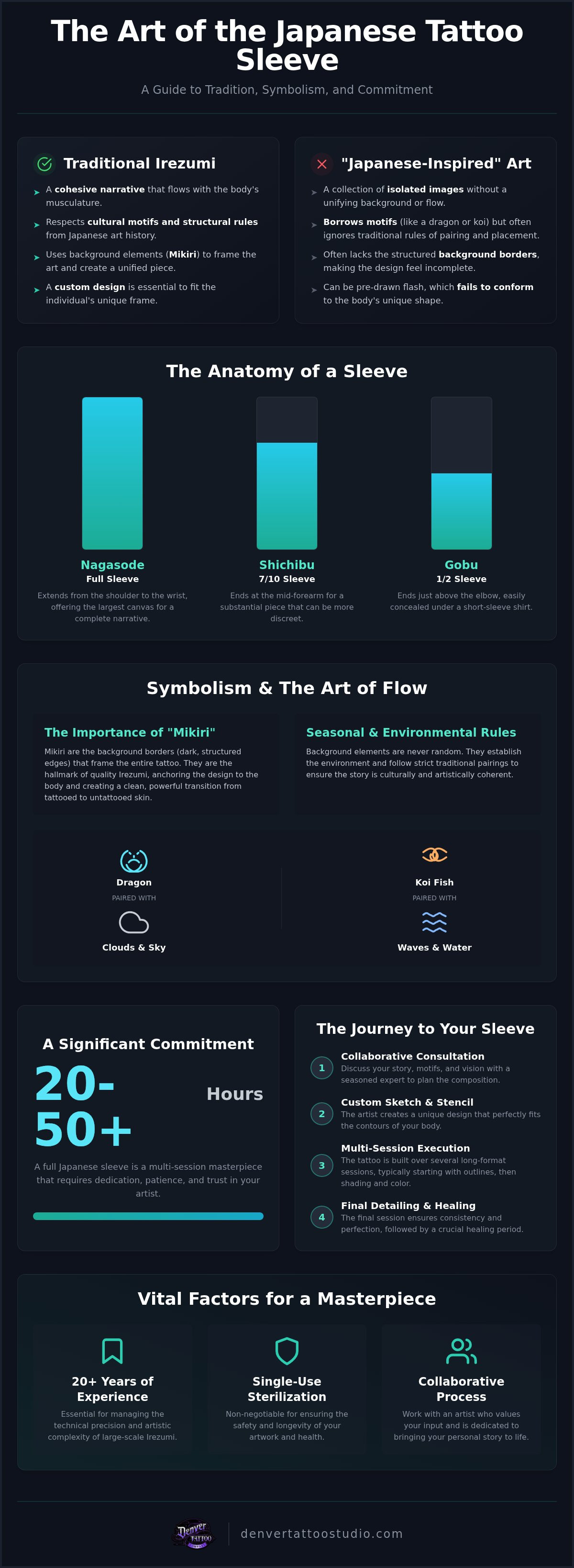
- The Nagasode (Full Sleeve): This is the most comprehensive option, extending from the top of the shoulder all the way to the wrist bone. It provides the largest canvas for a detailed narrative.
- The Shichibu (7/10 Sleeve): This length ends at the mid-forearm. It's a popular choice for those who want a substantial piece but prefer it to end before the wrist for a slightly more discreet look.
- The Gobu (1/2 Sleeve): Ending just above the elbow, this half-sleeve is excellent for those who want the impact of Irezumi while keeping the work easily concealed under a standard t-shirt.
Why Custom Design Trumps Flash for Large Pieces
Large-scale work requires a level of precision that pre-drawn flash simply cannot provide. Because everyone's limb shape and muscle structure are different, a custom design is the only way to ensure the art wraps perfectly around your arm. A skilled artist must carefully balance the foreground subjects with negative space and background shading to ensure the tattoo remains readable from a distance and doesn't feel cluttered. At Denver Tattoo Company, we view every sleeve as a collaborative design. We work closely with you during the consultation phase to ensure the final piece reflects your personal story while adhering to the technical standards that make Japanese tattooing timeless.
The Symbolism and Flow of Traditional Japanese Tattooing
A professional Japanese style tattoo sleeve Littleton clients can be proud of is defined by more than just its central figures. The true hallmark of quality in Irezumi is the "Mikiri," or the background borders. These dark, structured edges provide a frame that contains the art, preventing it from looking like a scattered collection of images. A master artisan uses Mikiri to anchor the design to the body, creating a clean transition between the tattoo and the skin.
The background elements, such as wind bars, waves, and clouds, are never chosen at random. They establish the environment and the "season" of the narrative. Wind and clouds might suggest a celestial or mountain setting, while crashing waves ground the story in the sea. This art form has an extensive history in Japan that dictates strict rules for these pairings. For instance, a dragon is a creature of the heavens and is traditionally surrounded by clouds or lightning, whereas a koi fish belongs in the water among swirling waves.
Technical precision is equally important for the longevity of the work. Maintaining consistent line weights across the entire length of an arm requires a disciplined hand. If the lines are too thin, they may fade unevenly; if they're too thick, the detail can become muddy over time. This balance ensures the sleeve remains legible and striking decades after it’s finished. If you're ready to start your own story, requesting a custom consultation is the best way to see how these traditions can be tailored to your vision.
Core Motifs and Their Meanings
The primary subjects of a sleeve carry deep symbolic weight, often reflecting the wearer's personal journey or aspirations:
- The Ryu (Dragon): Unlike Western dragons, the Japanese Ryu represents wisdom, strength, and a blessing for the wearer. It's often depicted as a protector.
- The Koi: This symbol represents perseverance and transformation. It's based on the legend of a fish that swims upstream to become a dragon.
- The Hannya Mask: This mask represents complex human emotions, including jealousy and sorrow, but it's also used as a talisman to ward off evil spirits.
Seasonal Flowers in Irezumi
Flowers aren't just decorative; they ground the tattoo in a specific moment in time. Mixing seasons is generally avoided in traditional work:
- Cherry Blossoms (Sakura): These spring blooms represent the fleeting beauty of life. They're a reminder to appreciate the present moment.
- Maple Leaves (Momiji): Often paired with wind or water, maple leaves symbolize autumn, regeneration, and the inevitable passage of time.
- Peonies and Lotus: The peony represents prosperity and a "kingly" spirit. The lotus, growing from mud to bloom in the sun, is a universal symbol of purity and spiritual awakening.
Planning Your Multi-Session Sleeve: Time, Cost, and Commitment
Embarking on a Japanese style tattoo sleeve Littleton project is a major undertaking that requires significant mental and physical preparation. Unlike smaller, standalone pieces, a full Irezumi sleeve is a marathon rather than a sprint. You should realistically expect the process to take anywhere from 20 to over 50 hours of chair time. This wide range depends on the complexity of the design, the density of the background elements, and how your skin absorbs the pigment during each session.
The work is deliberately broken into distinct phases: the outline, the shading, and finally, the color. Shading in traditional Japanese work is known as Bokashi, a technique that creates the smooth, atmospheric transitions seen in clouds and water. This sequential approach isn't just about technical order; it's about building the piece with structural integrity. Starting with a strong foundation ensures the background flow supports the primary imagery, creating a cohesive look that lasts a lifetime.
When discussing the investment, it's vital to recognize that fees reflect the artist’s decades of mastery and the high costs of maintaining a sterile environment. High-detail work demands a level of focus and technical skill that only comes with years of industry experience. Whether a studio uses an hourly rate or a flat-rate per session, you're paying for a specialized artisan who understands the permanence and cultural weight of the work. This investment guarantees a safe environment and a piece of art that ages gracefully.
There is a unique psychological aspect to "the journey" of a sleeve. Completing such a major piece of body art often feels like a personal milestone. It requires discipline and a steady hand from both the artist and the client. This shared commitment creates a collaborative bond that makes the final reveal even more rewarding. It's a transformative experience that changes how you carry yourself and how you view your own skin.
The Session Breakdown
The roadmap to a finished sleeve follows a logical, methodical progression. This structure helps manage the physical toll on the body and ensures each layer of ink is applied with precision.
- Session 1: The Foundation: This begins with an in-depth tattoo consultation followed by the first lines. The artist establishes the primary motifs and the flow of the background borders.
- Middle Sessions: Building Depth: These sessions focus on Bokashi shading. This is where the wind, waves, or clouds start to take shape, giving the arm its three-dimensional quality and "season."
- The Final Sessions: Fine Details: The last stage involves adding vibrant color and fine details. This is the most gratifying part of the process, as the full story finally comes together in high definition.
Managing the Investment
Budgeting for a project that spans several months or even a year is a practical necessity for most clients. Consistent scheduling, such as one session every 4 to 6 weeks, is often the best approach. This rhythm allows for proper healing while keeping the creative momentum alive. For more detailed information on financial planning for your piece, see our guide on Tattoo Budgeting: Pricing Your Custom Art in Denver. Maintaining a steady schedule also helps the artist maintain a consistent "hand" and flow throughout the entire project.
Preparing for Your Japanese Sleeve Journey in the Denver Metro Area
Selecting a master for a Japanese style tattoo sleeve Littleton residents can carry with confidence is a decision that requires careful thought. Large-scale work like Irezumi demands more than just artistic talent; it requires a deep understanding of how ink settles into the skin over decades. Jason Oz brings over 20 years of industry experience to every project, providing the steady hand and technical discipline necessary for complex, full-arm compositions. This level of expertise ensures that the intricate details of your sleeve remain sharp and legible as the years pass.
Physical and mental endurance are essential for the long sessions required to complete a sleeve. A typical sitting at our Englewood studio lasts between 4 and 6 hours, which can be taxing on the body. To prepare, focus on deep hydration in the days leading up to your appointment. Getting a full night’s sleep and eating a protein-rich meal before you arrive will help maintain your stamina. We recommend bringing a small bag with water and snacks to keep your blood sugar stable, along with a pair of headphones or a book to help you stay relaxed during the process.
The Consultation Process at Denver Tattoo Company
The journey begins with a dedicated tattoo consultation, where we transform your vision into a structural reality. It's helpful to bring reference images or a list of motifs that resonate with your personal story, such as specific animals or seasonal flowers. During this meeting, we take precise measurements of your limb to ensure the background flow and primary subjects wrap perfectly around your musculature. This collaborative approach is the foundation of our Collaborative Tattoo Design: From Concept to Skin, ensuring the final piece is a perfect fit for both your body and your history.
Skin Preparation and Long-Term Care
Colorado’s arid climate presents unique challenges for tattoo enthusiasts. For optimal ink saturation, your skin must be healthy and well-moisturized. In the weeks before your session, use a high-quality lotion to keep the area supple, though you should avoid applying anything to the skin on the day of your appointment. Once the work begins, following a strict regimen is vital for preserving the depth of the blacks and the vibrancy of the colors. You can find detailed guidance in our Tattoo Aftercare Advice: Healing Your Ink in Colorado. If you are ready to begin this transformative process, schedule your custom design consultation to meet with our team.
Expert Custom Irezumi at Denver Tattoo Company
Located in Englewood, Denver Tattoo Company serves as a premier destination for those seeking a Japanese style tattoo sleeve Littleton residents can wear with total confidence. Our studio is more than just a place to get inked; it's a dedicated environment designed for the focus and precision that large-scale Irezumi requires. We recognize that a full sleeve is a permanent legacy. We treat every session with the seriousness that such a commitment deserves.
Safety is the foundation of our practice. We adhere to strict sterilization standards, using only single-use equipment and premium inks that ensure long-term vibrance and clarity. This commitment to hygiene and technical excellence allows you to focus entirely on the creative process. Jason Oz leads the studio with over 20 years of industry experience, bringing a seasoned perspective to the collaboration between artist and client. This relationship is built on mutual respect and a shared vision, ensuring that the final result is both technically flawless and personally meaningful.
Our environment is intentionally clean, quiet, and professional. We avoid the loud or chaotic atmosphere often found in high-volume shops, providing instead a steady and methodical pace. This atmosphere is ideal for the long-format sessions necessary for a custom sleeve. It allows both the artist and the client to remain focused and comfortable throughout the journey.
Why Littleton Clients Choose Us
Residents of Littleton and Highlands Ranch find our Englewood location to be a convenient and accessible hub for their multi-session projects. Beyond the proximity, our clients choose us because of our reputation for artistic integrity and precision. We don't just follow trends. We respect the traditions of Japanese tattooing while tailoring them to fit the modern individual. This sophisticated approach ensures that every Japanese style tattoo sleeve Littleton enthusiasts receive is a unique masterpiece that honors the heritage of the craft.
Start Your Sleeve Journey Today
The first step toward your custom Irezumi piece is a comprehensive tattoo consultation. When you walk into our Englewood studio, you'll find a welcoming space where your ideas are treated with professional care. We will discuss your concepts, map out the technical roadmap for your arm, and set a schedule that works for your life. If you're ready to commit to a piece of art that will stay with you forever, we are here to provide the steady hand and creative partnership you need. Reach out today to begin your transformation.
Commit to Your Custom Irezumi Legacy
A Japanese style tattoo sleeve Littleton residents carry for a lifetime is far more than a simple aesthetic choice; it's a dedicated commitment to a rich cultural tradition. By understanding the vital role of "Mikiri" background elements and the long-term planning required for a multi-session project, you're already prepared for a successful journey. This process requires patience and a steady hand from an artist who respects the technical discipline and symbolic weight of large-scale work.
Jason Oz brings over 20 years of professional experience to every project, specializing in the complex flow and structural integrity that these pieces demand. Based in Englewood and serving the Littleton and Denver communities, our studio offers the clean, focused environment necessary for such a transformative artistic process. We invite you to Book Your Custom Japanese Sleeve Consultation with Jason Oz and begin the collaborative process of turning your personal story into a striking, permanent reality. Your skin is a canvas for a lifelong narrative, and we're honored to help you craft a piece that flows perfectly with your frame.
Frequently Asked Questions
How much does a full Japanese tattoo sleeve cost in Littleton?
The total investment for a Japanese style tattoo sleeve Littleton residents receive is determined by the total hours required and the complexity of the custom design. While we don't provide flat quotes online, the cost reflects the artist's decades of mastery and the high standards of safety in our studio. Factors like the density of background shading and the use of vibrant colors will influence the final time commitment and the overall project price.
How many sessions does it take to complete a Japanese sleeve?
A full sleeve typically requires between 5 and 10 sessions, though this varies based on your skin's receptivity and the design's intricate details. Each session usually lasts 4 to 6 hours. This multi-session approach allows for proper healing between layers of ink, specifically during the transition from the initial outline to the heavy background shading and final color application. Consistent scheduling every few weeks helps maintain creative momentum and ensures a cohesive result.
Is Japanese style tattooing more painful than other styles?
The sensation of getting a Japanese sleeve is comparable to other styles, but the endurance required for long sessions is a unique factor. Certain areas of the arm, like the elbow, wrist, and inner bicep, are traditionally more sensitive than others. Most clients find the process manageable with a focus on deep breathing and proper physical preparation. Our focused and calm studio environment is designed to help you stay relaxed during these extended sittings.
Can I incorporate personal symbols into a traditional Japanese design?
You can certainly incorporate personal symbols into a Japanese style tattoo sleeve Littleton project through a collaborative design process. A skilled artisan knows how to blend your specific story with traditional motifs like dragons or koi without breaking the rules of Irezumi. This ensures the tattoo remains culturally respectful while carrying deep personal significance. We discuss these elements during your consultation to find the perfect balance between tradition and your individual narrative.
How do I find a Japanese style tattoo artist in Littleton with experience?
Finding an experienced artist requires looking for a portfolio that showcases large-scale work with consistent flow and clean background borders. Experience is vital for large projects; Jason Oz brings over 20 years of industry knowledge to every custom design. You should look for a studio in the Littleton area that emphasizes hygiene and has a clear, methodical process. A seasoned professional will always prioritize the longevity and structural integrity of the work.
What is the best time of year to start a large sleeve project in Colorado?
The autumn and winter months are often considered the best time to start a large sleeve project in Colorado. During these seasons, you are less likely to expose your healing skin to intense high-altitude sun or the bacteria found in swimming pools and lakes. Since a full sleeve can take several months to complete, starting in the fall ensures your art is fully healed and protected by the time the summer weather arrives.
Do I need a consultation before booking a sleeve session?
A consultation is a mandatory first step for any large-scale custom project at our studio. This meeting allows us to take accurate measurements of your arm and discuss the specific motifs you want to include. It's also the time when we map out the timeline and the technical roadmap for your journey. This ensures that both the artist and the client are aligned on the creative vision and the logistical commitment before the first needle touches the skin.
How do I care for a multi-session tattoo while it is still in progress?
Caring for a tattoo in progress involves following specific aftercare instructions between every session to ensure the skin remains healthy for the next layer of ink. You'll need to keep the area clean, moisturized, and protected from the sun. It's also important to wear loose, breathable clothing that doesn't rub against the fresh work. Proper healing between sessions is critical for achieving the smooth shading and vibrant colors that define a professional Japanese sleeve.


