
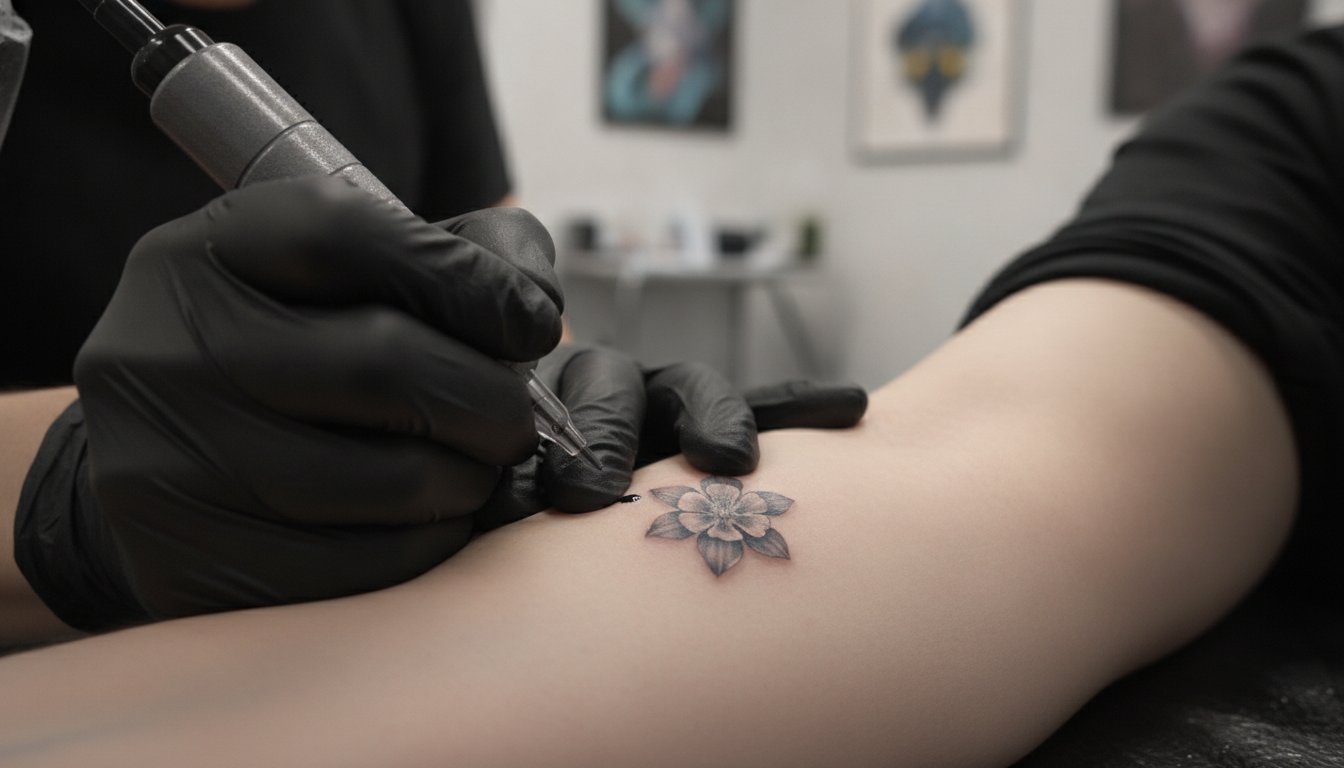
Can a tattoo really capture the texture of a petal or the glint in an eye within a space no larger than a coin? Many enthusiasts worry that such intricate work will eventually become an unrecognizable blur. You've likely seen stunning photos online but wonder if a micro realism tattoo Denver artist can truly deliver a piece that stands the test of time. It's a valid concern; the line between a masterpiece and a "blob" often comes down to the artist's understanding of ink density and skin physiology.
We understand the hesitation that comes with choosing a style as delicate as micro realism. This guide clarifies the technical requirements needed to achieve medical-grade precision and explains the crucial differences between fine line work and true micro realism. You'll learn how to select subjects that age gracefully at a small scale and why the healing process is just as vital as the initial needle stroke. We'll also highlight what to look for in a reputable Denver professional, such as Jason Oz, to ensure your collaborative creative process results in a permanent work of art you'll be proud to wear.
Key Takeaways
- Learn the fundamental difference between simple fine line work and micro realism, focusing on how depth and tonal value create a photographic effect in small spaces.
- Discover why specialized single-use needles and a precise, light touch are essential for a micro realism tattoo Denver to maintain sharp details while protecting your skin.
- Identify the best subjects for small-scale art by applying the "Rule of One" and prioritizing high-contrast designs that remain legible and striking over time.
- Understand the unique healing challenges of the Mile High City and how consistent UV protection prevents your intricate artwork from fading or settling prematurely.
- Explore the value of a collaborative consultation process where veteran expertise ensures your custom design is both artistically fulfilling and technically viable for the long term.
What Defines Micro Realism Tattoos in the Modern Industry?
Micro realism is a discipline that challenges the traditional "bold will hold" philosophy. It condenses the complexity of a portrait or nature scene into a space often no larger than two or three inches. While the ancient roots of tattooing prioritized thick, durable lines for longevity, modern techniques allow for a level of photographic fidelity once thought impossible on the skin. This specific aesthetic has found a dedicated home in Colorado, making a micro realism tattoo Denver search a common starting point for collectors who value subtlety and technical mastery.
The Evolution of Small-Scale Art
The transition from traditional styles to intricate realism didn't happen by accident. It was driven by advancements in tattoo technology, specifically the development of high-precision rotary machines and stabilized needle cartridges. These tools allow artists to work with surgical accuracy. Today's digital art culture also plays a role. Clients now expect their tattoos to mirror the high-resolution images they see on their screens. Mastering this style is widely considered one of the most difficult feats in the industry. There is zero margin for error. A single misplaced dot can alter the expression of a face or the texture of a wing. It requires a steady hand and a deep understanding of how ink interacts with different skin types at a microscopic level.
Micro Realism vs. Fine Line: Understanding the Difference
It's easy to confuse these two styles, but the difference lies in how the artist builds the image. Fine line work focuses primarily on the contour, using thin lines to define a shape. In contrast, micro realism focuses on three-dimensional form and texture. Instead of relying on a dark outline, the artist uses "grey wash," a diluted black ink, to create soft transitions and shadows. This creates the illusion of depth. Choosing an artist who understands both is crucial for achieving intricate tattoo designs in Denver. You want someone who can balance the structural integrity of a fine line with the soft, realistic shading that brings a small-scale piece to life.
Denver has emerged as a hub for this style because of its thriving community of artists who specialize in technical precision. The local culture values unique, custom designs that reflect personal stories, and micro realism provides the perfect medium for that expression. To achieve such high-fidelity results, experts often utilize single-needle techniques. By using a 1RL (one round liner) or 3RL needle, the artist can deposit ink with extreme control. This approach reduces skin trauma while allowing for details as fine as a strand of hair or a skin pore. When you're looking for a micro realism tattoo Denver, you're seeking an artist who treats the skin like a canvas for fine art, balancing the immediate visual impact with the technical safety required for the work to heal correctly.
The Technical Mastery Behind Intricate Tattoo Designs in Denver
Achieving photographic precision on a small scale requires more than just artistic talent. It demands a deep understanding of the mechanical process and the physics of the skin. For a high-quality micro realism tattoo Denver residents often seek out studios that prioritize technical discipline over speed. This involves using single-use, sterilized 1-Round Liner (1RL) and 3-Round Liner (3RL) needles. These are the smallest tools available in the industry. They allow the artist to mimic textures like the fine grain of wood, the softness of animal fur, or the intricate iris of a human eye. Because the needles are so fine, the artist must maintain a lighter "hand" than they would for traditional styles. This prevents excessive trauma while ensuring the ink is placed at the perfect depth within the dermis.
Needle Science and Precision
A 1RL needle is essentially a single point. It allows for the creation of microscopic "pores" and "textures" that give the piece its lifelike quality. However, this level of detail leaves no room for error. If the artist's hand speed isn't perfectly synced with the machine's voltage, the result can be a shaky line or a "blowout," where the ink spreads uncontrollably. To mitigate these risks, professional artists often use specialized high-lumen lighting and high-powered magnification. These tools help them see the subtle differences in skin resistance, ensuring every puncture is intentional and correctly placed. This focus on equipment is what separates a standard small tattoo from a true work of micro realism.
Skin Management and Saturation
Ink saturation is the balance between pigment density and skin health. If an artist overworks an area to achieve dark values, they risk permanent scarring and a loss of detail. Conversely, if the saturation is too low, the tattoo may appear ghost-like after it heals. High-pigment load inks are often preferred for micro realism because they deliver more color with fewer passes. In Denver's dry climate, skin preparation is especially important. Dehydrated skin is less elastic, which can make it difficult for the needle to penetrate cleanly. We often suggest that clients begin a moisturizing routine and increase their water intake several days before their appointment to ensure the skin is in peak condition for the session.
Adhering to FDA tattoo safety guidelines is essential for protecting the client's health and the integrity of the artwork. This includes using only professional-grade pigments and maintaining a sterile, focused environment. A quiet studio allows for the high-concentration sessions required for such intricate work, where every minute movement counts. If you're interested in exploring a custom piece, booking a tattoo consultation is a great way to evaluate how your skin type and desired subject matter will work together on a small scale.
Selecting the Right Subject Matter for a Micro Realism Piece
Choosing a design for a micro realism tattoo Denver project requires a shift in perspective. You aren't just selecting an image; you're choosing a composition that must remain legible as your skin naturally ages. Understanding the psychology of choosing a tattoo reveals that most collectors seek pieces representing deep personal milestones or identity. In the world of micro-scale art, this means finding a single, powerful symbol that can be rendered with extreme fidelity. High-contrast subjects are the gold standard for this style. Black and grey work often outperforms color because it relies on tonal range rather than pigment hue to define shape. This creates a durable visual structure that resists blurring and maintains its "pop" for years to come.
We advocate for the "Rule of One." This principle suggests focusing on a single primary focal point rather than attempting a crowded scene. A single lion's eye, for instance, carries significantly more impact in a three-inch space than an entire savanna. By limiting the scope, the artist can dedicate every needle stroke to the minute details that define the style, such as the reflection in a pupil or the individual whiskers of a predator. This focus ensures your micro realism tattoo Denver experience results in a piece that looks like a photograph, even at a distance.
Composition for the Small Canvas
Success in this medium depends on managing "visual noise." If a design is too busy, it risks becoming a muddled grey patch within a decade. Negative space is your greatest ally here. It allows the tattooed areas to breathe and helps the eye distinguish between different textures. At Denver Tattoo Company, Jason Oz works closely with clients to refine their initial concepts. With over 20 years of industry knowledge, he understands how to strip away unnecessary elements while preserving the soul of the image. This collaborative process ensures that the final piece is both artistically striking and technically sound for the long term.
Popular Micro Realism Themes in Colorado
Local enthusiasts often lean toward themes that reflect the natural beauty of the Rockies. Wildlife portraits are a staple, where the challenge lies in capturing the distinct texture of elk fur or the iridescent sheen of a trout's scales within a tiny frame. Botanical accuracy is another favorite. We see many requests for wildflowers like columbines or aspen leaves, where the focus is on realistic vein structures and delicate, paper-thin edges. Finally, classical art and architecture offer excellent opportunities for micro realism. Using stone textures to create 3D depth, an artist can recreate a Renaissance statue or a Gothic archway, turning a small patch of skin into a window to another era.

The Longevity Debate: How Micro Realism Heals Over Time
Many collectors worry that a micro realism tattoo Denver project will inevitably turn into an unrecognizable smudge within a few years. This concern often stems from seeing poorly executed work where an artist lacked the technical discipline to manage ink density. In reality, the longevity of a piece depends on understanding the settling process. During the first few weeks, ink moves from the epidermis into the dermis. This transition naturally softens the image. A master artisan anticipates this change, using high-contrast shading to ensure the details remain distinct even after the skin has fully regenerated. It's not the style itself that fails; it's the lack of foresight regarding how ink interacts with human biology.
Denver's geographic profile adds a unique layer to this challenge. At an altitude of 5,280 feet, the atmosphere is thinner, meaning UV radiation is significantly more intense than at sea level. UV rays are the primary cause of pigment breakdown over time. For those wearing a micro realism tattoo Denver, daily sun protection is a requirement for preserving sharp edges and fine textures. Additionally, this style often requires a "secondary pass" or a touch-up session about six months after the initial appointment. This allows the artist to reinforce any areas where the ink settled too lightly, ensuring the piece has the structural integrity to last for decades.
Healing in the Colorado Climate
The low humidity in the Mile High City can be particularly harsh on a fresh tattoo. Dry air accelerates the formation of scabs, which can pull pigment out of the skin if not managed correctly. We emphasize a "wet healing" approach for high-detail work, using specialized breathable bandages to keep the area hydrated. Following professional tattoo aftercare advice is the final step in the artistic process. It bridges the gap between the session in the chair and the permanent result on your skin. Proper hydration, both internal and external, ensures the delicate lines of a micro realism piece don't become brittle during the critical two-week healing phase.
The Science of Aging Ink
Your body is constantly trying to remove the ink particles through your white blood cells. Over ten years, these cells will slowly move tiny amounts of pigment, which is why "contrast" is the secret to a tattoo that looks good long-term. By using deep blacks alongside negative space, the artist creates a buffer that prevents the details from merging. Placement also plays a vital role. We generally advise against putting micro realism on high-friction areas like fingers, elbows, or knees, where the skin turns over more rapidly. If you're ready to discuss a piece designed for your specific skin type and lifestyle, we invite you to book tattoo consultations with our experienced team to ensure your vision stands the test of time.
Starting Your Project at Denver Tattoo Company
Embarking on a micro realism tattoo Denver project is a significant commitment to your personal narrative. We view every piece as a collaborative partnership, where your initial vision meets our technical expertise. This process begins with a detailed consultation, where we translate your ideas into a design that is both artistically striking and technically viable for the long term. Jason Oz anchors our studio with over 20 years of professional experience, providing a steady hand and a deep well of industry knowledge. His tenure in the craft ensures that every decision, from the placement of a highlight to the selection of a specific grey wash, is made with an eye toward how the piece will evolve over the coming decades.
Our commitment to your safety is as rigorous as our commitment to the art itself. We maintain a clean, focused environment in our Englewood studio, utilizing only single-use, sterilized equipment for every session. We select premium inks with high pigment loads to ensure that the microscopic details of your micro realism piece remain vibrant. This disciplined approach to hygiene and material quality is what allows us to create such intricate work with confidence. We don't just aim for a beautiful result on the day of your appointment; we work to ensure your tattoo remains a source of pride for a lifetime.
The Denver Tattoo Company Experience
Our Englewood studio is designed to be a quiet sanctuary for focused creativity. Unlike high-volume shops that prioritize turnover, we focus on a limited number of custom pieces to ensure each client receives our undivided attention. This methodical pace allows for the high level of concentration required for micro-scale work. If you are ready to explore your own ideas, you can easily schedule a tattoo consultation Denver. During this meeting, we will discuss your subject matter, evaluate your skin type, and provide a clear roadmap for the application process. This transparent communication is the foundation of our studio's philosophy.
Preparing for Your Session
Preparing the "canvas" is a vital part of the artistic process. Because micro realism requires such precision, your skin health directly impacts the final result. We ask that our clients focus on intense hydration and consistent moisturizing in the week leading up to their session. This is especially important in Colorado's arid climate, as supple skin accepts fine needle work more readily than dry or damaged tissue. During the application, you can expect a calm, professional atmosphere where we work in deliberate stages to build depth and texture. Once the session is complete, we will provide you with a comprehensive aftercare plan to protect your new investment. Booking your appointment is the final step toward owning a permanent masterpiece that captures the world in stunning, small-scale detail.
Elevate Your Vision with Precision Artistry
Choosing a micro realism tattoo Denver project is a decision to wear a masterpiece that defies traditional scale. We've explored how technical needle mastery and high-contrast subjects ensure these intricate designs remain sharp as they settle into the dermis. Success in this style isn't just about the initial application; it's about the collaborative planning and specialized care required in our unique Colorado environment. By prioritizing depth over simple lines and committing to rigorous aftercare, you ensure your small-scale art remains a clear, vibrant story for years to come.
Denver Tattoo Company is Englewood's premier studio for safety and sterilized artistry. Led by veteran artist Jason Oz with over 20 years of experience, we specialize in custom, high-detail realism that stands the test of time. We provide a clean, focused environment where your creative fulfillment and technical safety are the primary focus. Ready to transform your ideas into permanent art? Book Your Custom Micro Realism Consultation at Denver Tattoo Company today. We look forward to being your steady hand and creative partner in this meticulous process.
Frequently Asked Questions
How long does a micro realism tattoo take to complete?
A micro realism tattoo typically takes between three to six hours depending on the complexity of the subject matter. While the physical footprint is small, the density of the work requires a methodical pace to ensure every detail is saturated correctly. High-fidelity pieces often require more time than larger, traditional tattoos because the artist must manage microscopic textures and subtle tonal shifts.
Do micro realism tattoos hurt more because of the small needles?
Micro realism tattoos don't necessarily hurt more, though the sensation is often described as "sharper" due to the use of single-point needles. Because the artist uses a lighter touch to manage skin trauma, many clients find the process more manageable than heavy shading or bold lining. The overall discomfort is reduced because the surface area being worked on is limited.
How much does a micro realism tattoo cost in Denver?
The cost of a micro realism tattoo Denver project varies significantly based on the level of detail and the artist's specific experience. Because this style requires specialized tools and intense concentration, it's often priced differently than standard flash or traditional work. We recommend scheduling a consultation to receive an accurate estimate based on your specific design goals and skin type.
Can I get a micro realism tattoo in color, or is black and grey better?
Black and grey is generally considered the superior choice for micro realism because it provides the high contrast necessary for long-term legibility. While color is possible, the pigments can sometimes lose their distinct borders at a very small scale. Using a grey wash allows for softer transitions and a photographic quality that ages more gracefully than complex color palettes.
Will the details in my micro tattoo disappear after a few years?
Details won't disappear if the tattoo is applied at the correct depth and maintained with proper sun protection. While all tattoos "settle" over time, a piece designed with enough negative space and contrast will remain recognizable for decades. Consistent use of high-SPF sunscreen is the most important factor in preserving the fine textures of your micro realism tattoo Denver.
How do I find the best micro realism tattoo artist in Colorado?
Finding the best artist in Colorado involves reviewing healed portfolios rather than just fresh photos. Look for artists who demonstrate a consistent ability to capture 3D forms and textures in small spaces. It's also helpful to seek out professionals who prioritize a collaborative creative process and maintain a sterile, focused environment for their sessions.
Is my design too detailed for a small tattoo?
Some designs may be too complex for a two-inch space, but a skilled artist can help you simplify the image while keeping its core impact. We apply the "Rule of One" to identify the most important focal point of your concept. This ensures the final piece doesn't become muddled or lose its photographic quality as the skin naturally ages.
Do you accept walk-ins for micro realism pieces at your Englewood shop?
We do accept walk-ins for simpler designs at our Englewood shop, but micro realism pieces almost always require a scheduled appointment. The technical demands of this style mean the artist needs time to prepare the custom design and set up specialized magnification equipment. Booking a consultation ensures we can dedicate the necessary time to your high-detail project.


