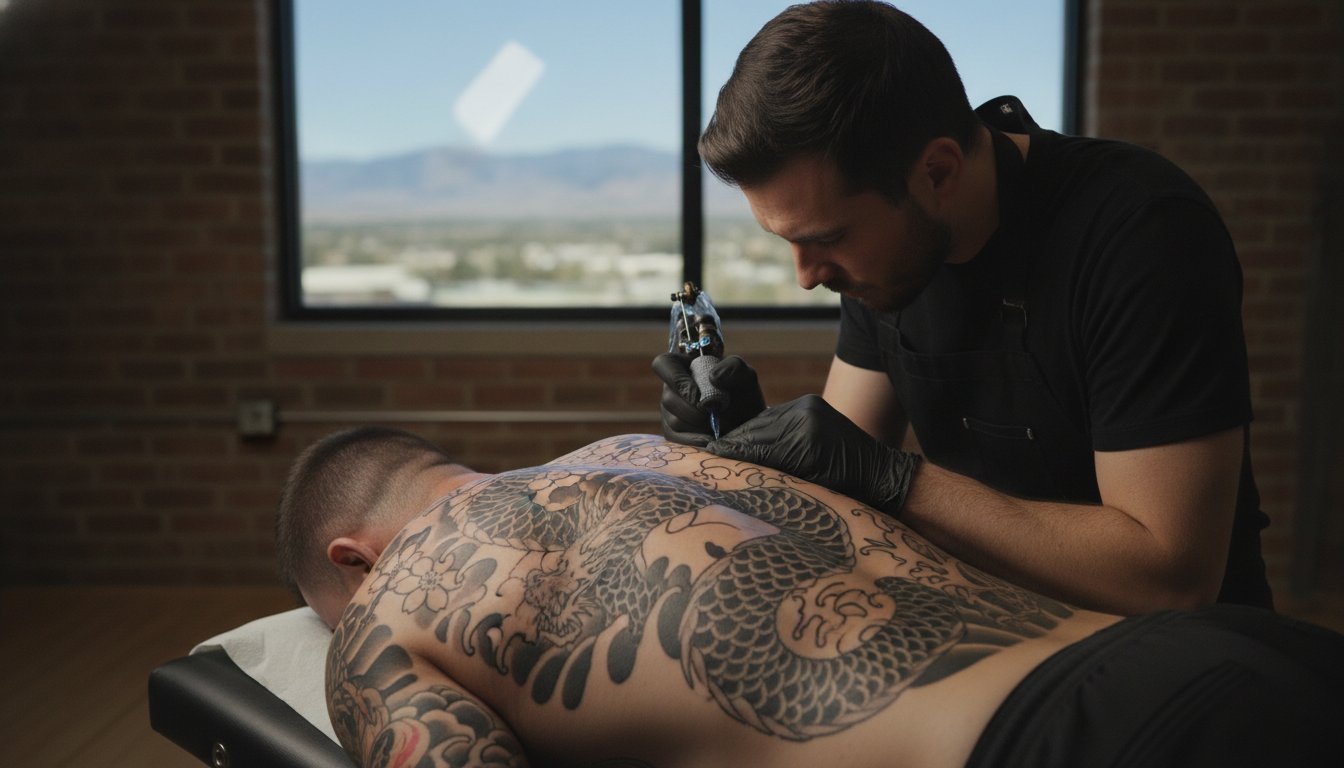
A full back piece or an intricate sleeve isn't just a purchase; it's a marathon of endurance and a long-term partnership between you and your artist. You might worry about the logistics of living with half-finished ink for months or the physical toll of back-to-back appointments. It's natural to feel some hesitation when committing to a project that requires several visits to a studio. If you're looking for a multi session tattoo Denver provides a wealth of talent, but success depends on more than just the artist's needle.
We've designed this guide to help you master the process of planning, healing, and budgeting for large-scale tattoo projects with expert guidance from veteran artists. You'll gain a clear roadmap for your sleeve or back project and the confidence to manage the healing process between sessions. We'll explore how to choose a dedicated professional who prioritizes both technical safety and creative fulfillment, ensuring your journey from the first sketch to the final highlight is as rewarding as the finished art itself.
Key Takeaways
- Understand the timeline of large-scale art, from 6-hour realism pieces to 40-hour back projects that require a phased approach.
- Learn the essential technical stages of a multi session tattoo Denver artists use to build a lasting foundation for complex designs.
- Master skin recovery in Colorado's dry climate by following the 2-to-4 week rule to ensure your skin is ready for the next layer of ink.
- Navigate the logistics of scheduling and budgeting with a clear understanding of how hourly and full-day rates apply to long-term work.
- Discover how a collaborative approach and veteran experience turn a technical process into a fulfilling creative partnership.
What defines a multi-session tattoo project?
A multi-session tattoo project is defined by the depth of collaboration and the scale of the artistic vision. While a standard appointment might wrap up in an hour or two, a large-scale project typically requires anywhere from 6 to over 40 hours of dedicated labor. This is the hallmark of a multi session tattoo Denver collectors pursue when they want a piece that truly transforms their body's silhouette. It requires a psychological shift in the client. You're moving away from the idea of a quick "piece" and entering into a long-term "project" that demands patience and commitment.
Technical necessity often dictates this timeline. Complex styles like hyper-realism or Japanese traditional involve multiple layers of shading and color that cannot be rushed. Attempting to finish a full-back piece in a single marathon sitting would be detrimental to both the art and your health. Splitting the work into manageable blocks prevents skin over-traumatization. When skin is overworked, it loses its ability to hold pigment effectively, which can lead to scarring or dull colors. By following the standard stages of The Tattooing Process, we ensure that every drop of ink is saturated perfectly into the dermis while allowing your body's natural defenses to recover.
Common projects requiring multiple sittings
Large-scale work is about more than just size; it's about complexity and flow. Many clients seeking a multi session tattoo Denver artists specialize in are looking for projects that cover significant surface area. These often include:
- Full and half-sleeves: These designs wrap around the entire limb, requiring the artist to account for muscle movement and joint placement.
- Back pieces and chest panels: These are the largest canvases on the body. They often serve as the centerpiece of a person's collection.
- High-detail realism and geometric work: Styles that rely on precision and mathematical symmetry often require the artist to work in smaller, more focused bursts to maintain absolute accuracy.
The benefits of a phased approach
Approaching a tattoo in phases is a strategic choice that benefits your physical well-being. Tattooing triggers an immune response. Spreading out the work reduces the overall stress on your system, preventing the exhaustion often called "tattoo flu." This method also allows for artistic refinement. Once the base layer has healed, your artist can return to the work with fresh eyes, adding white highlights or deep shadows that wouldn't have been possible on raw, inflamed skin. A phased approach also offers financial flexibility. You can invest in world-class art without the pressure of a single, massive upfront cost, spreading the investment over several months as the project evolves.
The technical phases of a multi-session tattoo Denver
The technical journey of a multi session tattoo Denver residents invest in follows a logical, disciplined progression. A large-scale project isn't just one long tattoo; it's a sequence of distinct technical layers that build upon each other. Each phase serves a specific purpose in the longevity and clarity of the final work. It begins with the consultation and design mapping, where we analyze how the art will wrap around your specific anatomy. Following this, the project moves through the structural framework, the building of depth with shading, and finally, the saturation of color and high-contrast highlights.
This methodical approach ensures that the skin isn't overwhelmed. By breaking the work into phases, we allow the body to heal efficiently between sessions. This is particularly vital for projects that cover the back or full limbs, where the surface area involved is significant. During these weeks of recovery, it's wise to stay informed about tattoo risks and precautions to maintain the integrity of the work as it settles into the dermis.
The Linework Session: Setting the Blueprint
The first session is often the most physically and mentally demanding. It sets the blueprint for everything that follows. During this sitting, the artist focuses entirely on the primary structure and "skeleton" of the design. We ensure the flow of the lines matches your body's natural musculature so the art moves with you rather than sitting stiffly on top of the skin. You'll likely leave the shop with "just the lines," which can look sparse or unfinished. Don't be discouraged by this stage; these foundations are what ensure the tattoo remains legible and sharp for decades to come.
Shading and Detail: Bringing the Art to Life
Once the lines are fully healed, the artist begins building value and texture. This is where a 2D blueprint transforms into a 3D masterpiece. By layering different tones of black and grey or underpainting for color, we create the depth required for realism or intricate geometric patterns. Realism, in particular, depends on this careful layering process. Some areas might even require a light "touch-up" pass in later sessions to ensure the saturation is uniform across the entire project. If you're ready to begin this collaborative journey, scheduling a tattoo consultation is the most effective way to start mapping out your vision with a professional eye.
This phased strategy is the gold standard for a multi session tattoo Denver artists use to achieve world-class results. It transforms the process from a simple transaction into a steady, intentional craft that respects both the artist's precision and the client's endurance.
Managing skin recovery in the dry Colorado climate
Healing a large-scale project in the Mile High City presents challenges that generic aftercare guides often overlook. Denver’s semi-arid climate and high altitude mean your skin loses moisture much faster than at sea level. For anyone undergoing a multi session tattoo Denver artists will emphasize that environmental factors can dictate how well your ink settles. If the skin becomes too dry, scabs can crack and pull pigment out, compromising the detail we worked so hard to achieve. This makes topical hydration a strategic priority rather than a suggestion.
The most critical guideline is the 2-to-4 week rule. You must wait for the "silver skin" phase to pass before the next needle touch. Silver skin is the thin, shiny layer of new epidermis that forms over the tattoo during the early stages of recovery. It's delicate and easily traumatized. Tattooing over it too soon can cause permanent scarring or "blowouts" where the ink spreads beneath the surface. Patience here ensures the longevity of the work and respects the fundamental principles of Tattoo Safety established by health authorities.
Long sessions also take a toll on your internal systems. "Tattoo flu" is a common reaction after a 6-hour sitting where you might feel feverish, shaky, or exhausted. This happens because your immune system is working overtime to heal a large surface area. Combat this by hydrating aggressively for a full week before your appointment. Increased water intake keeps the skin supple and more receptive to the needle, which can actually reduce the discomfort you feel during the process.
Aftercare for the multi-session client
Use fragrance-free, high-quality ointments that provide a breathable barrier against our dry air. Avoid heavy petroleum-based products that can suffocate the skin and trap bacteria. Since the Rockies offer less atmospheric protection from UV rays, you must shield an unfinished piece from the sun at all times. Sun exposure is the fastest way to fade fresh ink and damage healing tissue. If you notice persistent swelling, localized heat, or unusual redness beyond the first 48 hours, contact your artist immediately to distinguish between normal irritation and a potential reaction.
Preparing your body for back-to-back sessions
Regeneration requires fuel. Prioritize deep sleep and a high-protein diet in the days leading up to your multi session tattoo Denver appointment. Protein provides the amino acids necessary for rapid skin repair and cellular health. Avoid alcohol and blood thinners for at least 48 hours prior. These substances increase bleeding and can wash out the ink during the process, leading to poor saturation. Show up to the studio prepared with high-glucose snacks, plenty of water, and comfortable clothing that allows easy access to the tattoo site without restrictive waistbands or tight sleeves.

Logistics: Scheduling and budgeting for your tattoo
Managing the logistical side of a large-scale project is just as important as the technical application of the ink. When you commit to a multi session tattoo Denver artists will work with you to establish a timeline that respects both your physical recovery and your financial planning. Unlike smaller pieces that are often billed by a flat fee, large projects typically follow one of two billing models: hourly rates or full-day rates. Hourly rates are common for shorter sessions or finishing touches, while full-day rates provide a dedicated block of time that allows for significant progress on expansive areas like a full back or a leg sleeve.
Estimating the total number of sessions is a collaborative effort that happens during your initial design mapping. Factors such as the complexity of the style, the density of the pigment, and how your skin reacts to the needle all play a role. A high-detail realism portrait might take several sittings to achieve the necessary depth, whereas a bold traditional design might move faster through the shading phase. It's also vital to understand the studio's deposit and cancellation policies. For long-term projects, deposits often act as a commitment to the entire series of appointments, ensuring that your spot on the calendar is protected as the project evolves over several months.
Finding the right rhythm for your sessions
Consistency is the key to a cohesive final result. Most clients prefer a "Once a Month" approach, which provides ample time for the skin to fully regenerate while keeping the project moving at a steady pace. If you're traveling for your multi session tattoo Denver offers unique opportunities for "Sprint" sessions, where you might book two days back-to-back. This requires incredible physical endurance and a strict aftercare regimen. Avoid taking breaks longer than six months mid-project. Over long periods, skin elasticity can change and your artist's specific stylistic approach might evolve, which can subtly affect the visual flow of the piece.
Budgeting for a custom masterpiece
Transparency is a core value in a professional studio environment. You should feel comfortable discussing your total budget during your first consultation so your artist can plan the project's scale and detail accordingly. While it might be tempting to seek out lower rates, "cheap" work on a large scale often leads to expensive corrections or cover-ups later. Investing in a veteran artist ensures that the technical safety and artistic integrity of the work are never compromised. To better understand how professional studios structure their fees, see our guide on tattoo pricing in Denver for a detailed breakdown of what to expect.
Planning your project with a clear logistical roadmap allows you to focus on the creative journey rather than the stress of the unknown. If you're ready to start your project, you can book a tattoo consultation to discuss your vision and receive a professional estimate for your timeline.
The Denver Tattoo Company approach to complex projects
At Denver Tattoo Company, we treat large-scale work as a lifetime commitment rather than a series of transactions. Jason Oz brings over 20 years of experience to every multi session tattoo Denver project, ensuring that the artistic vision is matched by technical precision at every stage. We don't just focus on the immediate impact of the design. Instead, we prioritize the long-term integrity of the ink by selecting pigments and application techniques that age gracefully. Our environment is strictly controlled, and we use single-use sterilized equipment for every single session to maintain the highest standards of hygiene and safety. This discipline gives you peace of mind throughout a process that may span several months.
Our design process is collaborative and fluid. While the foundation is set in the early sessions, we allow the art to evolve as we see how the ink settles into your skin and how the composition interacts with your movements. This flexibility allows for a level of customization that isn't possible with smaller, one-off pieces. It's a partnership where your feedback and our technical expertise combine to create something truly unique. We take the time to ensure that every layer of shading and every line of detail serves the overall harmony of the project.
Expertise in realism and custom sleeves
Navigating complex skin areas like the inner arm, elbow, or the back of the knee requires a seasoned hand and a deep understanding of anatomy. A master artisan understands how skin tension varies across different parts of the body and adjusts their needle depth and pressure accordingly. When we map out a full sleeve from shoulder to wrist, we analyze the way your muscles rotate and how the design will look from every perspective. This isn't high-volume work; it's a dedicated craft that values quality above all else. This philosophy ensures that your multi session tattoo Denver remains a cohesive masterpiece that moves naturally with your body's silhouette.
Your journey starts with a consultation
Every great project begins with a thorough, professional conversation. During a multi-session consultation, we sit down to discuss your aesthetic goals, your physical endurance, and your long-term vision. We don't just talk about the art; we provide a clear roadmap and timeline for your specific project. This includes estimating the number of sessions and explaining exactly what we'll achieve in each sitting. This transparency removes the uncertainty of the process, allowing you to approach your first appointment with quiet confidence. If you're ready to transform your ideas into a permanent reality, you can Schedule your consultation with Jason Oz today to begin the collaborative process.
Planning Your Legacy in Ink
Embarking on a large-scale tattoo is a significant commitment that rewards patience with a lifelong masterpiece. By understanding the technical phases of the work and the specific requirements of skin recovery in our unique climate, you can navigate the entire process with confidence. A successful multi session tattoo Denver residents can be proud of relies on a steady, collaborative partnership between the client and a master artisan who prioritizes both longevity and creative fulfillment.
Denver Tattoo Company provides this focused and professional environment. Led by Jason Oz, who brings 20+ years of experience to every project, we specialize in intricate custom realism and expansive sleeves designed to flow with your body’s natural movement. Our studio upholds strict single-use sterilization standards, ensuring that every session is as safe as it is artistic. We're here to act as your creative partner from the first line to the final highlight. Start your large-scale tattoo project with a professional consultation today to begin mapping out your vision. Your journey toward a transformative piece of art is a marathon worth every step.
Frequently Asked Questions
How long should I wait between tattoo sessions?
You should wait a minimum of two to four weeks before returning for your next appointment. This period allows the skin to move past the initial healing phases and ensures the "silver skin" has matured enough to handle the needle again. Rushing the timeline for a multi session tattoo Denver project can lead to skin trauma or poor pigment saturation, so patience is vital for a clean result.
Is it better to do longer sessions or more frequent shorter ones?
The ideal session length depends on your physical endurance and the complexity of the art. Long sessions of six or more hours allow the artist to complete expansive sections of shading or color in a single sitting, which helps maintain a consistent visual flow. Shorter sessions of three to four hours are less taxing on your immune system and can be easier to manage if you have a lower pain threshold.
Why does my tattoo look faded or dull between sessions?
Your tattoo looks dull because of the natural formation of new skin cells over the fresh ink. This layer, often called silver skin, is slightly opaque and masks the true vibrancy of the pigment beneath. You don't need to worry about the quality of the work during this phase; once the skin fully settles and exfoliates naturally, the depth and clarity of the tattoo will reappear.
Can I change the design of my sleeve once we have started?
Minor adjustments are usually possible, but the primary structural blueprint is difficult to alter once the linework is set. Large-scale projects are mapped out to follow the specific musculature of your body, so significant changes can disrupt the overall composition. It's best to communicate any new ideas to your artist early so they can determine if the shift is technically feasible without compromising the art.
What is the "tattoo flu" and how do I avoid it after a long session?
Tattoo flu is an immune response that occurs when your body feels overwhelmed by the physical stress of a long session. It can result in fatigue, chills, or a general feeling of malaise. You can avoid this by staying hydrated, eating a high-protein meal before your appointment, and ensuring you get plenty of sleep both before and after your visit to the studio.
How do I sleep comfortably after a large-scale back session?
Sleep on your stomach or side to keep the fresh ink away from direct pressure and friction. It’s a good idea to use clean, dark sheets for the first few nights to prevent staining from minor weeping. If your artist used a medical-grade adhesive bandage, follow their specific instructions for removal to ensure the skin remains protected and calm throughout the night.
Is it more painful to tattoo over a partially healed area?
Yes, tattooing over skin that is still in the active stages of regeneration is significantly more painful. This is why we emphasize the importance of the healing gap for every multi session tattoo Denver residents receive. When the skin is fully recovered, the process is much more manageable for the client and allows the artist to work with greater precision and efficiency.
How much should I tip my artist after each session of a multi-part project?
Tipping 15% to 20% after each individual session is the standard professional courtesy in the tattoo industry. It’s better to tip as you go rather than waiting for the final appointment, as it recognizes the hours of dedicated labor and technical skill provided during each sitting. This practice supports the collaborative nature of the project and shows appreciation for the artist's ongoing commitment to your work.


