
A tattoo deposit is far more than a simple transaction; it is a mutual contract of respect that protects both your time and the artist's creative labor. It is natural to feel a bit of hesitation when asked to pay upfront, especially if you are wondering exactly how much is a tattoo deposit and whether that money disappears into a hidden fee or counts toward your final piece. In the professional world of custom ink, this payment serves as a vital anchor for the collaborative process. It ensures that the hours spent sketching and preparing your unique design are valued before the first drop of ink even meets the skin.
You likely want to walk into your appointment with total confidence, knowing your investment is secure. We understand the common concerns regarding industry-standard rates and the fear of losing funds due to an unexpected schedule change. This guide clarifies exactly what to expect in 2026, from typical ranges of $50 to $200 for standard sessions to the specific policies used by professional studios in the Denver area. You will gain a clear understanding of how these payments function as a down payment on your art and what steps you can take to protect your booking if you need to reschedule.
Key Takeaways
- Understand that a deposit is a professional commitment that secures your dedicated time in the studio and compensates the artist for essential design preparation.
- Discover industry standards for how much is a tattoo deposit in 2026, which typically ranges from $50 to $200 depending on the complexity of your custom piece.
- Learn why these fees are generally non-refundable to protect the artist's schedule and the labor involved in creating your unique artwork.
- See how your deposit acts as a credit toward the final cost of your tattoo, ensuring your initial investment is fully applied to the finished work.
- Gain confidence in the booking process by understanding how veteran-led studios prioritize transparency and creative collaboration.
What Is a Tattoo Deposit and Why Is It Required?
A tattoo deposit is a foundational step in the collaborative process of body art. While many clients initially ask how much is a tattoo deposit, it's equally important to understand what that payment represents. It isn't an arbitrary fee or an added cost. Instead, it serves as a down payment on your final piece, acting as a financial handshake that confirms your commitment to the appointment. This practice allows a studio to operate with the precision and focus required for high-level artistry and professional service.
Securing Your Spot in the Artist's Calendar
Professional studios often manage complex schedules that stretch weeks or months into the future. When an artist blocks out several hours for a session, they're dedicating their livelihood to that specific time slot. A deposit ensures that the chair is reserved exclusively for your project. Without this commitment, no-shows would create significant gaps in an artist's workday, leading to lost income and wasted preparation. By securing your spot, you allow the studio to maintain a steady, organized environment where every client receives the undivided attention they deserve. This structured approach is essential for maintaining the high standards expected in a professional setting.
The Cost of Creative Preparation
The work of a professional artist begins long before you sit in the chair. For custom tattoo designs, the artist spends hours researching, sketching, and refining the artwork to match your unique vision. This behind the scenes labor is a critical part of the Tattoo artist overview that clients often don't see. The deposit compensates the artist for this creative time and the administrative effort involved in the consultation and booking process. It acknowledges the expertise required to translate an idea into a permanent piece of art that will last a lifetime.
Beyond the art itself, deposits support the rigorous safety standards of a modern studio. Preparing for a client involves setting up a sterile environment with single-use equipment and premium inks. When you understand how much is a tattoo deposit, you're also seeing the value of the meticulous preparation required to ensure your session is safe and professional. This investment ensures that everything is ready the moment you walk through the door, allowing the focus to remain entirely on the craft and your creative fulfillment.
Average Tattoo Deposit Prices in 2026
The financial commitment for a tattoo varies significantly based on the artist's expertise and the technical demands of the design. In 2026, industry standards for a deposit typically fall between $50 and $200. This range covers a wide spectrum of work, from simple geometric shapes to more intricate custom pieces. When you are determining how much is a tattoo deposit, it's helpful to view the amount as a direct reflection of the project's total scale and the time required for preparation.
Factors That Influence the Deposit Amount
Several variables dictate where a specific project lands on the price scale. Complexity is a primary driver; a design requiring extensive anatomical flow or historical research demands more of the artist's focus before the needles are even unpacked. The local market demand in Denver also plays a role. In a city known for high artistic standards, experienced artists often require a deposit that aligns with their hourly rates, which currently range from $150 to $300 for seasoned professionals in the region.
The length of the scheduled session is another critical factor. A full day appointment represents a larger block of the artist's schedule compared to a two hour session. Consequently, the deposit for a full day is scaled higher to protect that significant time commitment. These policies are rooted in Tattoo Artist Community Standards, which emphasize the importance of professional integrity and mutual respect between the artist and the client.
Small Tattoos vs. Large Custom Projects
For smaller, straightforward designs or walk-in tattoos, a smaller holding fee is standard. These flash pieces often require less custom drawing time, allowing for a lower entry point. In contrast, large scale work like a custom sleeve or a multi session realism piece requires a much more significant initial investment. These projects involve dozens of hours of labor, and a higher deposit ensures that both parties are fully committed to the long term creative journey. While the initial question of how much is a tattoo deposit often focuses on the dollar amount, the true value lies in the preparation it covers.
Professional studios in Englewood prioritize quality and precision over high volume turnover. This focus means that the deposit is never just a fee; it's an investment in a dedicated, clean, and safe environment. If you are ready to begin your next project, you can schedule a consultation to discuss your ideas and receive a clear estimate tailored to your specific vision. This transparency helps you plan your budget with confidence while ensuring the highest level of artistic integrity for your permanent work.
Why Tattoo Deposits Are Usually Non-Refundable
The non-refundable nature of a tattoo deposit is a standard practice designed to safeguard the artist's specialized labor and the studio's operational stability. While you might initially focus on how much is a tattoo deposit, the policy surrounding that payment is what truly ensures a professional experience. This structure protects the artist from last-minute cancellations that would otherwise result in a complete loss of income for that day. In this context, a non-refundable deposit is a protection of artistic labor and essential overhead costs, ensuring the studio remains a viable space for high-quality craft.
Even if the tattoo is never applied to the skin, the artist has likely already invested significant hours into the project. This includes the time spent during collaborative consultations and the meticulous process of creating custom artwork tailored to your vision. If a client fails to appear, the artist is left with "dead time" in the chair. This is a block of hours that cannot be easily filled on short notice with another project of similar scale. The deposit offsets this loss, allowing the studio to maintain its commitment to excellence without financial strain caused by sudden scheduling gaps.
Rescheduling vs. Canceling Your Appointment
Most professional studios understand that life can be unpredictable. To accommodate this, many artists allow a one-time reschedule without penalty if you provide at least 48 to 72 hours' notice. There is a distinct difference between forfeiting a deposit and moving it. Forfeiting occurs when a client cancels entirely or fails to provide adequate notice, meaning the funds are kept by the studio to cover lost time. Moving a deposit means the credit is simply applied to a new date in the artist's calendar. Clear and early communication is the best way to protect your investment and maintain a positive, professional relationship with your artist.
Protecting the Studio's Professional Standards
The costs of maintaining a premium environment are substantial. Studio overhead includes the procurement of single-use sterilized equipment, premium pigments, and the rigorous upkeep of a high-end facility. Consistent and reliable booking allows a master artisan to focus on these safety standards rather than worrying about the financial impact of empty chairs. When you understand how much is a tattoo deposit, you are also acknowledging the value of a clean, focused, and safe environment. Transparency in these policies isn't about being restrictive; it is about building a foundation of trust. It ensures that every individual who walks through the door enters a space dedicated to the longevity and integrity of their work.
How the Deposit Applies to Your Final Tattoo Price
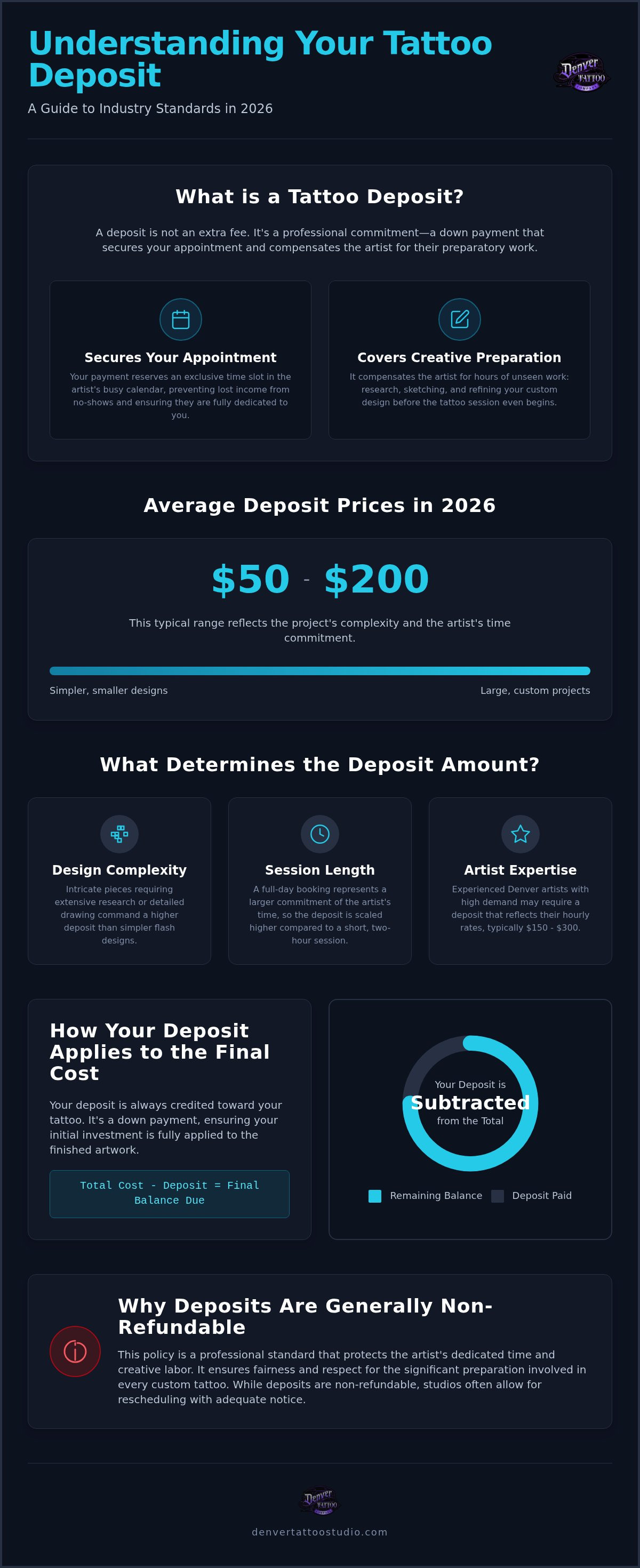
Understanding the financial logistics of your session is key to a stress free experience. A tattoo deposit is not an additional administrative fee or a separate surcharge. It functions as the first payment on your total bill. When you ask how much is a tattoo deposit, you are essentially asking for the initial installment of your investment in permanent art. In almost all professional shops, this amount is credited directly toward the final cost of your service, ensuring that every dollar you pay goes toward the creation of your piece.
The arithmetic of the process is straightforward and transparent. On the day of your appointment, the studio subtracts the deposit amount from the final price of the tattoo. Whether your project is priced at a flat rate or calculated by the hour, the credit is applied at the end of the session. This system simplifies the final transaction and acknowledges the commitment you made during the booking phase.
The Math of Your Session: [Total Price] - [Deposit] = [Balance Due on Day of Service]
The Payment Process on the Day of Your Session
Before the first drop of ink is applied, a professional artist will review the final price or hourly estimate with you. This transparency ensures there are no surprises when the work is complete. Once the session concludes, the studio applies your deposit to the total, and you pay the remaining balance. Professional Denver area studios typically accept various payment methods, including cash and major digital platforms. It is always a good practice to confirm the preferred payment method during your initial consultation to ensure a smooth conclusion to your visit.
Deposits for Multi-Session Sleeves and Back Pieces
For large scale work like sleeves or full back pieces, the deposit handling follows a slightly different rhythm. In these cases, the deposit usually stays on the books until the very last session of the project. This practice ensures the artist remains committed to the long term timeline of a complex piece. It also helps you manage your tattoo budget across several months of work. By holding the deposit until the final appointment, both the artist and the client maintain a clear mutual commitment to finishing the project with the same level of detail and focus as it began. This methodical approach reflects the discipline required for high level custom work.
If you are ready to begin a large scale project or a unique custom piece, book your consultation today to discuss your vision and project timeline with a seasoned expert.
Booking Your Session at Denver Tattoo Company
At Denver Tattoo Company, we view the booking process as the first chapter of a creative partnership. Our Englewood studio prioritizes transparency, ensuring you understand every detail of the journey before the first needle is set. While the initial question of how much is a tattoo deposit is a practical starting point, we focus on the value that payment unlocks: a dedicated block of time and the undivided artistic focus of a master artisan. We maintain a clean, focused, and highly dedicated environment where technical safety and creative fulfillment are equally prioritized for every individual who walks through our doors.
From Concept to Skin: Our Collaborative Approach
Jason Oz brings over 20 years of industry experience to every project, providing a steady hand and a wealth of technical knowledge. This veteran leadership ensures that your custom artwork is handled with meticulous attention to detail from the very first sketch. Your deposit initiates the design phase, allowing the artist to invest the necessary time to research and refine a piece that flows naturally with your anatomy. Clear communication during your consultation is the foundation of this work. It's a collaborative process where your personal vision meets seasoned expertise to create a design that will stand the test of time. We believe that the best results come from a mutual commitment to the craft, and the deposit serves as the formal beginning of that shared investment.
Ready to Book? Next Steps for Your New Ink
We utilize single-use sterilized equipment and premium inks for every client, regardless of the size or complexity of the project. Whether you are looking for a small walk-in piece or a complex custom sleeve, our dedication to hygiene and professional standards never wavers. When you are ready to move forward, the next step is simple. You can visit our studio in Englewood for a walk-in or schedule a dedicated consultation to discuss your vision in detail. Preparing your body is just as important as the design itself; we recommend focusing on skin health and staying well hydrated in the days leading up to your session. This preparation ensures your skin is in the best possible condition for the application process, leading to better healing and long term vibrancy. Once you have a clear understanding of your project's scope and how much is a tattoo deposit for your specific design, you can move forward with total confidence in the booking process.
Book your consultation with Denver Tattoo Company and begin the process of bringing your custom artwork to life in a professional, welcoming environment.
Secure Your Vision with Professional Artistry
Understanding how much is a tattoo deposit allows you to navigate the booking process with complete confidence. This initial payment is a practical step that secures your dedicated time and initiates the meticulous design phase required for high level body art. By establishing a clear agreement upfront, you ensure that both your vision and the artist's labor are valued throughout the entire collaborative journey. It is the first step toward a permanent piece of art that reflects your personal story.
At Denver Tattoo Company, we prioritize the longevity and safety of your work. Led by Jason Oz, who brings 20+ years of expertise to the craft, we specialize in custom realism and intricate, detailed art. Our commitment to professional excellence is reflected in our strict use of single-use sterilized equipment and premium pigments. Whether you are planning a small commemorative piece or a large scale custom design, our studio provides the steady hand and creative partnership you need.
Schedule your custom tattoo consultation in Englewood today to discuss your ideas and begin the process of creating a piece you will be proud to wear for a lifetime. We are ready to help you bring your next masterpiece to life.
Frequently Asked Questions
Is a tattoo deposit separate from the total price?
A tattoo deposit is not an extra fee; it is credited toward the final cost of your session. When clients ask how much is a tattoo deposit, it's helpful to remember that you're making a down payment on your total bill. On the day of your appointment, the studio subtracts this amount from the final price. This ensures your initial investment is fully applied to the finished artwork, simplifying the final transaction.
Can I get my tattoo deposit back if I change my mind?
Deposits are generally non-refundable because they compensate the artist for their preparation and the time reserved in their schedule. Once you book, the artist begins the creative process and turns away other potential clients for that specific time slot. While we value every individual's experience, this policy is essential to protect the studio's operational stability and the artist's specialized labor. It reflects a mutual commitment to the project.
What happens to my deposit if I need to reschedule?
Your deposit can typically be transferred to a new date if you provide sufficient notice, usually 48 to 72 hours. This window allows the artist to attempt to fill the vacated time slot. If you fail to provide adequate notice or miss the appointment entirely, the deposit is usually forfeited to cover the lost income. Clear communication helps ensure your investment remains secure while respecting the studio's professional calendar.
How much is a typical tattoo deposit in Denver?
When considering how much is a tattoo deposit in the local market, most professional studios require between $50 and $200. This range depends on the complexity of the design and the length of the scheduled session. Larger projects like full sleeves often fall at the higher end of this scale. This commitment ensures that both the artist and the client are fully prepared for the collaborative process ahead in a focused environment.
Does a walk-in tattoo require a deposit?
Walk-in tattoos generally don't require a deposit because the service is provided on a first-come, first-served basis. However, if the studio is busy and you choose to return later in the day for a specific time, a small holding fee might be requested. Deposits are primarily used for scheduled appointments to guarantee that a specific block of time is reserved exclusively for your custom work and meticulous preparation.
Why do tattoo artists charge for drawing time?
Artists charge for drawing time because creating custom tattoo designs involves significant labor before the session begins. This phase includes research, sketching, and refining the art to fit your body perfectly. The deposit often covers this creative effort. It ensures the artist is fairly compensated for their expertise and the behind the scenes work that makes a high-quality, permanent piece possible for both newcomers and enthusiasts.
What if the artist cancels my appointment?
If an artist needs to cancel your appointment due to unforeseen circumstances, your deposit is typically fully refundable or transferred to a new date. Professional studios prioritize the safety and health of both artists and clients. We will communicate any changes as early as possible to minimize inconvenience. Your trust is paramount, and we ensure that your investment is protected if we cannot fulfill the original booking as planned.
How do I pay my deposit to Denver Tattoo Company?
You can pay your deposit at our Englewood studio following a consultation or through our secure online booking system. We accept various payment methods to make the process as seamless as possible. Once the payment is processed, your session with Jason Oz is officially secured. We will provide a confirmation and all necessary details to help you prepare for your upcoming creative session and the collaborative design process.


