
![Tattoo Healing Process Day by Day: A Professional Guide [2026]](https://getautoseo.com/storage/hero_images/tattoo-healing-process-day-by-day-a-professional-guide-2026.jpg?v=25406ea23325)
What if you viewed your new ink not just as a piece of art, but as a biological collaboration between your body’s immune system and your artist’s precision? When you leave the studio, the masterpiece is only half-finished; the rest depends on how you manage the tattoo healing process day by day. In the high altitude and dry air of Colorado, your skin faces unique challenges that can make or break the longevity of your investment.
It is completely natural to feel a surge of anxiety when you notice the first signs of scabbing or intense itching. You might worry that your ink is falling out or wonder if that lingering redness is a cause for concern. We understand that you want to protect the integrity of your custom design. This guide provides a professional timeline to help you distinguish between normal recovery and potential issues. We will break down the physical changes you'll experience over the next few weeks and offer expert advice to keep your skin hydrated and your colors vibrant.
Key Takeaways
- Identify the initial inflammatory phase as a natural biological response where plasma and excess ink signify the start of a healthy recovery.
- Master the tattoo healing process day by day to manage the peeling and itching stages while understanding why ink often appears cloudy during the second week.
- Recognize that deep tissue recovery continues for several weeks after the surface appears closed, requiring ongoing care to restore natural skin texture.
- Adjust your aftercare routine for the Colorado climate to combat the effects of low humidity and intense high-altitude UV rays on vulnerable skin.
- Ensure the longevity of your work by choosing a studio that prioritizes sterile, single-use equipment and decades of professional industry experience.
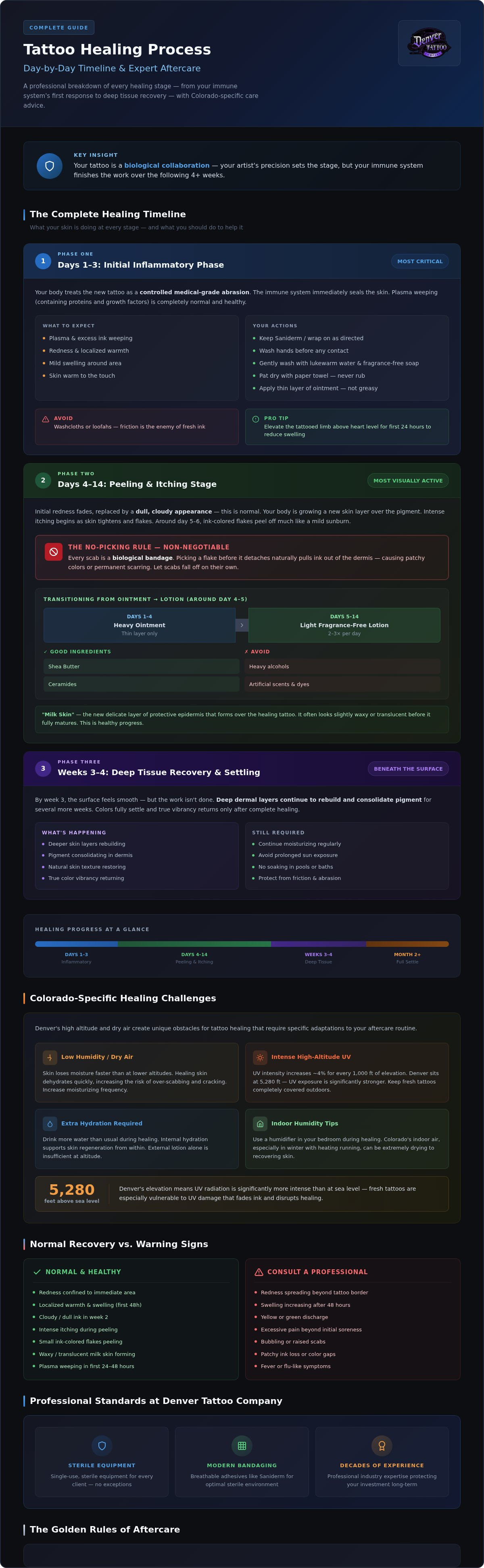
Days 1–3: The Initial Inflammatory Phase
The first 72 hours represent the most critical window in the tattoo healing process day by day. Biologically, your body treats a new tattoo as a controlled, medical-grade abrasion. Your immune system immediately shifts into high gear to protect the area, initiating a sequence of events designed to seal the skin. During this time, the "weeping" of plasma and excess ink is a standard response. Plasma is your body's natural defense mechanism, containing the proteins and growth factors necessary to begin the repair process.
Managing your initial bandage is the next vital step. At Denver Tattoo Company, we prioritize the safety of your work through meticulous hygiene and precision. We often utilize modern, breathable adhesives like Saniderm, which can remain in place for several days to maintain a sterile environment. If we apply traditional plastic wrap, it serves as a temporary shield. You should remove it within a few hours to allow the skin to breathe and to prevent early bacterial colonization.
Understanding Redness and Swelling
It's common for the tattooed area to feel warm to the touch or look slightly pink. This localized heat and swelling are signs that your white blood cells are actively working at the site. You can differentiate a healthy "glow" from early-stage irritation by observing the edges. A normal response stays confined to the immediate area. To reduce fluid buildup and discomfort, try to keep the tattooed limb elevated above your heart during the first 24 hours.
Your First Cleaning at Home
When you remove the wrap, your primary goal is to clear away debris without causing trauma. This first wash is a cornerstone of the tattoo healing process day by day. Always wash your hands with antibacterial soap before touching the area. Use lukewarm water and a fragrance-free, liquid soap to gently remove dried plasma with your fingertips. Avoid using washcloths or loofahs; friction is the enemy of fresh ink.
After rinsing, use a clean paper towel to pat the area dry. Never rub the skin. Once dry, apply a very thin layer of professional-grade ointment. The skin should look hydrated, not saturated. If the surface appears "wet" or greasy, you've applied too much, which can trap bacteria and suffocate the pores. A light, breathable layer is all that's required to support the skin's natural recovery.
Days 4–14: The Peeling and Itching Stage
As you move into the second week, the tattoo healing process day by day enters its most visually transformative phase. The initial redness fades, replaced by a dull, cloudy appearance. Don't worry; your ink isn't disappearing. This cloudiness occurs because your body is producing a new layer of skin over the pigment. During this time, the urge to scratch can become intense as the skin tightens and begins to flake.
The "No Picking" rule is the most important standard to follow during this window. Every scab is a biological bandage. If you peel or pick at a flake before it's ready to fall off naturally, you risk pulling ink out of the dermis, which is the deeper layer of skin where the pigment resides. This can lead to patchy colors or permanent scarring. If you notice unusual changes or have questions about your recovery, a professional tattoo consultation is the best way to ensure your artwork remains pristine.
The Scabbing and Peeling Process
By day five or six, your tattoo will likely begin to flake off in small, ink-colored pieces, much like a mild sunburn. This is a sign of healthy regeneration. While some areas might develop thicker scabs, it's vital to let them detach on their own. We define "milk skin" as the new, delicate layer of protective epidermis that forms over the healing tattoo, which often looks slightly waxy or translucent before it fully matures.
Transitioning from Ointment to Lotion
Once the tattoo stops "weeping" and the skin feels tight or dry, it's time to transition from heavy ointments to a light, fragrance-free lotion. This usually happens around day four or five. The goal is to find the "sweet spot" of hydration. Your skin should feel soft and supple, but it shouldn't look shiny or greasy. Over-moisturizing can trap bacteria and lead to "bubbling" scabs, which can compromise the final look of your design.
When selecting a moisturizer, look for high-quality ingredients like shea butter or ceramides. Avoid products containing heavy alcohols, artificial scents, or dyes, as these can irritate the fresh, sensitive skin. Applying a very thin layer two to three times a day is typically sufficient to keep the area comfortable without suffocating the pores. This disciplined approach ensures the artistic integrity of your custom work is preserved for the long term.
Weeks 3–4: Deep Tissue Recovery and Settling
By the third week, your skin usually feels smooth to the touch. It's easy to assume the work is finished. However, the tattoo healing process day by day involves much more than just surface-level repair. While the epidermis has closed, the deeper dermis is still actively integrating the pigment. This is a biological collaboration where your body encapsulates the ink particles in a permanent layer of tissue. This internal stabilization is why the work looks different after a month than it did on day one.
You'll notice the return of your skin's natural elasticity during this phase. The tightness and fragility of the second week should be gone. During this time, the ink starts to "settle" into its permanent home. It moves from a raw, surface-level vibrance to a more natural, embedded appearance. This transition is essential for the long-term artistic integrity of your piece. While many competitors claim healing is done in two weeks, we know that deep dermis stabilization can actually take several months to fully conclude.
The "Ghosting" Phase
Many clients feel a brief surge of anxiety when their tattoo looks dull or "milky" during week three. We call this the ghosting phase. It happens because a fresh layer of skin cells is maturing over the ink. As these cells become more translucent over time, the clarity and sharpness of the colors will return. Patience is a virtue here. The final result isn't truly visible until these layers fully stabilize and the "milk skin" matures.
Resuming Normal Activities
You can finally return to the gym with confidence. Sweating is no longer a major concern because the protective barrier is intact. However, you should still avoid heavy friction on the area from tight clothing or equipment. Submerging your tattoo in pools, hot tubs, or baths is generally safe after the four-week mark, provided no scabs remain. We always recommend a final check to ensure the skin texture has returned to its natural state before long soaks.
Even though you're past the intense care phase, hydration remains vital for the longevity of the work. Drink plenty of water and continue applying a light moisturizer. This keeps the skin healthy and the ink vibrant against the elements. If you ever have concerns about how your piece is settling, our team is available for a professional consultation to ensure your investment remains a masterpiece for years to come.
Colorado Specifics: Healing in a High-Altitude Desert
Standard aftercare guides often fail to account for regional environmental factors. In the Mountain West, the tattoo healing process day by day is heavily influenced by our semi-arid climate and high elevation. Denver’s low humidity means that moisture evaporates from your skin at an accelerated rate compared to coastal regions. If you follow a "set it and forget it" approach, you might find your new ink becoming brittle and prone to damage before the first week is even over.
Supporting your body from the inside out is just as important as topical care. We recommend increasing your daily water intake during the first month of recovery. When your body is hydrated, your skin maintains better elasticity, which allows the inflammatory response to progress without unnecessary complications. Staying proactive ensures that the precision of your custom work isn't compromised by environmental stressors.
Combatting Extreme Dryness
In Englewood and the greater Denver area, the frequency of moisturizing needs to be higher than in more humid environments. While generic advice might suggest twice-daily application, local conditions often require three or four very thin layers of lotion to prevent the skin from tightening too quickly. If you feel the area becoming stiff or see fine lines appearing, your skin is likely thirsty.
Using a humidifier in your bedroom at night can create a controlled, healing-friendly microclimate. This prevents the air from pulling moisture out of your skin while you sleep. Catching "micro-cracking" early is essential; if a scab cracks deeply due to dryness, it can lead to permanent ink loss. To ensure your piece heals perfectly in our unique climate, consider scheduling tattoo consultations to discuss a personalized aftercare plan tailored to your skin type.
Sun Protection at 5,280 Feet
The sun is significantly more intense at 5,280 feet than at sea level. Because a healing tattoo is essentially an open wound for the first few weeks, you cannot apply sunscreen directly to the area. Chemical filters and minerals can cause severe irritation or even infection in the fresh dermis. Instead, you must rely on physical barriers. Loose-fitting, UV-protective fabrics are your best defense against the Colorado sun.
Exposure to high-altitude UV rays is particularly devastating for black and grey realism. The sun breaks down pigment particles, leading to premature fading and a loss of the fine-line detail that makes high-quality work stand out. Protecting your investment during the first month is a small price to pay for a lifetime of artistic clarity. Once the skin has fully matured after the four-week mark, daily sunscreen application becomes a non-negotiable part of maintaining your ink's longevity.
Professional Standards at Denver Tattoo Company
Precision in the studio translates directly to comfort during recovery. Jason Oz brings over 20 years of industry experience to every session, ensuring that the application is as trauma-free as possible. When the needle depth is consistent and the technique is refined, your body doesn't have to work as hard to repair the skin. This foundation is what makes your tattoo healing process day by day a manageable journey rather than a source of stress.
We believe that high-quality results are the product of a collaborative relationship between the artist and the client. This partnership doesn't end when you walk out of our Englewood doors. Because every custom tattoo design has unique requirements, we provide tailored aftercare advice that considers the size, placement, and style of your piece. Monitoring your tattoo healing process day by day is a shared responsibility, and we maintain an open-door policy for healing consultations. We want to ensure that the artistic integrity of your work remains intact long after the initial session is over.
Our Sterilization and Safety Protocols
Safety is the cornerstone of our practice, and we never compromise on the technical standards of our environment. We use only single-use, sterilized equipment for every client to eliminate the risk of cross-contamination. Our selection of premium, stable pigments is intentional; we choose inks that are known for their longevity and biocompatibility. By maintaining a clean and focused workspace, we prevent complications before they have a chance to start. This meticulous attention to detail protects your health and ensures that your skin can focus entirely on the regenerative process. We encourage you to stop by for professional oversight if you ever feel uncertain about how your skin is responding during the first few weeks.
Booking Your Next Masterpiece
Preparing for a tattoo involves more than just choosing a design. We recommend scheduling a tattoo consultation to discuss your vision and prepare your skin for the upcoming session. Whether you are interested in one of our walk-in tattoos or a complex custom project, we take the time to ensure you are ready for the commitment. A full-day session requires physical resilience, and we provide the guidance needed to help your skin handle the process effectively. Our studio serves the greater Denver area with a focus on hygiene and artistic excellence. Contact us to discuss your vision and let’s begin the journey of creating your next permanent work of art together.
Preserving the Integrity of Your Artwork
Mastering the tattoo healing process day by day is a commitment to the longevity of your art. By understanding the biological shifts from initial inflammation to deep tissue settling, you can manage each stage with confidence. It's essential to remember that the Colorado climate demands extra vigilance; the dry air and high-altitude sun require a proactive approach to hydration and protection. Our studio in Englewood prioritizes your safety through strict medical-grade sterilization and the technical expertise of a veteran artist with over 20 years of experience.
We view every tattoo as a collaborative journey that requires professional oversight and a tailored care plan. If you're ready to start your next custom project or need expert guidance on a new piece, we're here to help. Book a Consultation with Jason Oz at Denver Tattoo Company to ensure your vision is executed with the highest standards of artistic integrity. Your journey toward a beautifully healed masterpiece starts with the right foundation and a steady hand. We look forward to helping you create something that lasts a lifetime.
Frequently Asked Questions
Is it normal for my tattoo to look blurry or cloudy while peeling?
It is completely normal for your tattoo to look blurry or cloudy during the second week of the tattoo healing process day by day. This happens because a new layer of skin cells, often called "milk skin," is forming over the pigment. As these cells mature and become more translucent, the original sharpness and vibrancy of your art will return. Be patient and avoid the urge to scrub or exfoliate the area prematurely.
Can I go hiking or exercise immediately after getting a tattoo in Denver?
You should wait at least 48 to 72 hours before engaging in strenuous exercise or hiking. Physical activity increases blood flow and sweat, which can irritate the open wound and introduce bacteria. In the Denver area, hiking also exposes your fresh ink to intense high-altitude UV rays and dust. It's best to let the initial inflammatory phase subside before returning to your active lifestyle to protect the integrity of the work.
How do I know if my tattoo is infected or just irritated?
Irritation typically involves localized redness and slight swelling that diminishes after the first few days. An infection is characterized by spreading redness, extreme pain, yellow or green discharge, and sometimes a fever. If the area feels increasingly hot or the redness begins to streak away from the tattoo, contact a professional immediately. Maintaining a sterile environment during application is why we prioritize medical-grade standards at our Englewood studio to reduce these risks.
What should I do if my tattoo starts to scab heavily?
If your tattoo starts to scab heavily, the most important rule is to leave it alone. Thick scabs are often a result of excess plasma drying on the surface during the first 24 hours. Don't pick or pull at them, as this can remove pigment from the dermis and cause patchy results. Instead, continue to apply a very thin layer of fragrance-free lotion to keep the scabs pliable and prevent them from cracking.
Is it safe to use coconut oil or Vaseline on a new tattoo?
We don't recommend using Vaseline because it is petroleum-based and non-breathable, which can suffocate the skin and trap bacteria. While some enthusiasts use coconut oil, it can be comedogenic and may clog your pores, leading to breakouts around the artwork. It's much safer to use a professional-grade, fragrance-free ointment or lotion specifically formulated for tattoo recovery. This ensures your custom design heals without unnecessary complications or pore blockages.
How long do I need to wait before applying sunscreen to my new ink?
You must wait until the tattoo is fully healed, typically four weeks, before applying sunscreen. Applying chemicals to an open wound can cause severe irritation or allergic reactions. During the initial stages of the tattoo healing process day by day, protect your ink by wearing loose, UV-protective clothing. Once the skin has completely regenerated, daily sunscreen becomes a non-negotiable part of your routine to prevent the intense Colorado sun from fading your pigment.
Why is my tattoo still red after three days?
Lingering redness after three days isn't always a cause for alarm, especially for larger pieces or sensitive placements. Some bodies take longer to move through the inflammatory phase than others. However, the redness should be fading, not intensifying. If the area remains bright red, feels increasingly painful, or starts to throb, it could indicate excessive irritation or the start of a complication. In these cases, we recommend seeking a professional consultation to ensure safety.
When can I stop the intensive aftercare routine?
You can typically transition away from an intensive aftercare routine after four weeks. By this point, the surface skin has fully closed and the deep tissue recovery has stabilized. However, long-term care is still necessary to maintain the vibrancy of your work. We recommend continuing to moisturize the area daily and applying high-SPF sunscreen whenever you are outdoors. This protects the artistic integrity of the piece against the elements and keeps the colors crisp.


