
What makes a black and grey realism tattoo Denver clients can wear with confidence years from now? A polished reference image is only a starting point. The design also needs enough contrast, space, and scale to stay readable on the body. If you’re unsure how those choices affect the finished piece, focus first on the subject’s defining features and where you want the design placed.
Planning realism is about more than capturing detail. Composition, tonal range, size, and placement work together to shape how an image reads on your skin. This guide explains how to compare references, assess whether a design has room to breathe, and prepare for a consultation so your idea can develop into artwork made for you.
At Art Fiend Club in Englewood, your concept and preferred placement help guide the custom design process. Lead artist Jason Oz brings more than 20 years of industry experience to the work. Ahead, you’ll learn how to evaluate references, prioritize details, and discuss the choices that matter before your tattoo takes shape.
Key Takeaways
- Assess how highlights, midtones, and dark areas create depth and keep the subject easy to recognize.
- Match the design’s detail and scale to the available space, considering how placement may affect the composition.
- When reviewing a black and grey realism tattoo Denver portfolio, look for consistent clarity, intentional contrast, and cohesive composition across multiple pieces.
- Bring a few reference images and identify which elements matter most, while staying open to adapting details during the design discussion.
- Explore custom artwork through a consultation at Denver Tattoo Company in Englewood, where lead artist Jason Oz brings more than 20 years of industry experience.
What Makes Black and Grey Realism Tattoos in Denver Read Clearly?
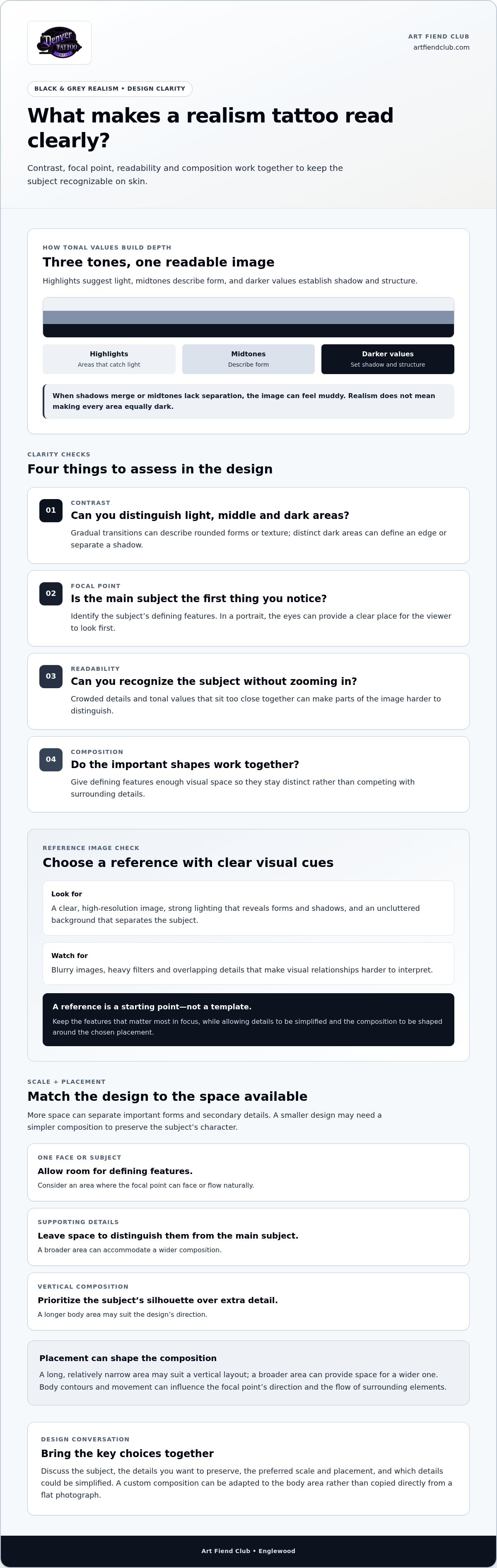
Black and grey realism is an image-led tattoo style that uses black ink, grey tones, and gradual tonal transitions to create the appearance of depth and lifelike detail without color. Highlights suggest areas that catch light, midtones describe form, and darker values establish shadow and structure. Together, these tones help a face, animal, or other subject feel dimensional. For a broader overview of the Black-and-gray tattoo style, including its history and shading approach, see the linked reference.
A photograph and a tattoo are different media. A photograph can show tiny shifts in tone and fine details on a screen or printed surface. A tattoo has to translate those visual cues into marks on skin. When details are crowded or tonal values sit too close together, parts of the image may be harder to distinguish. To improve readability, identify the subject’s defining features and make sure the composition gives them enough visual space.
How do shading and contrast create a realistic effect?
Shading describes form through changes in value. A gradual transition can make a cheek appear rounded or suggest the texture of fur, while a distinct dark area can define an edge or set a shadow apart. Realism doesn’t mean making every area equally dark. If shadows merge or midtones lack separation, the image can feel muddy. A clear focal point, such as the eyes in a portrait, gives the viewer a place to look first.
Use this quick checklist when assessing a design:
- Contrast: Can you distinguish the light, middle, and dark areas?
- Focal point: Is the main subject the first thing you notice?
- Readability: Can you recognize the subject without zooming in on every detail?
- Composition: Do the important shapes work together rather than compete?
Which reference images translate well into tattoo designs?
Choose a clear, high-resolution image where the subject is easy to identify. Strong lighting can reveal the forms and shadows that guide realistic shading. An uncluttered background helps separate the subject from surrounding details, especially when the reference includes a face, animal, or other intricate focal element. Blurry images, heavy filters, and overlapping details can make those visual relationships harder to interpret.
For a black and grey realism tattoo Denver clients are planning, references are starting points, not templates. During a custom design consultation, discuss the subject, the features you want to preserve, and details that could be simplified. This gives the artist direction while leaving room to shape the composition around your priorities and placement.
How Scale and Placement Shape a Denver Black and Grey Realism Tattoo
Scale and placement are design decisions, not finishing touches. A larger area can give important forms more separation and leave room for secondary details, while a smaller design may call for a simpler composition. The goal is to preserve the subject’s character at the size and location you want, rather than forcing every detail from a reference into limited space.
How large should a realism tattoo be?
Start with the subject and the details you most want to retain. A portrait with subtle features may need more room than a bold, close-cropped image. Compressing every element can crowd shadows, textures, and focal details together, making the image harder to read. When discussing size, describe the effect you want as well: should the subject be immediately recognizable, or are secondary details central to the idea?
How can placement support the composition?
The shape and movement of a body area influence how the artwork can be arranged. A long, relatively narrow area may suit a vertical composition, while a broader area can provide space for a wider layout. Body contours and movement can also affect the direction of the focal point and the flow of surrounding elements. These are starting considerations, since bodies and preferences differ. A consultation helps shape the design around your chosen placement.
| Design goal | Scale consideration | Placement consideration |
|---|---|---|
| Emphasize one face or subject | Allow enough room for the defining features | Choose an area where the focal point can face or flow naturally |
| Include supporting details | Leave space to distinguish the main subject from secondary elements | Consider a broader area that can accommodate the composition |
| Create a vertical composition | Prioritize the subject’s silhouette over extra detail | Explore a longer body area that suits the design’s direction |
Bring your preferred placement and reference images into the design conversation. A custom composition can be adapted to the body area rather than copied directly from a flat photograph. Discuss the subject, scale, and orientation together before the design takes shape. If you’re also considering care and potential risks as part of planning, review the FDA’s guidance on tattoo safety and risks.
For a black and grey realism tattoo Denver design, start with the effect you want and stay open to adjustments that support clarity. A custom tattoo design consultation can bring your concept and placement preference into the same conversation.
How to Assess Black and Grey Realism Tattoo Examples in Denver
A polished photograph can make a tattoo look impressive, but a closer look reveals more about how the design is built. Check whether the subject reads clearly at the size shown, whether light and dark areas are intentionally separated, and whether the composition leads your eye to a clear focal point. These checks help you look beyond surface appeal when considering a black and grey realism tattoo Denver design.
What should you look for in a realism portfolio?
Review several examples rather than judging an artist’s work from one isolated image. A collection gives you a broader view of how subjects, contrast, and composition are handled across different designs. Look for recognizable subjects, deliberate transitions between light and shadow, and details that support rather than distract from the main image. Clear, well-lit presentation also helps you assess the artwork without confusing image quality with tattoo detail.
- Readable subject: Can you identify the main subject at the photo’s displayed size?
- Intentional contrast: Are highlights, midtones, and dark areas distinct enough to define form?
- Coherent composition: Does the image have a clear focal point, with supporting details arranged around it?
- Clear presentation: Is the tattoo shown in lighting and focus that let you examine the work?
Keep the photo itself in mind, too. Cropping, lighting, and editing can change how tones appear on screen. A crisp, dramatic image may catch your attention, but the most useful examples let you see the tattoo clearly without visual effects doing the work.
What can fresh and healed photos tell you?
A fresh-tattoo photo shows the immediate appearance of a piece, while a healed photo can offer additional context about how its lines and tonal areas look after healing. When both are available for an example, compare them to understand more than a single moment in the tattoo’s life. Photos can’t guarantee how an individual piece will heal or age, since results vary.
Portfolio review is one part of planning. It doesn’t replace thoughtful attention to the tattoo process itself. For information about potential infections, allergic reactions, and ink considerations, consult the FDA’s guidance on tattoo safety and ink regulation.
For more context on artists working in the style across the state, see the Colorado realism artist guide. Use examples to clarify what appeals to you, then bring those preferences into a consultation so your own concept can be shaped as a custom composition.
How to Plan a Custom Black and Grey Realism Tattoo in Englewood
A clear plan gives your artist useful direction without locking the design into a copy of a reference. Gather images, identify the subject, consider placement, and decide which details are essential. Then discuss how those choices can work together as an original composition. This gives your black and grey realism tattoo Denver design a focused starting point.
What should you bring to a realism tattoo consultation?
Bring a small selection of relevant images and explain what draws you to each one. You might like the expression in one portrait, the lighting in another, or the framing of a third. Also share your preferred placement, approximate scale, and what the subject means to you. Separating must-haves from flexible details helps the artist understand your priorities while leaving room to adapt the design for clarity and flow.
At Denver Tattoo Company in Englewood, a consultation with lead artist Jason Oz gives you space to discuss your concept and preferences. With more than 20 years of industry experience, he can work with you to clarify the visual priorities before the composition is refined. For a closer look at the custom tattoo design process, explore how an idea can develop into personalized artwork.
How does a custom design take shape?
Your references communicate direction, not a requirement to reproduce someone else’s tattoo. The subject, placement, and details you value most can guide a discussion of scale, focal point, and visual hierarchy. For example, if the eyes are central to a portrait, the composition can prioritize them while simplifying less important background elements. This collaborative process makes room for your idea and for design decisions that suit the intended placement.
Before the consultation, try this sequence:
- Gather references: Choose a few images and note what appeals to you in each.
- Identify the subject: Decide what the tattoo should depict and what it means to you.
- Consider placement: Share the body area and approximate scale you have in mind.
- Discuss composition: Align on essential features and areas where you’re open to adaptation.
For more ways to prepare for the conversation, read the Denver tattoo consultation guide. When you’re ready to talk through your concept and placement, plan a custom tattoo consultation.
Plan Your Denver Realism Tattoo with an Experienced Englewood Studio
A lasting realism tattoo begins with thoughtful planning and a clear conversation about what matters to you. Denver Tattoo Company is a tattoo-only studio in Englewood serving clients in Denver, Lakewood, Highlands Ranch, and Littleton. Lead artist Jason Oz brings more than 20 years of industry experience to the studio. In a consultation, discuss your subject, references, placement, and design priorities as the idea develops into personalized artwork.
What makes the design process personal?
Your references help communicate the mood or details you have in mind, but the design discussion is about shaping those preferences around your concept and placement. You might identify one feature as essential while staying flexible about background elements or layout. That distinction gives the artist room to develop a tailored direction while keeping the heart of your idea intact. It’s a considered process for work intended to remain part of you.
For a black and grey realism tattoo Denver clients can plan with intention, use the conversation to address creative and practical choices. Share where you envision the piece, what you want the viewer to notice first, and which details you’re open to adapting. A consultation gives you time to align on those priorities before the custom design takes shape.
What can clients expect from the Englewood studio?
Denver Tattoo Company creates custom tattoo designs and offers tattoo consultations and walk-in tattoos. Walk-ins are an option for clients interested in coming in without planning a custom design through a consultation. For detailed realism, discussing your concept and preferences through a consultation can help establish a clear design direction.
Careful studio practices matter alongside the creative process. The studio uses single-use sterilized equipment and premium inks. These details offer useful context as you consider where to plan a permanent piece, while the consultation keeps the focus on your artwork and experience.
Before you meet, gather a few references and think about your preferred placement, approximate scale, and the elements you consider essential. You don’t need every design choice settled in advance. A clear sense of what you value, paired with openness to thoughtful adjustments, gives the discussion a practical starting point.
If you’re ready to continue planning, explore Denver Tattoo Company and arrange a consultation to discuss your custom tattoo design.
Shape Your Realism Tattoo with a Thoughtful Plan
A black and grey realism tattoo Denver design depends on more than a compelling reference. Clear tonal contrast, a distinct focal point, and scale and placement that support the composition all help the image read well on the body. Bring a few references to a consultation, identify which details matter most, and consider where you’re open to adapting the design.
At Denver Tattoo Company in Englewood, lead artist Jason Oz brings more than 20 years of industry experience to a collaborative design process. The studio uses single-use sterilized equipment and premium inks, with care for both the artwork and the tattoo experience.
Your concept doesn’t need to be fully resolved before you begin. A conversation about the subject, placement, and visual priorities can give your custom design a thoughtful direction. Explore Denver Tattoo Company and plan your custom tattoo when you’re ready to take the next step. A clear idea and an open creative process give you a practical starting point.
Frequently Asked Questions
What is a black and grey realism tattoo?
A black and grey realism tattoo uses black ink and grey tones to create an image with lifelike depth and detail, without relying on color. Highlights, midtones, and darker areas suggest light, form, and shadow. Subjects can include portraits, animals, objects, or scenes. Contrast and composition help make the subject recognizable, while scale and placement influence how much detail can be included clearly.
How do I choose a black and grey realism tattoo design?
Choose a subject that matters to you, then gather a few references that communicate the details or mood you like. Think about placement and approximate size, too. A design for your black and grey realism tattoo Denver plans should balance your priorities with a composition that reads clearly on the chosen area. During a consultation, discuss which features are essential and which can be adapted as the artwork develops.
Will a small black and grey realism tattoo show as much detail?
A smaller tattoo generally has less room to separate fine details and tonal areas. If a reference contains many subtle features, compressing all of them into a small space may make the image harder to read. Focus on the details that define the subject, such as a face’s expression or an animal’s silhouette. Discuss your preferred size with the artist so the composition can be tailored to the intended effect.
How do I assess a realism tattoo artist’s portfolio?
Review a range of examples rather than judging from one striking photograph. Look for subjects that are easy to recognize, deliberate contrast between light and dark, and compositions with a clear focal point. Notice whether images are presented in clear lighting and focus. If fresh and healed photos are both available, compare them for additional context, while remembering that photos can’t predict exactly how an individual tattoo will heal or age.
Can I bring a reference photo for a custom tattoo?
Yes. Reference photos help explain the subject, mood, lighting, or details you have in mind. A small selection is often more useful than a large folder of images, especially if you can describe what you like about each one. Treat references as starting points rather than instructions to copy an existing tattoo. In a consultation, your preferences can inform an original composition shaped around your concept and placement.
How should I prepare for a black and grey realism tattoo consultation?
Bring a few relevant images, your preferred placement, an approximate size, and a clear sense of which details matter most. It also helps to note what you’re open to changing. Denver Tattoo Company’s lead artist, Jason Oz, has more than 20 years of industry experience, and a consultation creates time to discuss your concept and design direction. The Englewood studio uses single-use sterilized equipment and premium inks.
Is black and grey realism only suitable for portraits?
No. Portraits are one option, but black and grey realism can also depict animals, objects, and other subjects suited to image-led design. The key is choosing a subject with visual features that can be translated into tonal contrast and a clear composition at your preferred scale. Denver Tattoo Company serves clients in Denver, Englewood, Lakewood, Highlands Ranch, and Littleton, with custom designs shaped through consultation.


