

What if the most critical phase of your tattoo's life isn't the hours spent under the needle, but the quiet weeks of recovery that follow? It's completely natural to feel a mix of excitement and anxiety as you watch your new ink transition from a fresh masterpiece to a weeping, peeling wound. Between contradictory internet advice and the fear of a ruined design, the tattoo healing stages can feel like a test of patience. We understand that you've invested significant time and trust into your body art; the last thing you want is for a preventable mistake to compromise the technical precision of the work.
This guide will help you master the recovery timeline by providing a professional, day-by-day roadmap of what to expect. You will gain the confidence to manage your aftercare routine effectively, ensuring your ink stays vibrant and your skin remains healthy. We will walk you through each phase of the process, offering expert tips on cleaning, moisturizing, and navigating the specific challenges of Colorado's notoriously dry climate. From the first 24 hours to the final settling of the pigment, you'll learn exactly how to preserve the fine details of your custom piece for a lifetime.
Key Takeaways
- Understand the biological mechanics of skin recovery and why the surface appearance doesn't always reflect deep tissue healing.
- Master the four distinct tattoo healing stages to anticipate common milestones like inflammation and peeling without unnecessary anxiety.
- Learn to distinguish between healthy scabbing and early signs of infection to ensure the technical integrity of your artwork remains intact.
- Apply specialized hydration strategies tailored for the Denver climate to prevent premature fading and maintain the sharp lines of your design.
- Discover the ideal timeline for touch ups and how expert application techniques minimize the need for secondary sessions.
Understanding the Biological Tattoo Healing Timeline
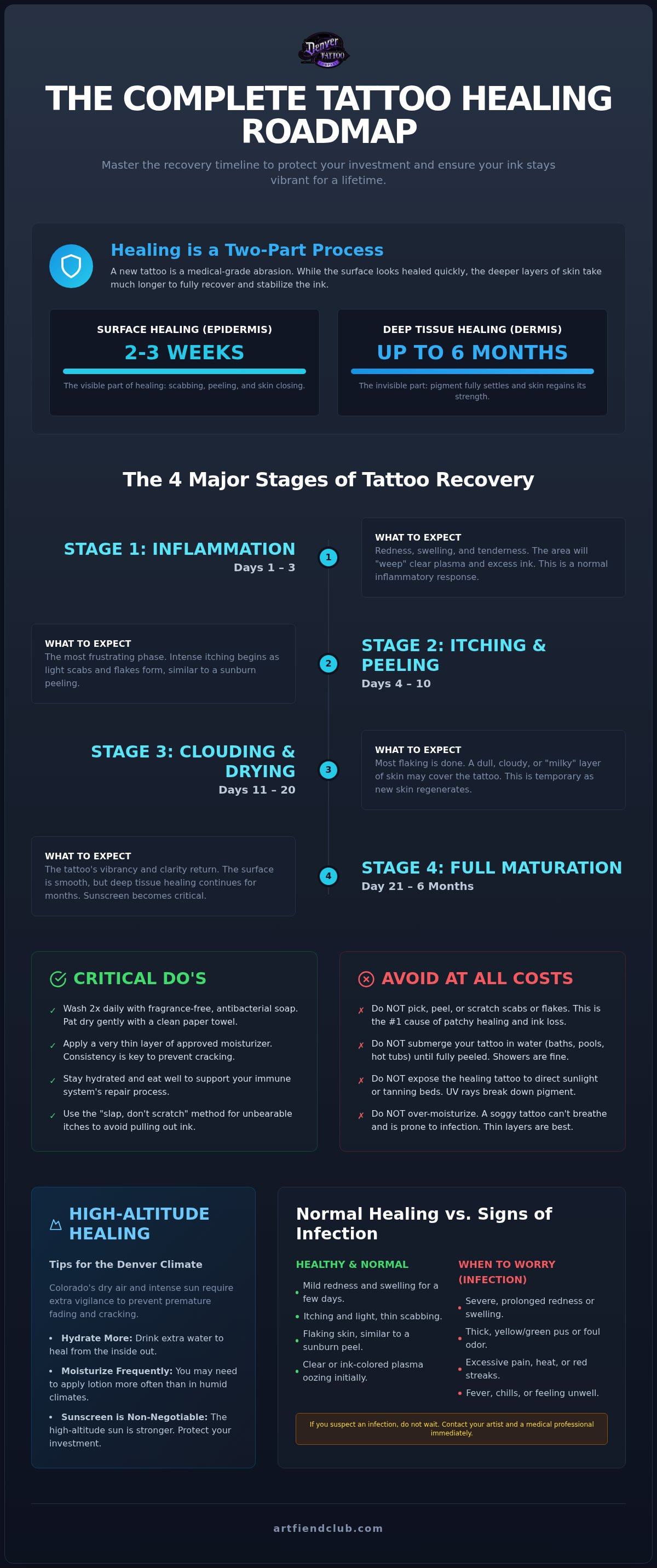
To properly care for your new ink, you must first view it through a clinical lens. A tattoo is technically a medical-grade abrasion that bypasses your skin's primary defenses to deposit pigment into the dermis. This means the tattoo healing stages aren't just about waiting for a scab to fall off; they're a complex biological recovery phase. While the surface epidermis typically appears closed within two to three weeks, the deeper tissue recovery can take up to six months to fully stabilize. Understanding the physiological process of tattooing helps you realize that while your artist provided the vision, your immune system acts as the primary technician during the first 48 hours. It works tirelessly to seal the area and identify the ink as a permanent part of your body rather than a foreign invader.
The Open Wound Phase: The First 24 Hours
Immediately after your session, your body initiates an emergency repair protocol. You'll likely notice a clear or slightly ink-colored fluid pooling under your bandage. This is plasma, a nutrient-rich component of your blood designed to jumpstart the healing process and facilitate cell regeneration. Using a professional-grade barrier, such as a Saniderm wrap or a traditional sterile bandage, is essential during this window to prevent opportunistic bacteria from entering the open skin. The "weeping" stage is a natural inflammatory response where the body attempts to flush out debris while beginning the coagulation process. Without this initial protection, the risk of infection increases significantly, and the delicate pigment could be pushed out before it has a chance to settle.
Why Aftercare Consistency Dictates Final Quality
The relationship between skin hydration and ink retention is direct and unforgiving. If the skin becomes too dry, it loses its elasticity, which often leads to heavy, premature scabbing. These thick scabs can act like anchors; if they're bumped or pulled, they may take the underlying pigment with them, leaving gaps in your artwork. Consistency is the bridge between a successful session and a lifelong masterpiece. Skipping even a single day of your moisturizing routine can cause the skin to tighten and crack, especially when dealing with high-detail work. The custom tattoo designs Denver residents choose for their intricate realism require a steady hand during aftercare just as much as they did during the application. By maintaining a disciplined tattoo healing stages routine, you ensure that the fine lines and subtle shading of your design remain as crisp as the day they were tattooed.
The 4 Major Stages of Tattoo Recovery
Healing isn't a linear event. It's a series of biological shifts that transform an open wound into permanent art. While every body reacts differently, most people follow a predictable set of tattoo healing stages that dictate how you should adjust your care routine. Understanding these phases helps you distinguish between normal recovery and potential issues, ensuring your ink settles perfectly into the skin.
- Stage 1: Inflammation and Oozing (Days 1–3)
- Stage 2: The Itch and The Peel (Days 4–10)
- Stage 3: Clouding and Drying (Days 11–20)
- Stage 4: Full Maturation (Day 21–6 Months)
Stage 1: Managing the "Fresh Ink" Glow
The first 72 hours are the most intense. Your skin will feel warm, tender, and look slightly swollen. To manage this initial inflammation, you can apply a cold compress over a clean paper towel for 10 to 15 minutes. It's vital to wash the area twice daily with a fragrance-free, antibacterial soap to remove excess plasma and ink. According to the Tattoo Healing Timeline from the Cleveland Clinic, this window is your primary defense against infection. You must keep the tattoo out of standing water; showers are fine, but skip the bathtub and the pool until the skin is fully closed.
Stage 2: Surviving the "Tattoo Flu" and Itching
Days four through ten often bring the most frustration. As the skin begins to tighten and flake, it often looks like a localized sunburn. You might even feel a slight "tattoo flu"—a general sense of fatigue as your immune system works overtime to repair the site. You must resist the urge to pick or peel the skin. Removing a flake prematurely can pull ink from the dermis, leaving a permanent gap in your design. When the itching becomes unbearable, use the "slap don’t scratch" method. A gentle tap on the skin provides relief without the damage caused by fingernails.
Stage 3 & 4: The Settling Phase
By week three, your tattoo might look cloudy or "milky." This is the Silver Skin phase. A thin layer of new skin is covering the ink, making it look duller than it actually is. At this point, transition from heavy ointments to a light, daily lotion. While the surface looks healed by day 21, the ink doesn't officially become a permanent part of your dermis for several months. If you're concerned about how your skin is reacting during these tattoo healing stages, booking a tattoo consultation can provide the professional reassurance you need to ensure your piece ages beautifully.
Normal Healing vs. Complications: When to Worry
Monitoring your skin as it moves through the tattoo healing stages requires a discerning eye, as the line between a normal inflammatory response and a genuine complication can sometimes feel thin. It is important to remember that placement significantly influences your recovery experience. A piece on a high-motion joint like an ankle or elbow will naturally exhibit more swelling and a slower closing time than a tattoo on a flat, stable surface like the forearm. You might also observe what appears to be a slight shadow around the edges of your ink. While some "ink drift" is a standard part of the pigment settling into the dermis, a sudden, jagged spread of color immediately following the session usually indicates a technical blowout. If you notice any changes that seem outside the norm, reaching out to Art Fiend Club for a professional assessment is always the safest first step.
Signs of a Healthy Recovery
A healthy recovery is defined by a steady decrease in physical symptoms. Within the first 72 hours, the sharp tenderness and radiating heat should begin to dissipate, transitioning into a dull ache that eventually fades entirely. You'll then see uniform flaking that resembles the aftermath of a mild sunburn. This shedding is your body successfully replacing the damaged epidermis. While the colors may look muted or "milky" during the third week, this is simply the new skin maturing over the pigment. This phase is a sign that your body is effectively sealing the artwork, and the vibrancy will return once the tissue fully stabilizes. At our Englewood shop, we encourage clients to monitor this progression closely to ensure the technical precision of the design remains intact.
Warning Signs: Infection and Allergic Reactions
Distinguishing between common irritation and a serious medical issue is vital for protecting both your health and your art. While a healthy scab is thin and dry, a "wet" scab that consistently oozes yellow or green fluid is a primary indicator of infection. You should also be vigilant for red streaks radiating away from the tattoo or a feverish heat that spreads rather than subsides; these are potential symptoms of cellulitis. Allergic reactions are less common but often target specific pigments, particularly red. These manifest as persistent, raised bumps or intense itching that lasts well beyond the initial peeling phase. The FDA offers detailed guidance on Tattoo Safety and Complications, highlighting how specific chemical sensitivities can impact the dermis.
In many cases, what looks like a sudden rash is actually the result of over-moisturizing. If you apply too much ointment, you can trap heat and bacteria, leading to small white bumps known as folliculitis. This differs from an infection or an allergic reaction as it is typically localized to the pores rather than the ink itself. If your skin doesn't seem to be following the standard tattoo healing stages, don't hesitate to consult with your artist at Art Fiend Club. We are invested in the long-term life of your tattoo and can help you determine if you simply need to adjust your hydration levels or if you should seek a consultation with a healthcare provider.
High-Altitude Healing: Pro Tips for Denver Residents
Living in the Mile High City offers breathtaking views, but the environmental conditions present unique challenges for the tattoo healing stages. Denver’s humidity often hovers at levels significantly lower than coastal regions, causing fresh ink to lose moisture nearly twice as fast as it would at sea level. This arid environment can turn a healthy recovery into a battle against cracking and heavy scabbing if you don't adjust your routine. We advocate for the "Colorado Hydration Rule," which emphasizes that external care is only half the battle. You must increase your internal water intake to support the dermis from the inside out while maintaining a meticulous topical regimen. Seasonal shifts in Englewood also dictate your care; the biting dry cold of winter requires more frequent ointment application than the relatively humid summer months.
Combatting Arid Air in Englewood and Lakewood
In our local climate, "dry healing" is a strategy we rarely recommend. The lack of ambient moisture in the air means your skin cannot effectively pull hydration from its surroundings. We suggest using a humidifier in your bedroom during the first week of recovery to create a stable microclimate for your skin. When selecting aftercare products, look for lotions that contain ceramides. These lipids help lock in moisture and reinforce the skin's natural barrier, which is easily compromised at 5,280 feet. If you're unsure which products suit our local environment, our team can provide tailored recommendations during your tattoo consultations.
Sun Safety at 5,280 Feet
At high altitude, the atmosphere is thinner and provides less protection from aggressive UV rays. A new tattoo is essentially a "sun magnet" during the first month of healing. The fresh, vulnerable skin lacks the melanin needed to shield the new pigment, and even a brief hike can lead to significant fading or irritation. Your clothing choices are your first line of defense. Opt for loose linens or tightly woven cottons that breathe well while blocking the sun. Avoid tight synthetics that can trap heat and bacteria against the wound. For a deeper dive into protecting your investment over the years, explore our guide on Long-Term Tattoo Care in Colorado to ensure your ink remains as vibrant as the day it was finished.
Managing your recovery in a high-desert climate requires a proactive approach. By acknowledging the unique stressors of the Colorado environment, you can ensure your artwork matures perfectly. If you have questions about how the local weather is affecting your progress, don't hesitate to reach out to us for professional guidance.
Ensuring Longevity: Post-Healing Care at Art Fiend Club
The final phase of your recovery is less about active cleaning and more about disciplined patience. While many people assume a tattoo is finished once the peeling stops around day 14, the skin is still structurally fragile. We often see clients eager for a touch up just two weeks after their session, but we advise waiting at least four to six weeks. This allows the deeper layers of the dermis to fully remodel. Attempting to tattoo over skin that hasn't completed all tattoo healing stages can cause unnecessary scarring or ink rejection. Our goal is to ensure your art remains a permanent, crisp addition to your body, and that requires respecting the biological clock of your skin.
Jason Oz’s application technique, refined over 20 years in the industry, focuses on minimizing skin trauma from the first pass. By using premium inks and single-use sterilized equipment, he ensures the pigment is deposited precisely where it needs to stay. This methodical approach significantly reduces the likelihood of "holidays" or faded spots, often making secondary sessions unnecessary. However, your lifestyle during the first 30 days plays a massive role in this outcome. You must avoid the gym, public swimming pools, and tanning beds during this window. Sweat and chlorine are particularly aggressive during the early tattoo healing stages, and premature sun exposure can degrade the pigment before it has settled.
The "Settled" Look: What to Expect After 3 Months
As you reach the 90 day mark, you'll notice the "settled" look of your piece. Fine lines and realism details will naturally soften as the ink becomes a permanent part of your anatomy. This isn't fading; it's the natural integration of the pigment into your living tissue. Maintaining the high contrast of black and grey realism requires ongoing vigilance, particularly regarding UV protection. We invite all our clients back to our Englewood shop for a brief final inspection to ensure the work has healed to our exacting standards. This commitment to safety and quality is why we are recognized as a Safe Tattoo Studio Denver residents can trust for complex, large-scale projects.
Booking Your Next Session
If you're planning a multi-session piece or a full sleeve, we carefully coordinate your appointments around these healing cycles. We won't start a new section of a project until the adjacent areas have reached a stable state. This prevents overtaxing your immune system and ensures each portion of the design receives the focus it deserves. When you're ready to expand your collection or start a new custom design, we'll walk you through the preparation steps to ensure your skin is in peak condition for the next session. Your journey with us is a collaborative process that extends far beyond the initial appointment. If you're ready for your next piece, Schedule a consultation with Jason Oz today to begin crafting your next unique story.
Preserving Your Art for a Lifetime
Mastering the tattoo healing stages is the final, vital step in your creative journey. By understanding that recovery is a biological process involving both the surface epidermis and the deeper dermis, you can navigate the peeling and itching phases with complete confidence. In our arid Colorado environment, consistent hydration and diligent sun protection aren't just suggestions; they're essential requirements for maintaining the technical integrity and vibrancy of your ink.
At Art Fiend Club, we view aftercare as a collaborative partnership. Our veteran artist, Jason Oz, brings over 20 years of industry experience to every session, utilizing sterile, single-use equipment to ensure your healing process begins on the safest possible foundation. We provide the technical precision and the expert guidance, but your commitment to the recovery timeline ensures those fine details remain sharp for decades. If you're ready to start your next project with a team dedicated to both artistic excellence and your long-term satisfaction, book your custom tattoo consultation at Art Fiend Club. We look forward to helping you transform your vision into a lasting masterpiece.
Frequently Asked Questions
How long does each stage of tattoo healing last?
Stage one, characterized by inflammation, typically lasts for the first three days. Stage two involves peeling and itching from day four to day ten. The third stage of clouding spans days eleven through twenty, while the final maturation stage begins at day twenty-one and can continue for six months. Every individual's immune system and the tattoo's placement will influence the exact duration of these tattoo healing stages.
Is it normal for my tattoo to look blurry while it is peeling?
Yes, temporary blurring is expected during the peeling phase. As the old epidermis lifts, it creates an uneven surface that distorts the appearance of the ink underneath. This is often just trapped ink and dead skin cells rather than a permanent blowout. Once the peeling completes and the "silver skin" matures, the sharp lines and saturation of your custom design will become clear again.
Can I go to the gym while my tattoo is healing?
You should avoid the gym for at least the first seven to ten days. Intense exercise causes excessive sweating and skin stretching, both of which can irritate the wound and lead to pigment loss. Gym environments also harbor bacteria that increase the risk of infection. If your tattoo is in a high-movement area like a joint, wait until the peeling stage is finished before returning to your routine.
What happens if I accidentally pick a scab off my tattoo?
Accidentally removing a scab can pull pigment out of the dermis, potentially leaving a light spot in the art. If this happens, don't panic or try to scrub the area. Clean it gently with antibacterial soap and apply a very thin layer of ointment. Once the tattoo is fully settled after several weeks, contact us at our Englewood shop to discuss a potential touch up session for the area.
Why does my tattoo look dull or faded after two weeks?
This dullness is caused by a layer of new skin called "silver skin" that forms over the ink. During the final tattoo healing stages, this new tissue is still slightly opaque, which masks the true vibrancy of the pigment. As the skin continues to exfoliate and flatten over the next few months, the original contrast and color depth will return. Consistency with your moisturizing routine is vital during this transition.
When can I stop using specialized tattoo ointment and switch to regular lotion?
You can typically transition to a fragrance-free, water-based lotion after the first three to five days, or once the tattoo stops weeping plasma. The heavy ointment is designed to provide a barrier during the open wound phase. Once the skin begins to flake and peel, a lighter lotion is more effective for hydration without clogging your pores. Avoid any products with heavy scents or alcohols that can irritate the site.
How much does the Denver altitude affect my tattoo recovery time?
The high altitude and low humidity in Denver can accelerate skin dehydration, potentially leading to thicker scabbing if you aren't careful. While the overall timeline remains similar, you may need to apply moisturizer more frequently than someone at sea level. We recommend the "Colorado Hydration Rule" of drinking extra water to support your skin's health from within while navigating the dry climate of the Front Range.
Is redness around the tattoo normal after the first week?
Persistent redness after the first seven days is generally not normal and warrants a closer look. While initial inflammation is expected, redness that spreads, feels increasingly hot, or is accompanied by red streaks can indicate an infection or an allergic reaction. If the area remains angry and swollen after the first week, reach out to your artist immediately or consult a healthcare professional to ensure your safety.


