
Tattoo booking is more than securing a date. It’s the first step in shaping a piece of art you’ll be proud to wear for life. It’s natural to have questions about choosing an artist, deposits, or what to expect at a consultation. A thoughtful booking process can turn those questions into a clear plan.
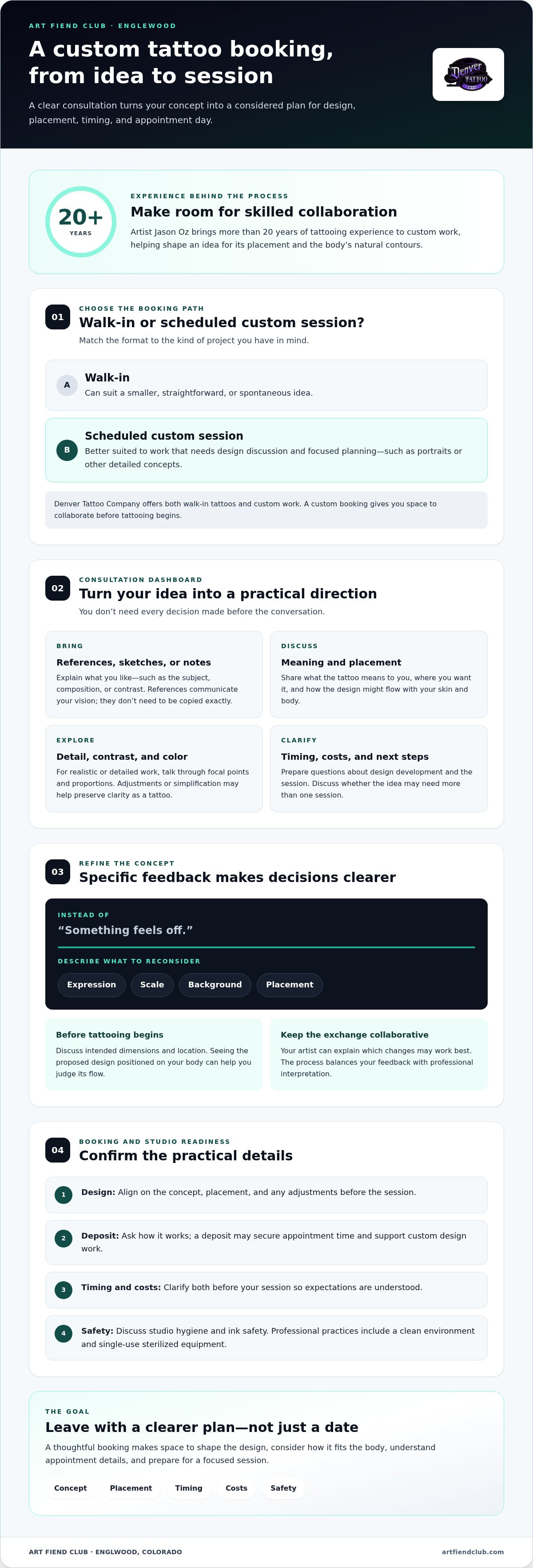
For custom work, the first conversation is a chance to share your ideas, discuss placement, and explore how the design can take shape. At Art Fiend Club in Englewood, artist Jason Oz brings more than 20 years of experience to that process, creating custom tattoo designs across a range of styles.
This guide explains what to expect from consultation through appointment day, including how to discuss deposits, clarify costs and timing, and prepare for a session. You’ll also learn what professional safety practices look like, including the use of single-use sterilized equipment. Whether you’re coming from Denver, Englewood, Lakewood, Highlands Ranch, or Littleton, a little preparation can help you feel ready to move forward.
Key Takeaways
- Treat tattoo booking as the start of a creative collaboration, not simply a way to reserve a date.
- Use the consultation to shape your idea, discuss placement, and consider how the design will flow with your skin and body.
- Understand each booking step, including how a deposit may secure appointment time and support custom design work.
- Look for professional safety practices, including a clean environment and single-use sterilized equipment.
- Prepare for a smoother appointment by clarifying the design, timing, and costs before your session.
Understanding the Tattoo Booking Process: More Than Just a Date
A tattoo booking begins a working relationship between you and your artist. You bring an idea, reference images, and questions; the artist brings technical judgment and creative direction. Together, you can develop a design that suits its placement and feels personal, rather than treating a lasting piece of body art like a quick transaction.
That care matters because a tattoo is both an artistic choice and a permanent one. Tattoos have a long history and varied cultural significance, as explored in this overview of the history and process of tattooing. A considered booking gives you room to discuss what you want and gives the artist a clearer foundation for the work.
Booking for longevity means thinking beyond the next available date. Jason Oz brings more than 20 years of tattooing experience to custom work at Denver Tattoo Company. That experience informs how an idea can be developed for the body, helping you make thoughtful decisions about a piece you intend to live with for years.
Why Appointments Matter for Custom Body Art
Custom work benefits from focused time. A planned session gives the artist space to understand your concept, develop a design direction, and prepare for the appointment. It also allows the studio to prepare a dedicated workspace for your tattoo. If you’re considering a detailed style, specialization matters for your ink, because translating complex imagery onto skin calls for careful attention to detail.
Walk-ins vs. Scheduled Sessions in Englewood
A walk-in can suit a smaller, spontaneous idea, while a scheduled custom session is better suited to work that needs design discussion and focused planning. Portraits and other detailed concepts, for example, benefit from a shared understanding of the subject and a plan for developing the piece. Denver Tattoo Company offers both walk-in tattoos and custom work, so you can choose the route that fits your project.
The difference is not simply how you reserve time. A walk-in can be a direct path for a straightforward idea; a custom booking creates room for collaboration before the tattoo begins. If you have a reference image, explain what draws you to it and what you’d like adapted. That gives the artist useful context without asking them to reproduce an image exactly.
For detailed work, consider what you want the tattoo to communicate, where you’d like it placed, and whether the idea may need more than one session. You don’t need every detail solved before the consultation. The conversation is a chance to establish a direction, align expectations, and begin shaping a piece with care.
The Consultation: Designing Your Custom Tattoo in Denver
A consultation is an important part of tattoo booking because it turns a general idea into a practical direction for custom work. Explain what the tattoo means to you, discuss where you want it, and hear how an experienced artist might adapt the concept for skin. You don’t need to arrive with every decision made. The aim is to leave with a clearer understanding of the design, placement, and next steps.
Bring reference images, sketches, or written notes that show the mood and details you have in mind. Explain what you like about each reference, such as the composition, subject, or contrast, and be open to a different approach. References help communicate your vision; they don’t have to dictate an exact copy. To make the meeting productive, prepare questions about design development, timing, and the session itself. This guide to what to ask during a tattoo consultation can help you organize them.
Collaborating with a Master Realism Artist
For a realistic or highly detailed concept, small choices can change how an image reads on the body. With more than 20 years of experience, Jason Oz can help translate your idea into a tattoo design, taking placement and natural body contours into account. You can discuss how contrast, detail, and color choices contribute to the look you want and how the concept can be adapted for your chosen placement.
Custom tattoo designs can carry a personal story while leaving room for artistic judgment. Detailed work often calls for close discussion of reference images, proportions, and focal points. Simplifying or adjusting an image may help preserve its clarity as a tattoo. If your idea is a portrait, for example, share which features matter most to you and discuss how they can be emphasized. Thoughtful custom tattoo designs in Denver begin with that exchange.
Finalizing the Design Concept
Useful feedback is specific. Rather than saying only that something feels “off,” describe what you’d like reconsidered: the expression, scale, background, or placement. Your artist can then respond to the concern and explain what changes may work best. A consultation is collaborative, and it also calls for trust in professional interpretation.
A design may need adjustments in detail, spacing, or contrast to suit its size and placement and remain readable over time. Discuss the intended dimensions and location before tattooing begins. Seeing the proposed design positioned on your body can help you judge its flow and make a considered decision.
Use the meeting to discuss practical questions alongside the art, including studio hygiene and ink safety. The FDA’s overview of tattoo safety and FDA guidelines offers useful background. When you’re ready to develop an idea with an experienced artist, you can explore tattoo consultation resources as a next step.
How to Prepare for Your Tattoo Booking: Deposits and Logistics
A little planning makes a custom appointment easier to manage, from agreeing on the design to arriving ready for a focused session. A clear tattoo booking process also helps you understand what each step involves, why a deposit may be requested, and which practical details to settle before the appointment.
The 5 Steps to Secure Your Appointment
For custom work, the process usually moves from an initial idea toward a confirmed session. Use these steps to keep the details organized:
- Send an initial inquiry. Share the tattoo idea, approximate size, preferred placement, and reference images. This gives the artist context for discussing the concept.
- Meet for a consultation. Discuss the design direction, placement, and project scope. A consultation helps clarify what you want and what the project involves.
- Discuss the deposit. A deposit may reserve the artist’s time and help compensate for work involved in developing a custom design. Deposit terms vary, so clarify whether it is applied to the final balance and what happens if an appointment is changed or cancelled.
- Review the design. Share focused feedback on the proposed concept and agree on any final adjustments. Confirm the intended size and placement before the session.
- Arrive prepared and on time. Follow the appointment instructions, wear clothing that makes the tattoo area accessible, and bring what you need for the planned session.
Budgeting and Pricing for Your Custom Piece
Tattoo pricing may be hourly or a flat rate for a defined project. Hourly pricing reflects the time spent tattooing, while a flat quote can suit a project with a clear scope. Size, detail, and the time required to complete the piece can affect the price. Ask for a clear explanation of what the quote covers and how additional work would be handled.
For a custom piece, clarity matters as much as the number. Discuss the design and tattooing stages, deposit terms, and expectations for any planned sessions. The price should reflect the scope of the specific piece, rather than assumptions based on another project.
Prepare for your appointment, too. Get a good night’s rest, drink water, and eat a full meal before the session. Avoid alcohol for at least 24 hours beforehand. Choose comfortable clothing that gives the artist access to the area without requiring you to hold an awkward position. For longer sessions, think about comfort and movement, and follow any studio-specific preparation instructions.
Keep the tattoo area in good condition before your visit. Avoid arriving with sunburned, irritated, or broken skin in the planned placement area, and don’t experiment with last-minute products. If you have a concern about the skin there, raise it before the appointment so the artist can discuss an appropriate plan.
Professional Standards: Why Your Booking Requires a Safe Studio
A tattoo booking involves more than choosing an artist and a date. The studio environment and hygiene practices matter because tattooing involves needles contacting the skin. A clean workspace and careful handling of equipment help create a controlled setting for the work.
Pay attention to how the studio is prepared, not just how it looks from the front. Professional procedures include preventing cross-contamination and using single-use supplies where appropriate. Needles, ink caps, and protective barriers are examples of items that should be fresh for each client and handled according to safe practice. Denver Tattoo Company uses single-use sterilized equipment and premium inks as part of its professional standards.
Sterilization and Hygiene Protocols
At a tattoo shop, look for a tidy work area, clean surfaces, and supplies prepared for the individual session. Equipment intended for one-time use should be fresh for your appointment, rather than reused. Sterilization is a defined process, not a visual impression, so a polished room alone isn’t proof of safe handling.
Premium inks are part of the materials chosen for the work, but ink does not replace sound hygiene. Ink quality and careful application both matter to the finished tattoo. If you have questions about studio practices, raise them before the session so you understand what to expect. Denver Tattoo Company uses single-use sterilized equipment and premium inks as part of its approach to professional care.
The Master Artisan’s Commitment to Safety
Experience supports good judgment, but safety depends on consistent habits at every appointment. Jason Oz has more than 20 years in the industry, and Denver Tattoo Company’s tattoo-only focus keeps the studio dedicated to body art. The studio’s work and preparation are centered on tattooing.
When choosing a tattoo studio, look for careful preparation: fresh single-use equipment, clean surfaces, and a clearly organized station. These details help make hygiene part of the process, not an afterthought.
Choosing a professional studio means considering both the tattoo experience and the care taken with permanent work. A thoughtfully prepared space lets you focus on the design while hygiene remains part of the process. For a closer look at what a safe tattoo studio in Denver should prioritize, review the practical standards before your appointment.
Ready to plan custom tattoo work with an experienced artist? Explore tattoo consultation options and begin shaping your piece.
Ready to Start? Booking Your Session at Denver Tattoo Company
A custom tattoo moves from an idea to a lasting piece through a series of considered decisions: sharing the concept, talking it through with the artist, shaping the design, and preparing for the session. At Denver Tattoo Company in Englewood, that process is collaborative. Jason Oz brings more than 20 years of experience to the work, helping clients develop personal ideas into thoughtfully planned tattoos.
The studio is in Englewood and serves clients from the greater Denver area, including Lakewood, Highlands Ranch, and Littleton. If you’re ready to discuss a custom piece, arrange a tattoo consultation with Jason. You don’t need a finished design before you begin. A clear starting point is enough to open the conversation.
Your Next Step: The Initial Inquiry
Start by reaching out through the studio’s website or phone. Include the subject or idea, the style you’re considering, approximate size, and preferred placement. Reference images can help communicate the mood or details you like, but explain what matters to you rather than expecting an exact copy. Mention key questions or project considerations so the consultation can focus on your needs.
After you submit an inquiry, the next step is to arrange a conversation about the concept and its direction. Keep your project details together and be ready to discuss your priorities. That preparation makes it easier to use the consultation time well and understand how the process will move forward.
Experience the Denver Tattoo Company Difference
A tattoo studio should feel focused and professional without making clients feel they need to fit a certain image. Denver Tattoo Company is dedicated to tattooing, with an environment centered on the craft and the person wearing the work. That approach leaves room for questions, thoughtful feedback, and a genuine exchange between client and artist.
Working with an experienced artist means you have a creative partner, not simply someone executing a request. Jason can bring technical perspective to your concept while listening to the story and preferences behind it. The result is a considered process where artistic direction and your own vision inform the design together.
Before you commit, make sure you understand the design direction, appointment plan, and booking terms discussed during your consultation. Clear expectations help you approach the session with confidence and give the collaboration a strong foundation. You can begin with a subject, a reference, or a feeling you want the tattoo to express. From there, the conversation can bring the idea into focus.
Ready to take that first step? Schedule a tattoo consultation with Jason Oz at Denver Tattoo Company and start shaping a piece that feels personal, considered, and true to your vision.
Take the First Step Toward Your Custom Tattoo
The right next step isn’t to have every detail settled. It’s to bring your idea into a conversation and explore how it could become art that feels distinctly yours. A thoughtful tattoo booking creates space for that collaboration, from the story behind your concept to the choices that shape the finished piece.
At Denver Tattoo Company, Jason Oz brings more than 20 years of experience to custom design across a range of styles. The studio pairs that artistic focus with careful hygiene practices, including single-use sterilized equipment. You can arrive with a reference, a rough idea, or simply a starting point. The consultation helps turn it into a direction you can feel confident about.
When you’re ready, take the next step and Book Your Custom Tattoo Consultation in Englewood. Share what you have in mind and begin shaping a piece with an experienced creative partner. Your idea deserves thoughtful attention, and your next conversation can be where it starts.
Frequently Asked Questions
How far in advance should I book my tattoo in Denver?
Book when you have a clear concept and a preferred time frame, especially for a detailed or multi-session piece. Artist schedules vary, so there isn’t one reliable lead time to plan around. If you’re traveling to the Englewood studio from Denver, Lakewood, Highlands Ranch, or Littleton, leave room for a consultation and appointment planning before setting travel details. Flexibility with dates can make scheduling easier.
Do I need a consultation before I can book my tattoo session?
A consultation is a helpful starting point for custom work. It gives you and the artist a chance to discuss the project before settling on a session plan. For a straightforward walk-in idea, the process may be more direct. If you’re unsure which route fits, describe the design and its complexity when you make your initial inquiry.
Why do tattoo shops require a deposit for booking?
A deposit may reserve an artist’s appointment time and recognize the preparation involved in a custom project. If a client cancels, that time may be difficult to fill, and design work may already have begun. Deposit policies vary, so understand the cancellation, transfer, and payment terms before sending a deposit. Keep a record of the agreed terms with your appointment details.
Can I book a tattoo as a walk-in at Denver Tattoo Company?
Yes. Denver Tattoo Company welcomes walk-ins during open hours. Walk-ins can suit a smaller, simpler idea when you’re comfortable discussing the design at the studio. For custom concepts that need more planning, a consultation and scheduled session can provide a clearer path. If you have a particular design in mind, bring a reference and be prepared to discuss size and placement when you arrive.
What should I bring to my tattoo booking consultation?
Bring a few reference images or sketches, notes about what you want the tattoo to express, and your preferred placement. It helps to identify which details in each reference matter most, such as the subject, mood, or composition. You can also bring questions about the design process and appointment plan. You don’t need polished artwork; clear context gives the artist a useful starting point for discussion.
Is the deposit applied to the final price of my tattoo?
Deposit terms can vary. Before paying, clarify whether the deposit is credited to the tattoo, what happens if the appointment changes, and whether any conditions apply. Knowing these details in advance helps you plan your budget and avoid confusion when the session is complete.
What happens if I need to reschedule my tattoo booking?
Contact the studio as soon as you know your plans have changed. Rescheduling terms depend on the booking policy and the notice provided, so don’t assume a deposit automatically transfers to a new date. Keep your original appointment information handy and explain your situation clearly. Prompt communication helps the studio discuss next steps and manage the reserved time.
How do I know if an artist is the right fit for my booking?
Look for work that aligns with the visual qualities you want, then consider how comfortably you can discuss your idea with the artist. If you’re interested in detailed work, review examples that show the subject and level of detail you have in mind. During a consultation, notice whether the conversation helps clarify your choices. A good fit combines artistic direction with attentive communication.


