
Your skin is the only canvas you'll carry for a lifetime, yet many people spend more time researching a new car than they do their tattoo artist. It's natural to feel a mix of excitement and anxiety when you're ready for new ink, especially with concerns about hygiene or the dread of a permanent mistake. Knowing exactly what to look for in a tattoo shop Denver helps turn that uncertainty into confidence. You deserve a space that prioritizes medical-grade safety and artistic integrity over high-volume turnover.
We understand that a tattoo is more than a transaction; it's a collaborative journey between you and a master artisan. This guide provides the professional standards you need to evaluate local studios in 2026, from verifying Bloodborne Pathogen training certifications to understanding the custom design process. We'll walk through how to identify a sterile environment, how to gauge an artist's technical experience, and how to ensure your vision translates perfectly onto your skin. By the end, you'll have a clear roadmap for choosing a studio that treats your body with the respect it deserves.
Key Takeaways
- Recognize why a professional studio must operate like a clinical environment, ensuring all needles and pigments are strictly single-use.
- Learn to look beyond social media filters by requesting photos of healed tattoos to verify an artist’s long-term technical mastery and ink saturation.
- Understand exactly what to look for in a tattoo shop Denver during an in-person consultation to vet an artist’s experience with your specific style.
- Discover how a studio’s focus on professional ergonomics and high-end lighting creates the necessary environment for high-quality custom work.
- Gain insight into how veteran expertise and medical-grade sterilization standards protect both your health and the longevity of your piece.
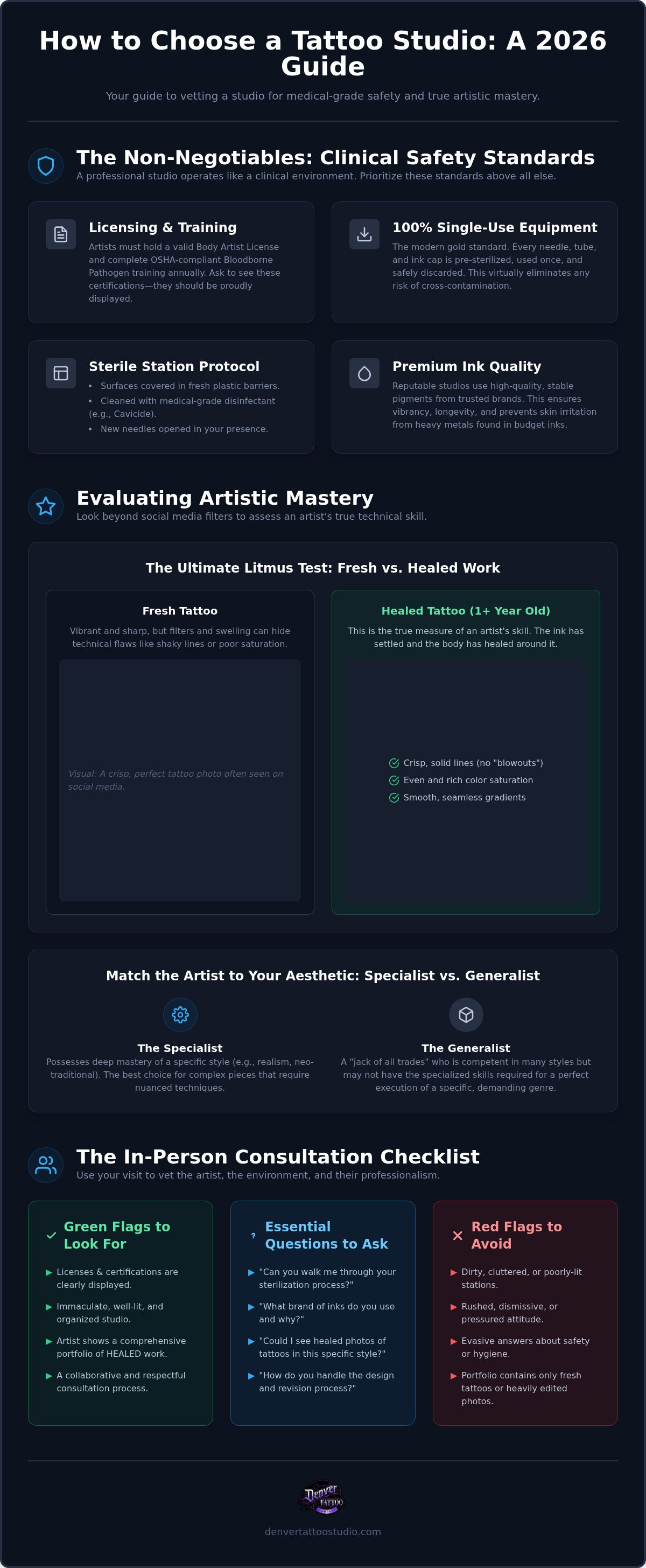
Prioritizing Safety: The Healthcare Standards of Professional Tattooing
A tattoo studio is more than an art space; it's a clinical environment where technical precision meets creative expression. Because the process involves breaking the skin barrier, it carries inherent health risks such as localized infection or systemic complications if safety protocols are ignored. When you're determining what to look for in a tattoo shop Denver, your evaluation must begin with the studio's hygiene standards rather than its portfolio. A master artisan understands that a beautiful piece of art is only successful if it's applied in a safe, sterile manner.
In 2026, the City and County of Denver's Department of Public Health & Environment enforces strict regulations for body art establishments. Every professional artist is required to hold a Body Artist License, which costs $25 and must be renewed annually. A critical prerequisite for this license is the completion of an OSHA-compliant Bloodborne Pathogen Training course within the last 12 months. When you walk into a shop, these licenses should be clearly displayed. If they aren't visible, don't hesitate to ask to see them; a professional studio will welcome your diligence.
The modern gold standard for safety is the "single-use" rule. While some shops still use traditional autoclaves or Statims to sterilize reusable steel grips, many top-tier studios have transitioned to 100% disposable equipment. This means every needle, tube, and ink cap is pre-sterilized by the manufacturer, used once, and immediately discarded in a sharps container. This approach virtually eliminates the risk of cross-contamination and provides peace of mind for both the artist and the client.
The Anatomy of a Clean Station
Before your session begins, observe the artist's setup process. Every surface that might be touched during the tattoo, including the lamp, power supply, and the tattoo machine itself, should be covered in a fresh layer of plastic barrier film. This prevents the transfer of fluids between clients. A professional artist will also use medical-grade disinfectants, such as Cavicide, to scrub the station before and after every appointment. Most importantly, your artist should always open new, blister-packed needles and cartridges in your presence so you can verify they are sterile and unused.
Pigment and Ink Quality Standards
The quality of the ink used is just as vital as the sterility of the needle. Premium, professional-grade pigments are formulated for stability and long-term vibrancy. Budget alternatives often lack the same rigorous testing and may contain heavy metals or irritants that lead to poor healing. Don't be afraid to ask about the studio's ink sourcing. Reputable artists stay informed about the safety data sheets for their pigments and choose brands known for their longevity. High-quality ink doesn't just look better on day one; it ensures your custom design remains crisp and clear for decades to come.
Evaluating Artistic Mastery: Beyond the Instagram Feed
Social media is a powerful tool, but it can be deceptive. High-contrast filters and strategic lighting often mask technical flaws that only become apparent once the skin has fully recovered. When you're determining what to look for in a tattoo shop Denver, you must learn to look past the "fresh ink" glow. True artistic mastery is found in the technical execution of line weight, saturation, and smooth gradients. A master artisan doesn't just create a beautiful image; they apply it with a precision that respects the biology of the skin.
Style specialization is another key factor in your search. While many artists can perform a variety of styles, a specialist often possesses a deeper understanding of the specific mechanics required for genres like realism or neo-traditional. A "jack of all trades" might lack the specialized shading techniques needed for a complex portrait. Matching your specific aesthetic to an artist's dedicated focus is essential for a successful outcome. This ensures that the person handling your piece isn't just practicing a style, but has mastered its nuances over years of discipline.
One of the most reliable ways to vet an artist is the "Healed Work" test. Always ask to see photos of tattoos that are at least one year old. Fresh tattoos look vibrant because the ink is still sitting in the upper layers of the skin. Over time, the body naturally attempts to break down the pigment. If an artist lacks consistent depth, the tattoo may fade unevenly or develop "blowouts," which are blurry, blueish shadows where the ink was pushed too deep. While FDA regulations on tattoo ink focus on chemical safety, the technical application is what determines if that ink stays where it belongs.
Analyzing Line Work and Precision
Examine a portfolio for the consistency of the lines. Shaky or wobbly lines are a sign of an unsteady hand or poor machine control. You should also look for "holidays," which are small gaps or missing spots of ink within a line or shaded area. A professional tattoo features consistent line weight throughout the piece, unless variation is a deliberate part of the design. Zoom-in clarity is the hallmark of a master artisan; the details should remain sharp even under close inspection.
The Importance of Contrast and Longevity
A common mistake for newcomers is requesting too much detail in a small space. As skin ages, ink naturally spreads. A veteran artist will advise you on how to balance detail with negative space to ensure the piece doesn't turn into an unreadable blur in a decade. Black ink acts as the skeleton of a tattoo, providing the necessary contrast to hold colors in place. If you're unsure how your vision will age, scheduling tattoo consultations with an experienced professional can help you refine your design for lifelong clarity. This collaborative approach ensures your investment looks as good in twenty years as it does on day one.
Assessing the Studio Environment: Professionalism vs. Aesthetic
A common mistake when choosing a studio is prioritizing the decor over the functionality of the space. While a specific aesthetic can be inspiring, it should never overshadow the technical requirements of a safe tattooing environment. When you're researching what to look for in a tattoo shop Denver, prioritize a layout that feels intentional, organized, and clinical. A focused, low-distraction environment isn't just about comfort; it's about reducing errors and allowing the master artisan to concentrate on the minute details of your permanent piece.
The physical environment must meet high standards to ensure your health. Clutter is more than an eyesore; it's a surface that can collect dust and bacteria, making effective sterilization difficult. Following FDA tattoo safety guidelines requires a space where cross-contamination is impossible. Look for hard, non-porous surfaces that are easy to disinfect. If a shop feels more like a crowded lounge than a professional studio, it may indicate a lack of discipline in their safety protocols.
Professionalism also manifests in how the shop handles communication. Timely responses to inquiries and clear, written policies regarding appointments are signs of a stable business. A studio that values your time and provides transparent information before you even walk through the door is likely to bring that same level of care to the tattoo chair. This administrative precision often mirrors the technical precision required in the physical work.
Client Comfort and Physical Safety
High-quality tattooing requires you to remain still for extended periods, which is only possible with professional-grade, adjustable furniture. Ergonomic chairs and tables aren't just for luxury; they support your body and the artist's posture to prevent fatigue during long sessions. Additionally, the studio must be well-lit with neutral, bright lights. Dim or "moody" lighting makes it difficult for the artist to accurately judge skin texture and ink saturation. For work on sensitive areas, a professional shop should always offer privacy screens or private rooms to ensure you feel secure and respected.
Professional Conduct and Ethics
The culture of a studio is the backbone of the client experience. A "No Ego" policy is essential; it ensures that every person who enters feels welcome, regardless of their tattoo history. Master artisans handle client boundaries with the utmost care, asking for ongoing consent throughout the process. Furthermore, clear pricing and deposit policies are hallmarks of a reputable establishment. When a shop is upfront about the financial and procedural aspects of the work, it builds the trust necessary for a successful, collaborative creative process. Finding a space that balances this professional authority with approachable warmth is key to a positive outcome.
The Consultation Framework: How to Vet Your Artist in Person
A consultation is the most critical step for anyone seeking custom work. It’s the bridge between your initial idea and a permanent piece of art that fits your body perfectly. When you’re evaluating what to look for in a tattoo shop Denver, the quality of this interaction often predicts the success of the final tattoo. This meeting allows you to move beyond a digital portfolio and gauge the artist’s technical knowledge and their genuine interest in your project. It’s your opportunity to vet their professional discipline before any ink touches your skin.
During this conversation, ask specific questions about the artist’s experience with your chosen style. If you’re interested in fine-line work or complex realism, ask how they approach the longevity of those details. A master artisan will be transparent about the timeline for multi-session pieces and will clearly define the scope of the project. They should be able to explain why certain placements work better than others and how the design will settle into the skin over the next decade. If an artist seems dismissive of your questions, it may be a sign to look elsewhere.
Collaborative Design Development
Bringing reference images is an excellent way to start the conversation, but a professional artist won’t simply offer a direct copy of someone else’s work. Instead, they’ll use those images as a springboard to create a unique custom design. A master artist will suggest modifications to ensure the piece flows naturally with your anatomy and muscle structure. This collaborative process ensures the design doesn’t just look good on paper, but functions as a dynamic piece of art on your body. The journey from a rough sketch to a final, precise stencil is where the artist’s expertise truly shines.
Setting Realistic Expectations
A successful session requires honesty about the physical process. Use the consultation to discuss the tattoo pricing Denver structure for your specific piece, as custom labor often includes design time that occurs before your appointment. You should also have a frank conversation about pain management and session duration. A professional will help you prepare your body for a multi-hour session by providing clear instructions on hydration and nutrition. Understanding these logistical details beforehand reduces anxiety and allows you to focus on the creative experience. Ready to bring your vision to life? You can schedule tattoo consultations to begin the collaborative process with an experienced professional.
Why Denver Tattoo Company Sets the Standard for Custom Ink
Selecting the right studio is the final step in ensuring your artistic vision becomes a lasting reality. When you evaluate what to look for in a tattoo shop Denver, the decision often comes down to the depth of experience and the transparency of the process. Denver Tattoo Company, located in Englewood and serving the broader metro area, was founded on the principle that every client deserves the undivided attention of a master artisan. Led by Jason Oz, an artist with over 20 years of industry experience, our studio bridges the gap between technical discipline and creative fulfillment.
Our commitment to your health is absolute. We’ve moved beyond standard industry expectations by exclusively using single-use sterilized equipment for every procedure. This means that every needle, tube, and pigment cap is opened in your presence and discarded immediately after use. By maintaining these medical-grade hygiene standards, we eliminate the variables that lead to poor healing or infection. We believe that a clean, focused environment is the only appropriate setting for the precision required in modern tattooing.
The philosophy at Denver Tattoo Company is rooted in collaboration. We don’t view a tattoo as a mere transaction; it’s an opportunity to translate your personal story into a technical masterpiece. Whether you’re a newcomer or a seasoned enthusiast, you’ll find a steady hand and a disciplined partner in our studio. We take the time to understand the nuances of your design, ensuring that the final piece respects both your aesthetic goals and the long-term integrity of your skin.
Custom Mastery Across Styles
While our studio welcomes a variety of projects, we specialize in high-detail realism, sophisticated black and grey work, and complex custom pieces. Our shop is often the preferred choice for large-scale, intricate work that requires multiple sessions and a high degree of technical planning. We balance this focus on custom mastery with walk-in tattoos for those seeking smaller, more immediate designs. This versatility allows us to serve the diverse needs of the Denver community while maintaining the high standards of a dedicated custom studio.
Next Steps for Your Denver Tattoo
Preparing for your first session is a straightforward process when you have a clear roadmap. To begin, we recommend gathering any reference images or notes that describe your vision. When you meet with Jason Oz for your initial consultation, we’ll discuss placement, sizing, and the technical requirements of your specific style. This is also the time to address any questions about the timeline or the preparation of your skin. If you’re ready to begin your journey with a master artisan, you can Book Your Custom Consultation Today. We look forward to helping you create a piece of art that you’ll be proud to carry for a lifetime.
Investing in a Lifetime of Artistic Integrity
Choosing the right studio is about balancing technical safety with your unique creative vision. You now understand that what to look for in a tattoo shop Denver involves verifying single-use sterilization standards, vetting healed portfolios for technical precision, and engaging in a collaborative consultation process. These professional benchmarks protect your health and ensure your artwork remains a sharp, vibrant reflection of your story for decades to come.
At Denver Tattoo Company, we uphold these standards in every custom piece we create. Located in Englewood and serving Denver, Lakewood, and Highlands Ranch, our studio is led by veteran artist Jason Oz. With 20+ years of professional experience and a strict commitment to single-use sterilization, we provide the steady hand and disciplined environment your next permanent piece deserves. We invite you to Schedule a Consultation with Veteran Artist Jason Oz to begin your creative journey. Your vision is a lifelong investment, and we're here to ensure it's executed with the highest level of mastery.
Frequently Asked Questions
How do I know if a tattoo shop in Denver is clean?
A clean shop prioritizes hard, non-porous surfaces and demonstrates a strict single-use protocol. Look for barrier film on all equipment and ensure your artist opens sterilized needle cartridges in your presence. These visual cues are essential when determining what to look for in a tattoo shop Denver to ensure your safety. Clutter-free stations and the use of medical-grade disinfectants are also non-negotiable standards for a professional environment.
Should I look for a specific license when choosing a Denver tattoo artist?
Yes, all artists in Denver must hold a current Body Artist License issued by the Department of Public Health & Environment. This license requires annual renewal and proof of OSHA-compliant Bloodborne Pathogen Training. Verifying these credentials ensures the artist follows legal safety protocols. Most reputable studios display these licenses prominently in their workspace to reassure clients of their professional standing and commitment to public health.
What is the average hourly rate for a tattoo in Denver in 2026?
Industry data for 2026 shows that hourly rates in the Denver area typically range from $100 to $300. High-profile or exceptionally experienced artists may charge significantly more, sometimes reaching $400 to $800 per hour for specialized work. These rates reflect the artist’s technical skill, the complexity of the design, and the overhead costs of maintaining a sterile, professional studio environment. Always confirm the specific pricing model during your initial meeting.
Is it better to do a walk-in or an appointment for my first tattoo?
Appointments are generally superior for a first tattoo, especially if you desire a custom design. While walk-in tattoos are available for smaller, pre-drawn flash pieces, an appointment guarantees dedicated time for a tattoo consultation and design refinement. This structured approach reduces anxiety and ensures you and your artist are fully aligned on the placement and technical details before the session begins.
How can I tell if an artist is good at realism vs. traditional styles?
Distinguishing between styles requires a close look at the technical execution in an artist's portfolio. Realism relies on smooth gradients, soft shading, and a lack of bold outlines to mimic a photograph. Traditional styles are defined by heavy black outlines and high-contrast, saturated colors. A master artisan often specializes in one area, so look for consistency in their healed work to judge their true proficiency in a specific genre.
What should I do if a tattoo shop refuses to show me their sterilization area?
If a shop refuses to discuss their sterilization process or show you their setup, you should find another studio immediately. Transparency is a hallmark of professional tattooing. A reputable artist is proud of their safety standards and will gladly explain their use of single-use equipment and disinfectants. Any hesitation to provide this information is a significant red flag regarding the studio’s hygiene practices and professional ethics.
How long should I wait for a consultation with a veteran Denver artist?
Wait times for a consultation with a veteran artist can vary from a few days to several weeks depending on their current project load. While it might be tempting to find a faster option, the experience of a master artisan is worth the wait for a permanent piece. This time allows the artist to give your custom design the focus it requires. Use this period to refine your reference materials and prepare for a collaborative creative session.
Do tattoo shops in Denver require a deposit for custom designs?
Most professional shops in Denver require a non-refundable deposit to secure your appointment and cover the artist’s design time. This is a standard business practice that ensures both the client and the artist are committed to the project. The deposit is typically applied toward the final cost of the tattoo. Understanding these policies is a key part of what to look for in a tattoo shop Denver, as it indicates a stable and organized business.


