
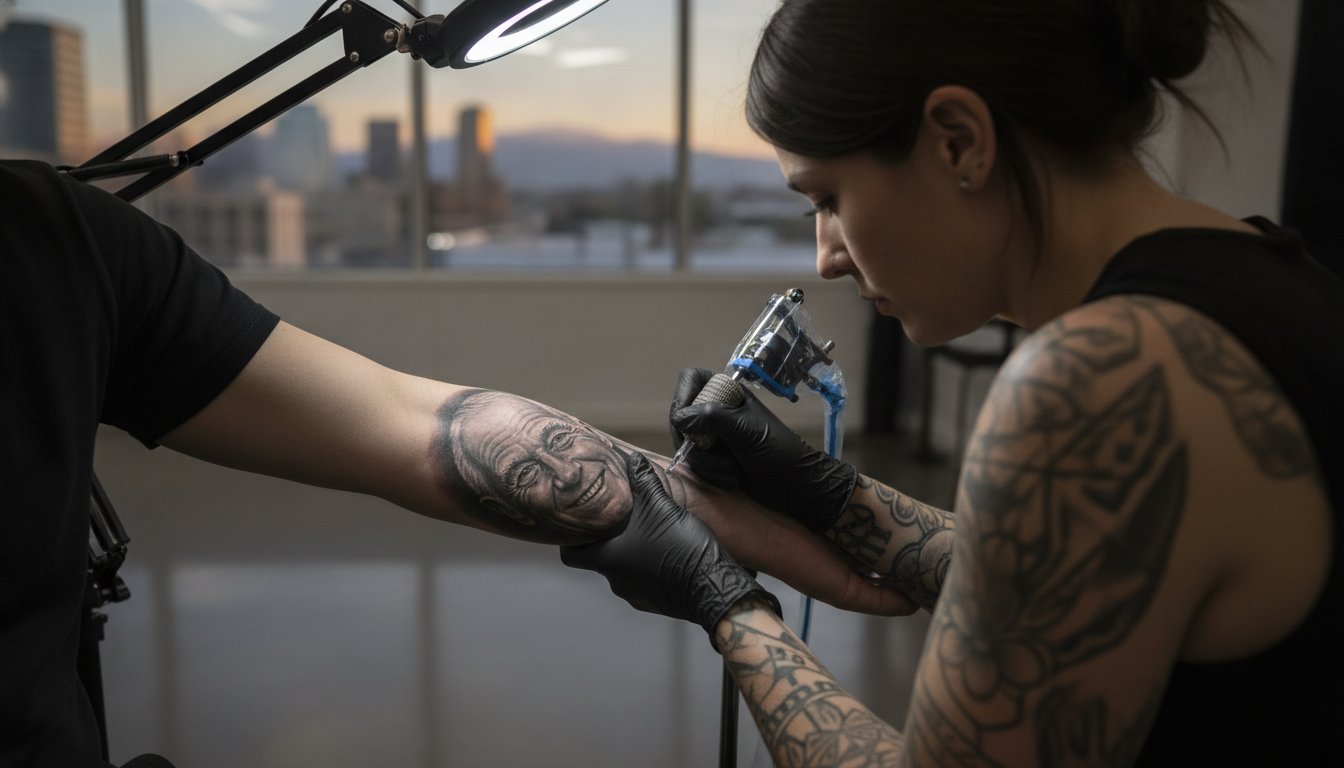
What if the most meaningful tribute you ever wear becomes unrecognizable because of a single misplaced shadow or a lack of understanding of skin anatomy? Selecting a portrait tattoo artist Denver is a decision that carries immense emotional weight. You aren't just looking for a technical drawing; you want to capture a specific spark of life, a memory, or a legacy that feels as real on your skin as it does in your mind. It's natural to feel some anxiety about the permanence of a face tattoo or how those intricate details will actually hold up as the years pass.
We understand that a portrait is a technical translation of light and emotion, not just a simple reproduction. This article highlights the technical mastery and the collaborative process required to create breathtaking, lifelike portraits that stand the test of time. You'll discover the importance of a professional environment and how clear communication during the design phase ensures your tribute retains its integrity. We will also look at the specific ways realism ages, giving you the confidence to move forward with a piece that honors your vision with precision and care.
Key Takeaways
- Learn how the manipulation of light and shadow, combined with a deep understanding of anatomy, creates a true likeness rather than a flat image.
- Understand why high-resolution reference photos with single-source lighting are essential for your portrait tattoo artist Denver to achieve lifelike precision.
- Discover the specialized techniques used to render human expressions or the unique textures of animal fur and whiskers for a realistic tribute.
- Gain clarity on how proper pigment saturation protects your tattoo against the elements and ensures the fine details of realism remain readable for decades.
- See how a collaborative design process with a seasoned expert transforms your personal memories into a one-of-a-kind piece of permanent art.
Defining Mastery: What Makes a Top Portrait Tattoo Artist in Denver?
Mastery in portraiture is the ability to manipulate light and shadow to create the illusion of three-dimensional form on a living, breathing canvas. A skilled portrait tattoo artist Denver doesn't just copy a photograph; they interpret the source material to ensure it translates effectively to the skin. True "likeness" isn't found in the eyes alone but in the artist's understanding of underlying bone structure and facial anatomy. If the artist doesn't respect the way skin sits over the cheekbones or the jawline, the portrait will look distorted as the body moves or ages.
While many can draw a face, hyper-realism requires replicating every pore and fine wrinkle with surgical precision. This level of detail demands a mastery of skin tension. Managing how the needle interacts with different areas of the face or neck is a skill that often takes decades to perfect. A portrait tattoo artist Denver with 20+ years of experience has the technical foresight to know how a detailed piece will settle over time. They understand that the skin is a dynamic environment, not a static piece of paper, and they adjust their technique to ensure the work remains a faithful tribute for years to come.
The Role of Contrast in Realism
Contrast is the engine that drives a realistic tattoo. Without deep blacks to provide depth and bright highlights to catch the light, a portrait can quickly look flat or muddy. Top artists use soft gradients to mimic the natural texture of human skin, avoiding harsh lines where they don't belong. To achieve this, an artist focuses on three technical pillars:
- Value Range: Using the full spectrum from the darkest black to the natural skin tone.
- Edge Control: Distinguishing between hard edges for bone structures and soft edges for subtle shadows.
- Saturation: Ensuring the pigment is packed densely enough to maintain its clarity through the healing process.
The real challenge lies in managing these "edges." Knowing when to use a sharp transition for a specific feature and when to use a subtle blur for a soft shadow is what separates a professional from an amateur. This technical balance ensures the image has the weight and presence of a real person.
Black and Grey vs. Color Portraits
Choosing between black and grey or color often comes down to the desired mood and the client's skin type. Black and grey realism remains a timeless choice, particularly for memorial pieces, because it focuses on form and light. Throughout the history of tattooing, monochromatic work has been celebrated for its longevity and its ability to capture the essence of a subject without the distraction of color. It's often the safest bet for ensuring a portrait ages gracefully in the Colorado sun.
Color realism, while striking, presents unique challenges in matching skin tones and managing saturation. It requires a sophisticated understanding of color theory to prevent the image from looking cartoonish. A seasoned artist will help you determine which style best suits your skin's natural undertones and the intended placement on your body during your initial consultation. Whether you choose the classic feel of grey tones or the vibrancy of full color, the goal is always a piece that respects the subject's integrity.
Human vs. Animal Portraits: Specialized Techniques
While both fall under the umbrella of realism, the technical approach for a human face versus a family pet is vastly different. A portrait tattoo artist Denver must master specific needle groupings and hand movements to switch between these subjects effectively. Human portraits rely on the subtlety of muscle movement and emotional depth. Animal portraits, however, demand a focus on organic textures and the physical depth of a coat. Each subject requires a unique set of skills to move beyond a simple drawing into a piece of art that feels present and alive.
Technical specialization is common because of the equipment involved. Rendering a human expression often requires larger magnum needles for soft shading to mimic skin. In contrast, the intricate whiskers of a cat or the coarse hair of a dog might require tight 3-round liners for sharp, individual strokes. Choosing a specialized portrait tattoo artist Denver allows for a deeper exploration of these technical nuances, ensuring the specific character of the subject is honored. Whether it's the glint of a piece of jewelry or the wetness of a dog's nose, these micro-details are what define the final result.
Capturing the "Spark" in the Eyes
The eyes are the focal point of any portrait. They hold the "spark" that makes a piece feel alive rather than static. To achieve this, artists use micro-details and carefully placed negative space to represent light reflections. Eye-light is the single most critical element of likeness because it defines the moisture and life within the gaze. Without this precise highlight, the portrait can look dull or artificial. It's the difference between a flat image and a tribute that seems to look back at you.
Rendering Texture: Fur, Skin, and Fabric
Tattooing fur requires a different rhythm than tattooing smooth human skin. The artist often uses faster hand movements and specific layering techniques to build the density of an animal's coat. It's about more than just drawing lines; it's about the direction of growth and the way light hits the individual strands. For human portraits, complex textures like lace, jewelry, or hair require a similar level of patience and varying needle depths.
Regardless of the subject, you must Protect your tattoo from the sun to ensure these fine textures don't blur over time. Keeping background elements soft helps the main subject remain the sharp focus of the piece. If you're ready to discuss the specific details of your project, scheduling tattoo consultations can help you understand how these textures will be translated to your skin.
The Design Process: From Reference Photo to Permanent Art
The journey from a cherished photograph to a permanent piece of art is a meticulous, multi-step process. It doesn't begin with the needle, but with a deep analysis of the source material. A portrait tattoo artist Denver acts as your technical guide during this phase, helping you select an image that has the structural integrity to survive the tattooing process. This collaboration is vital because not every beautiful photo makes for a beautiful tattoo. We look for specific markers like directional lighting and sharp focus to ensure the final result captures the true essence of the subject.
During tattoo consultations, we move beyond the image itself to discuss the emotional intent and the physical reality of the work. This is where we map the face. Mapping involves identifying the anatomical landmarks of the subject, such as the specific curve of the brow or the depth of the philtrum. By understanding these "anchor points," the artist can create a stencil that respects the subject's unique geometry. This preparation ensures that when the needle finally touches the skin, every movement is intentional and backed by a clear architectural plan.
Choosing the Perfect Reference Photo
Shadows are your best friend when it comes to realism. Avoid photos taken with a direct front-facing flash, as these tend to wash out the subtle contours that define a person's likeness. High-resolution files are mandatory; a low-quality screenshot from social media lacks the pixel density needed to see skin texture or the "spark" in the eyes. If you're planning a memorial piece and only have access to older, grainy photos, we can often reconstruct the likeness. This requires a seasoned hand to interpret the missing details without losing the subject's character, ensuring the final piece feels authentic.
Placement and Distortion
The human body is a collection of curves and moving parts, which makes placement a critical technical decision. Flat, stable surfaces like the outer thigh, upper arm, or forearm are generally ideal for portraits. If a face is placed too close to a joint or over a muscle group that twists significantly, the portrait will distort every time you move. Scale also plays a massive role in longevity. A portrait shouldn't be too small; detail requires physical space on the skin. A larger scale allows for the proper "packing" of pigment, which keeps the image readable and prevents the features from blurring together as the years pass.

Longevity and Aging: How Realism Survives the Colorado Sun
A common misconception in the tattoo community is that realism, with its soft gradients and lack of heavy outlines, is destined to fade faster than traditional styles. This isn't necessarily true. The longevity of a piece depends on the technical mastery of the portrait tattoo artist Denver you choose. While traditional tattoos rely on thick black borders to contain the image, realism uses "packed" pigment and high-contrast values to create a lasting structure. By saturating the dermis with a high density of ink, a skilled artist ensures that even the softest shadows remain readable as the skin ages.
Living in the Mile High City presents unique environmental challenges for any tattoo. At an elevation of 5,280 feet, the atmosphere is thinner, which leads to significantly higher UV exposure than at sea level. This intense radiation is the primary cause of ink degradation. A portrait tattoo artist Denver must account for this by using specific application techniques that prioritize depth and saturation. Without this technical foresight, the fine details that make a portrait look alive can become blurred or muted under the persistent Colorado sun.
The "Settling" Process of Realism
Every tattoo undergoes a natural "settling" phase during the first two to five years. As the body's immune system interacts with the ink particles, the sharpest edges soften slightly. This is a normal part of the healing process and shouldn't be feared. In fact, a well-executed portrait should look better once fully settled. The mantra "bold will hold" applies to realism just as much as it does to traditional work, but the "boldness" comes from the depth of the blacks and the clarity of the highlights rather than a single outer line. This internal structure keeps the likeness intact even as the skin's texture changes over time.
Protecting Your Investment in the Mile High City
High-altitude living demands a disciplined approach to aftercare. Sunscreen is the absolute #1 tool for preserving the micro-details and soft shading of a portrait tattoo. Once your piece is fully healed, daily application of a high-SPF, broad-spectrum sunscreen is mandatory to prevent the UV rays from breaking down the pigment. Because realism sessions are often multi-hour endurance tests for the skin, the initial healing protocol is also more intensive. We prioritize the use of premium, lightfast inks that are specifically formulated to resist the premature fading that can occur in high-UV environments.
Maintaining the integrity of your art is a lifelong commitment that begins the moment you leave the studio. If you have questions about how your specific design will age or want to discuss a new project, you can schedule tattoo consultations to get professional guidance on the best path forward for your skin.
Custom Portraiture at Denver Tattoo Company
At Denver Tattoo Company, we view every portrait as a collaborative masterpiece. Choosing a portrait tattoo artist Denver is about finding someone who respects the gravity of your story. Our studio is led by Jason Oz, who brings over 20 years of professional tattooing experience to every session. This longevity in the industry isn't just a number; it represents thousands of hours spent mastering the nuances of skin, light, and ink. We focus exclusively on custom, one-of-a-kind realism that captures the unique personality of your subject, whether it's a family member or a beloved pet.
The environment where your art is created matters as much as the art itself. Our studio in Englewood serves the greater Denver area with a commitment to clinical standards. We maintain medical-grade sterilization and utilize only single-use equipment to ensure your safety throughout the process. This clean, focused atmosphere allows you to relax and focus on the creative fulfillment of the project, knowing the technical safety is handled with meticulous attention to detail. We believe that a professional setting is the foundation of a successful tattoo experience.
Why Experience Matters for Portraits
Portraiture is arguably the most demanding style in the industry. There is no room for error when you're honoring a life through a memorial piece. Jason's two decades of experience provide the quiet confidence needed to handle these high-stakes projects. We don't just apply ink; we listen to the story behind the image. Our portfolio of human and animal realism showcases our ability to translate complex emotions into permanent art. This veteran perspective ensures that your design is optimized for your specific anatomy and lifestyle, resulting in a piece that you can wear with pride.
Book Your Consultation in Englewood
Starting your journey toward a custom portrait is a deliberate and rewarding process. Booking Your Consultation is the first step in ensuring your vision is technically feasible and artistically sound. When you arrive for your first meeting, bring high-resolution physical or digital copies of your reference photos so we can analyze the lighting and detail together. We will discuss size, placement, and the technical approach that will best preserve your vision for the long term. Let’s work together to create a mark of mastery that honors your most important memories.
Honoring Your Story with Technical Precision
Capturing a true likeness requires more than just artistic talent; it demands a deep understanding of how light, shadow, and anatomy interact on a living surface. We've explored how the right reference photo and strategic placement ensure your portrait remains a faithful tribute as the years pass. Selecting a portrait tattoo artist Denver means choosing a partner who prioritizes both the creative soul of the piece and the technical standards required for longevity in our high-altitude climate.
At Denver Tattoo Company, we provide a clean, professional environment where single-use sterilized equipment and 20+ years of industry experience are the baseline for every project. As a custom realism specialist, Jason Oz focuses on creating work that is as safe as it is breathtaking. We invite you to Schedule a Portrait Consultation with Jason Oz to begin discussing your vision. Your memories deserve to be preserved with the highest level of discipline and care. We look forward to helping you transform your story into a permanent masterpiece.
Frequently Asked Questions
How much does a portrait tattoo cost in Denver?
The cost of a portrait tattoo in Denver varies significantly based on the artist's experience level, the complexity of the design, and the total time required for completion. Most professional studios charge an hourly rate or a flat day rate for high-detail realism. It's best to view this work as a long-term investment in technical skill and artistic integrity. You can get an accurate estimate by scheduling a consultation to discuss your specific vision.
How long does a typical portrait tattoo session take?
A high-detail portrait session typically requires a full day, often lasting between six and eight hours. This time is necessary for the meticulous layering of ink required to build realistic depth and texture. Larger or more complex pieces might even require multiple sessions to ensure the skin isn't over-worked. This methodical pace allows your portrait tattoo artist Denver to focus on the fine details that bring the image to life.
Can you do a portrait tattoo from an old, blurry photograph?
It's possible to work from older or less-than-perfect photographs, but it requires an artist with a deep understanding of facial anatomy. In these cases, the artist reconstructs the features by interpreting the underlying bone structure and light patterns. While a high-resolution photo is always the preferred starting point, an expert can often bridge the gap for memorial pieces. This interpretation ensures the final tattoo feels authentic even if the source material is grainy.
Does a portrait tattoo hurt more than other styles?
Portrait tattoos don't necessarily hurt more than other styles, but the length of the session can increase physical fatigue. The technique often involves soft shading with magnum needles, which many clients find more tolerable than the sharp sensation of heavy lining. However, because realism requires packing pigment for proper saturation, the area can become quite sensitive toward the end of a long day. Staying relaxed and hydrated helps manage this discomfort effectively.
What is the best placement for a realistic face tattoo?
The best placement for a realistic face tattoo is on a flat, stable surface like the outer thigh, upper arm, or forearm. These areas provide a large enough canvas to capture micro-details without significant distortion from muscle movement. You should avoid areas like the ribs or stomach where skin elasticity can warp the likeness. Choosing a stable location ensures that the portrait remains anatomically correct regardless of how your body moves.
How do I choose between black and grey or color for a portrait?
Choosing between black and grey or color depends on your personal aesthetic and how you want the piece to age. Black and grey realism is timeless and typically handles the intense Colorado sun better over several decades. Full-color realism is striking and vibrant, but it requires a specific skin undertone and more diligent sun protection to maintain its clarity. Your artist can help you weigh these factors based on your skin type and lifestyle.
What happens if the likeness doesn’t look exactly like the photo?
Ensuring a perfect likeness is a collaborative process that begins with a precise stencil and a detailed mapping phase. A professional portrait tattoo artist Denver will walk you through the design and get your final approval on the stencil placement before starting. By identifying anatomical anchor points early, the artist ensures the geometry of the face is accurate. This transparent process is designed to put you at ease and guarantee a result that honors the subject.
How do I prepare my skin for a long realism session?
Preparing for a long realism session involves staying hydrated and ensuring your skin is in optimal condition. You should avoid sun exposure or tanning in the weeks leading up to your appointment, as damaged skin cannot hold ink properly. On the day of your session, wear comfortable clothing and eat a substantial meal beforehand. Bringing snacks and water will help keep your blood sugar stable during the multi-hour process of creating your custom design.


