
A tattoo doesn't have to be a permanent reminder of a past mistake or a style you've outgrown. Many people live with the quiet frustration of a piece that no longer represents who they are, often fearing that a second attempt will only result in a darker, muddied mess. It's a common concern for anyone seeking a tattoo cover up Denver artists can execute with precision. You might feel stuck between the embarrassment of poor quality work and the confusion of whether expensive laser removal is your only path forward.
You can reclaim your skin through a collaborative process that prioritizes artistic integrity and technical safety. We believe a successful transformation requires more than just heavy ink; it demands a sophisticated understanding of color theory and skin anatomy. This article provides a clear roadmap for your journey, from the initial consultation to the final reveal of a design that looks entirely intentional. We'll explore the essential design principles for masking old work, address the necessity of fading treatments, and explain the technical requirements for turning a dated "patch" into a custom masterpiece you're proud to wear.
Key Takeaways
- Understand that tattoo ink is translucent rather than opaque, requiring a strategic layering approach to effectively mask previous work.
- Learn why a successful tattoo cover up Denver usually needs to be significantly larger than the original to ensure the old silhouette is fully integrated.
- Discover how professional artists use intricate textures and the body's natural flow to create a new design that feels intentional and fluid.
- Recognize the critical role of an in-person consultation for assessing your unique ink history and developing a custom stencil for perfect coverage.
- Identify why 20+ years of technical experience and strict sterilization standards are essential for safely managing complex cover-up projects.
The Science of Tattoo Cover-Ups: How Ink Interacts in the Skin
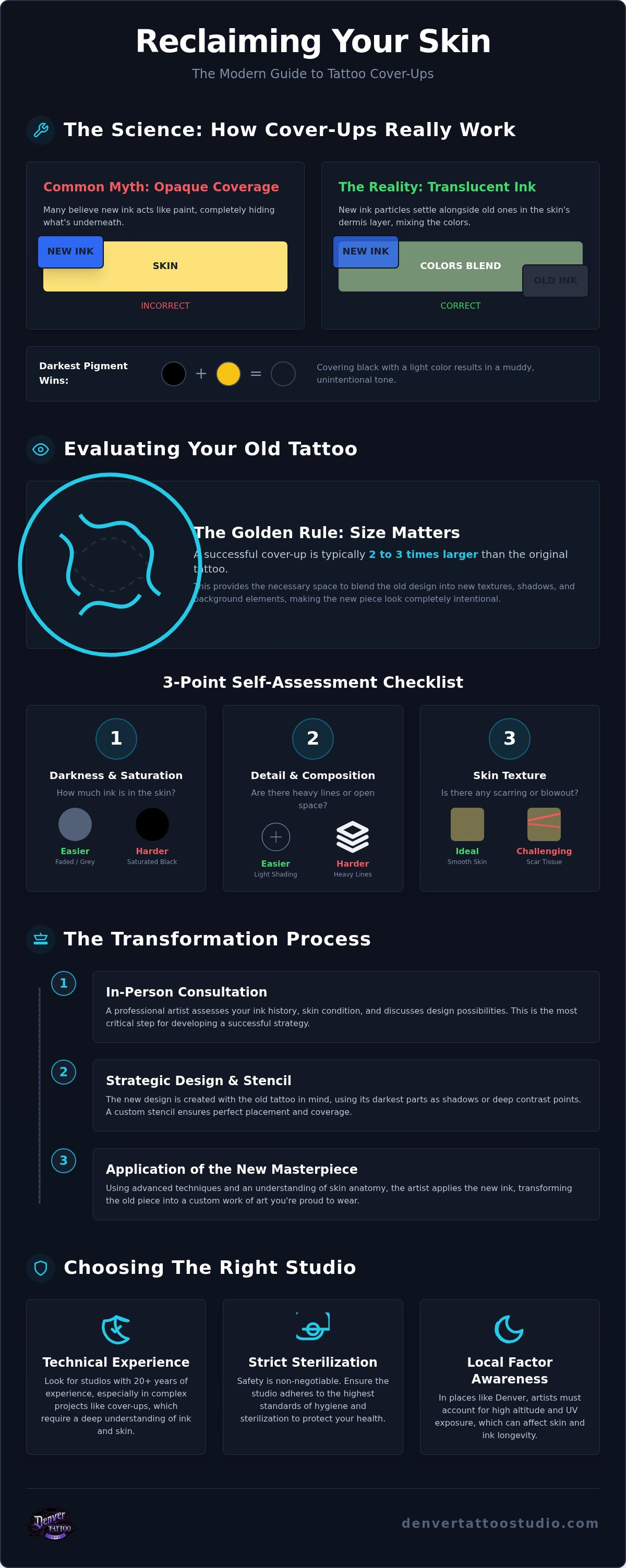
Understanding a tattoo cover up Denver requires a shift in how you view ink. Most people imagine tattoo ink as an opaque substance, similar to house paint, where one layer completely hides the one beneath it. In reality, tattoo pigments are translucent. When an artist applies new ink, it doesn't sit on top of the old design like a fresh coat of lacquer. Instead, the new particles settle into the dermis alongside the existing ones. This creates a combined visual effect where the two layers of color interact and blend. Cover-up tattoos are essentially an exercise in advanced color theory and light management.
Because the skin acts as a filter, the darkest pigments always remain visible. If you try to cover a solid black line with a bright yellow, the black will simply turn the yellow into a muddy olive green. This is why a professional transformation often relies on darker, more saturated tones than the original piece. By choosing colors that are darker or more concentrated than the previous work, the artist can effectively mask the old silhouette without creating an unintentional third color.
Why Your Old Tattoo Isn't Actually 'Gone'
The skin is a complex organ with multiple layers. Tattoo ink is held in the dermis, which is located beneath the protective epidermis. When we add new pigment, we're essentially adding a second layer of colored glass over the first. This creates a "window" effect. If the old ink is very dark or has heavy outlines, those shapes can "ghost" through lighter colors even if they look covered initially. Ink saturation is the density of pigment within a specific area of skin. High saturation in the original piece means there's less "room" in the dermis for new particles, which is why some old tattoos require a more strategic approach to ensure the new art remains crisp and clear over time.
The Role of Fading and Age in Cover-Up Success
Time is often an ally in the cover-up process. Older, faded tattoos have lost some of their original pigment density, making them significantly easier to transform. However, technical challenges like "blowouts," where ink has migrated into deeper layers of skin, or raised scar tissue from a heavy-handed application require specialized handling. A veteran artist must navigate these textures to prevent the old design from distorting the new one. This variability is why a successful tattoo cover up Denver depends on an artist who understands how time and environment have altered your canvas. Colorado's high altitude and intense UV exposure often lead to sun-damaged skin, which can affect how well the dermis retains new, premium inks. We account for these local factors to ensure your new masterpiece stands the test of time.
Evaluating Your Ink: Is Your Tattoo a Candidate for a Cover-Up?
Determining if your current ink can be successfully transformed requires a realistic look at its physical characteristics. Many clients believe a cover-up can be the same size as the original, but professional standards typically require the new design to be two to three times larger. This added scale provides the artist with the real estate necessary to blend the old tattoo into new textures and background elements. When planning a tattoo cover up Denver residents often find that the most successful projects are those that embrace the history of the skin rather than fighting it. By expanding the boundaries of the piece, the artist can use the existing ink as a natural shadow or a deep point of contrast within a much larger, more complex composition.
Color analysis is equally vital to the process. Deep blacks and vibrant blues are the most stubborn pigments to mask, whereas faded reds or light greens offer more flexibility. The location of the piece also dictates the technical complexity of the project. Areas with high elasticity, such as the ribs or stomach, require designs that move with the body without revealing the ghost of the old tattoo. If your original piece left behind raised scar tissue or keloids, the new application must be handled with extreme care. Ink behaves differently in scarred dermis, often requiring a more seasoned hand to ensure even distribution and safety.
The 3-Point Self-Assessment Checklist
Before booking your session, take a moment to evaluate these three factors to set realistic expectations for your new art:
- Darkness: Is the ink still a deep, saturated black, or has it faded into a dull blue or grey? Lighter foundations allow for a broader range of new color options.
- Detail: Does the original have heavy, bold outlines? These structural lines are harder to hide than soft, illustrative shading and may dictate the flow of the new design.
- Goal: Are you seeking to completely erase the past, or would you be satisfied with a refresh that integrates the old art into something modern and intentional?
When to Consider 'Lightening' Before Your Cover-Up
While we focus exclusively on the creative application of new art, it's important to understand that some projects benefit from preparation. If an existing tattoo is exceptionally dark or covers a massive area, a few sessions of laser lightening can be a game-changer. Although Denver Tattoo Company does not offer tattoo removal services, we often recommend this path for clients who want a very specific, light-colored custom design. Lightening the old pigment expands the color palette available for your new piece, moving the process from a simple blast over to a strategic, fine-art transformation. If you're unsure where to start, a professional tattoo consultation can help determine if your skin is ready for a new masterpiece or if a bit of fading is the best first step for your tattoo cover up Denver project.
Strategic Design: How Denver Artists Mask the Past
A successful tattoo cover up Denver requires more than just heavy ink; it demands a strategic redirection of the viewer's gaze. Instead of trying to bury the old design under a solid block of color, we use intricate details and deliberate composition to make the original piece disappear. This approach transforms the old ink into a foundational layer of shadow or texture. It ensures the new art feels like a primary choice rather than a secondary correction. By aligning the new design with the body's natural musculature, we create "flow" that makes the art look like it was always meant to be there, avoiding the common "patch" look of amateur covers.
Choosing the right subject matter is the most critical decision in this collaborative process. Organic shapes like blooming flowers, flowing water, or wildlife are far more effective than rigid geometric patterns. Geometry relies on perfect symmetry and straight lines, which can easily be disrupted by the dark, irregular outlines of a previous tattoo. In contrast, organic forms allow the artist to adjust the placement of petals or leaves to perfectly overlap the most problematic areas of the old work. This flexibility is why black and grey realism is often a superior choice for complex covers, as it allows for a wide range of tonal values to mask the past.
The Art of Distraction and Camouflage
We utilize high-contrast areas to pull focus toward the brightest and most detailed parts of the new design. By placing vibrant highlights or intricate focal points away from the old ink, the eye naturally skips over the masked area. Negative space, or the untouched skin, must be mapped with extreme precision. If negative space is placed directly over an old dark line, it creates a "ghosting" effect that ruins the illusion. Organic textures like feathers, scales, or fur are ideal for masking irregular lines because their natural complexity mimics the scattered nature of old pigment. This technical camouflage is what separates a master artisan's work from a simple over-tattoo.
Style Recommendations for Denver Clients
Certain tattooing styles are naturally better suited for cover-up work due to their inherent density. American Traditional and Neo-Traditional styles excel here because they utilize bold black outlines and dense, saturated color palettes that provide maximum coverage. Conversely, Fine Line work is rarely recommended for covering heavy black ink, as the delicate nature of the style cannot compete with the existing pigment. At our Englewood studio, we often lean into custom realism. This style allows us to incorporate the old tattoo's dark spots into the deep shadows of a new portrait or landscape. With over 20 years of industry experience, Jason Oz understands how to balance these stylistic choices to ensure a clean, professional result that stands the test of time.
The Cover-Up Process: From Consultation to New Masterpiece
The journey toward a successful tattoo cover up Denver begins long before the first drop of ink enters the skin. While digital photos provide a useful baseline, an in-person assessment at our Englewood studio allows us to feel the skin's texture and see the exact hue of the fading pigment under professional lighting. This technical evaluation is essential. We examine the depth of the original ink and check for any underlying scar tissue that might affect how the new art settles. This methodical approach ensures that the final design isn't just a mask, but a high-quality piece of custom art that stands on its own merits.
Expectations must be managed with transparency. A cover-up is often a more demanding process than a fresh tattoo on untouched skin. Because the dermis is already holding pigment, the tissue can be more sensitive or resistant to new applications. You may find the physical sensation slightly more intense, especially when working over areas with existing saturation. We often use a custom stencil or even freehand drawing directly on the skin to map out the old lines. This "dry run" ensures every part of the old design is accounted for before the permanent work begins. Patience is key; complex transformations frequently require multiple sessions to achieve the depth and clarity required for a perfect finish.
Step 1: The Collaborative Consultation
Success starts with a clear vision. When you visit us, please bring clear photos of your current tattoo and a collection of inspiration for the new piece. We'll discuss the reasons behind the change to ensure your new art provides long-term satisfaction. This is a collaborative creative process where we align your goals with the technical realities of your skin. We encourage you to review the artist's portfolio, specifically looking for cover-up examples that demonstrate a mastery of color and composition. This initial meeting builds the trust necessary for a high-stakes project. To begin your transformation, you can schedule your tattoo consultation with our experienced team.
Step 2: The Application and Layering
The first session focuses on establishing the new framework and neutralizing the most dominant parts of the old design. It's normal if the original ink isn't entirely invisible after the first pass. We use a layering technique to prevent "ghosting," where old dark lines slowly reappear as the tattoo heals. By building the new design in stages, we ensure the premium inks settle deeply and stay vibrant. Aftercare for a cover-up is particularly vital. Because the skin has undergone additional stress, following our specific healing protocols is the only way to protect the artistic integrity and longevity of the work. Our use of single-use sterilized equipment and expert precision ensures your safety throughout this intricate physical process.
Choosing the Right Studio for Your Cover-Up in the Denver Area
Selecting a studio for a tattoo cover up Denver involves more than just picking a popular shop. Cover-up work is technically demanding and carries significantly higher stakes than starting on a blank canvas. Jason Oz brings over 20 years of industry experience to every project, providing the seasoned perspective necessary to navigate the complexities of existing pigment and skin history. Experience of this caliber is vital because there is little room for error when working with saturated tissue. When you evaluate an artist's portfolio, look specifically for healed results. A fresh tattoo can hide many things under temporary redness, but a healed photo proves the new ink has successfully remained opaque without the old design "ghosting" through the surface.
Safety remains our highest priority. We maintain a focused, professional environment in Englewood that prioritizes hygiene and artistic integrity over a high-volume atmosphere. We use only single-use sterilized equipment and premium inks to ensure that your new custom art heals beautifully and stays vibrant for years. Our studio is designed to be a clean, quiet space where clients can feel at ease during the collaborative design process. This methodical environment reflects the precision required in our physical work, ensuring every client receives the dedicated attention their transformation deserves.
The Denver Tattoo Company Difference
Our commitment to custom art means we respect both your vision and your skin health. We don't believe in generic solutions for cover-ups. Instead, we create unique designs tailored to your specific anatomy and the requirements of your previous ink. This elite level of technical standard allows us to serve clients from Denver, Lakewood, and Highlands Ranch who are looking for a permanent, high-quality solution. Our Englewood location provides a sophisticated setting for serious collectors and newcomers alike, offering a level of professionalism that respects the permanence of the craft.
Booking Your Transformation
You can begin your journey by scheduling a consultation at our Henger Street location in Englewood. During this meeting, we'll discuss the scope of your project and provide a clear understanding of the custom labor involved. Because cover-ups require strategic layering and often take more time than standard tattoos, we want you to have a realistic expectation of the schedule required for a masterpiece. We focus on quality over speed, ensuring that the final result is a piece of art you can wear with confidence. Book your cover-up consultation with Jason Oz today.
Reclaim Your Skin with Professional Artistry
A tattoo you no longer love doesn't have to define your canvas forever. By understanding how ink interacts within the dermis and applying strategic design principles, you can transform outdated pieces into intentional masterpieces. A successful tattoo cover up Denver requires a master's touch to navigate the complexities of color theory and skin anatomy. We prioritize a collaborative process that respects your vision and your skin health. Led by Jason Oz, our team brings over 20 years of industry experience to every project. We specialize in custom realism and complex transformations, maintaining medical-grade sterilization standards for your peace of mind.
You deserve art that reflects your present self. It's time to move past the embarrassment of old ink and embrace a design that tells a better story. Please schedule your custom cover-up consultation at Denver Tattoo Company to begin your journey. We look forward to partnering with you on this creative transformation and providing a safe, professional environment for your next piece of permanent art.
Frequently Asked Questions
Can any tattoo be covered up, or are some too dark?
Most tattoos can be successfully covered, but extremely dark, saturated black pieces pose the greatest challenge. Success depends on the artist's ability to integrate the old ink into a new, more complex composition. If a piece is exceptionally dark, we may need to use denser pigments and more intricate textures. This ensures the old silhouette doesn't interfere with the new custom art or create an unintended muddied effect.
How much larger does a cover-up tattoo need to be than the original?
A successful cover-up typically needs to be two to three times larger than the original piece. This additional scale allows the artist to blend the old ink into the background or shadows of the new design, preventing it from looking like a patch. The extra space is essential for creating a flow that feels natural and intentional rather than being forced over a small, restricted area.
Is a cover-up tattoo more painful than a regular tattoo?
You may find the sensation slightly more intense because the artist is working over skin that has already been tattooed. Scar tissue or skin that is already saturated with pigment can be more sensitive than untouched areas. However, our focus on technical precision and a steady hand helps manage this discomfort. We prioritize your experience to ensure the process is as manageable and professional as possible throughout the session.
Do I need to get laser tattoo removal before a cover-up?
Laser removal isn't always necessary, but it can be beneficial for very dark or large tattoos. Lightening the old ink through a few laser sessions expands your options for the new design, allowing for lighter colors and finer details. While we don't offer removal services at our studio, we can evaluate your ink during a consultation to see if a tattoo cover up Denver project requires preparation first.
Which colors work best for covering up old black ink?
Deep, cool tones like dark blues, purples, and forest greens are the most effective for masking old black ink. Because tattoo ink is translucent, lighter colors like yellow or pink will often allow the old lines to ghost through. We use premium, highly saturated pigments to ensure the new colors are strong enough to neutralize the previous work without creating a muddy or dull appearance in the final result.
How many sessions does a typical cover-up take in your Denver studio?
Most cover-up projects require at least two to three sessions to achieve full opacity and detail. The first session often focuses on neutralizing the old design and establishing the new framework, while subsequent sessions add depth and fine-tune the color saturation. Complex realism or large-scale pieces may take longer. We provide a clear timeline during your initial consultation based on the specific needs of your unique skin.
Will the old tattoo eventually show through the new one over time?
If applied correctly using strategic layering and high-quality ink, the old tattoo should stay hidden permanently. Ghosting typically occurs when an artist uses colors that are too light or doesn't account for the translucency of the pigment. Our 20 years of experience ensures that we map out your old lines carefully. We use technical foresight to place shadows and details where they will most effectively mask the past.
What is the best tattoo style for hiding an old name or small symbol?
American Traditional and Neo-Traditional styles are excellent for hiding small symbols or names due to their bold lines and dense color. Organic styles like floral realism or Japanese-inspired designs also work well because their irregular shapes can easily camouflage old lettering. These styles allow for a tattoo cover up Denver clients can trust to look like a fresh, intentional piece of art rather than a simple correction.


